 DrugClass
Atorvastatin 10mg for Cholesterol: Uses, Dose & GPAT Notes
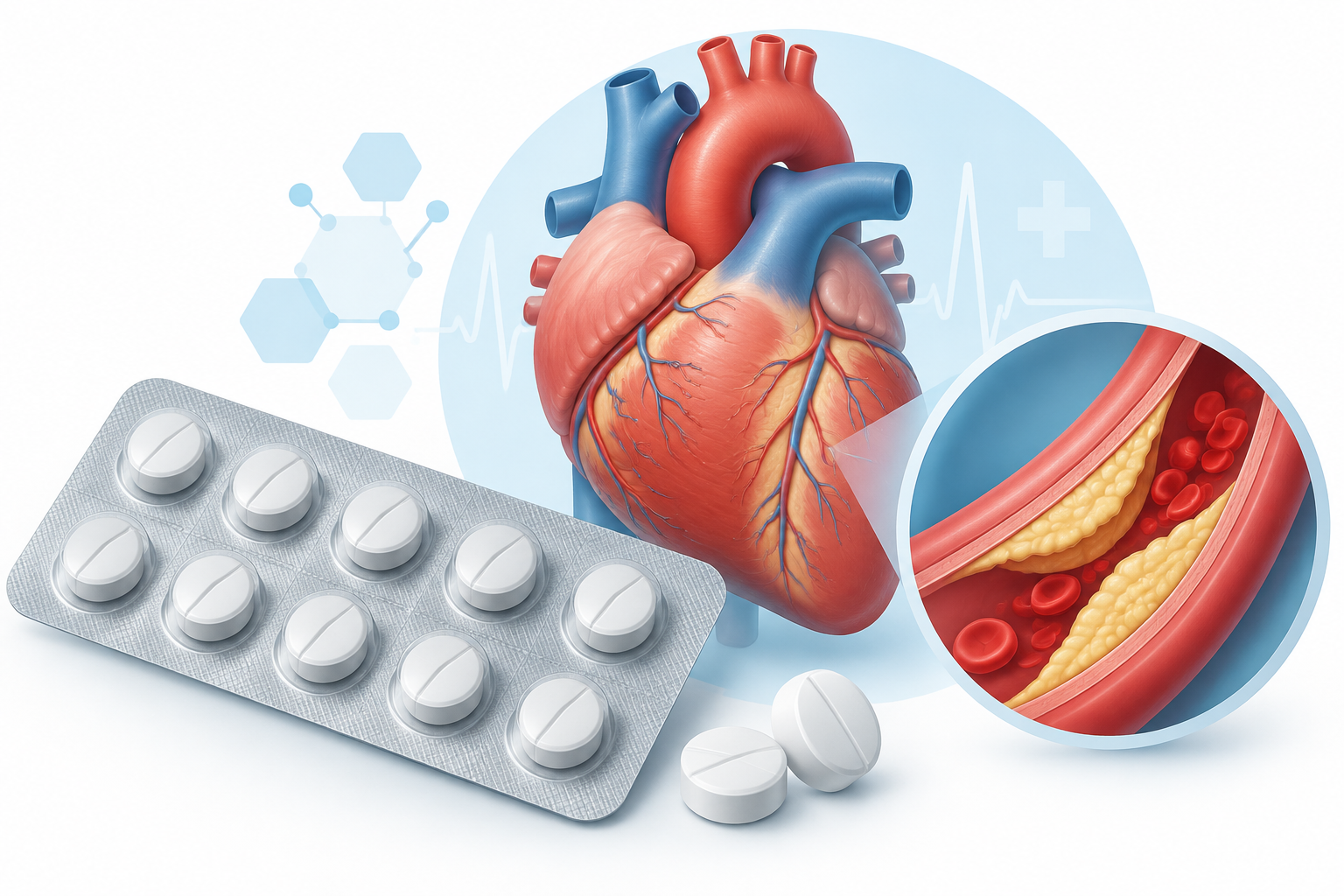
Atorvastatin 10mg is a widely prescribed lipid-lowering drug belonging to the statin family. It reduces high cholesterol levels and prevents cardiovascular events. This guide breaks down its pharmacology, clinical uses, and high-yield GPAT points in simple terms.
What is it?
Atorvastatin is an oral lipid-lowering drug. It belongs to the class of medications called statins, officially known as HMG-CoA reductase inhibitors.
Doctors prescribe Atorvastatin to manage high blood cholesterol levels. It is also used to prevent serious cardiovascular events. These events include heart attacks, angina, and strokes.
Atorvastatin reduces "bad cholesterol" in the blood. This includes Low-Density Lipoprotein (LDL) and triglycerides. At the same time, it helps slightly raise "good cholesterol," which is High-Density Lipoprotein (HDL).
Salt and Composition
- Chemical Salt: Atorvastatin Calcium trihydrate.
- Chemical Nature: Synthetic, enantiomerically pure heptanoic acid derivative.
- Common Strengths: 10 mg, 20 mg, 40 mg, and 80 mg tablets.
- Popular Brand Examples: Lipitor (Innovator), Atorva, Storvas, Atocor, Lipikind.
Atorvastatin 10mg is the standard starting dose for most adult patients.
Dose Chart
| Drug / Form | Adult Dose | Child Dose |
|---|---|---|
| Atorvastatin Tablet (Oral) | Initial: 10 mg to 20 mg once daily.<br>Maintenance: 10 mg to 80 mg once daily.<br>High-risk CAD: 40 mg to 80 mg once daily. | Children (10–17 years):<br>Initial: 10 mg once daily.<br>Max: 20 mg once daily (only for heterozygous familial hypercholesterolemia).<br>Below 10 years: Not routinely recommended. |
Note: Dosing should always be individualized based on baseline LDL-C levels and patient response.
How it Works in the Human Body
Atorvastatin primarily acts inside the liver. The liver is the main organ that produces cholesterol in the human body.
Here is how Atorvastatin works, step by step:
- Competitive Inhibition: In the liver cells (hepatocytes), an enzyme called 3-hydroxy-3-methylglutaryl-coenzyme A (HMG-CoA) reductase converts HMG-CoA into mevalonate. This is the rate-limiting step in cholesterol biosynthesis. Atorvastatin competitively blocks this enzyme.
- Drop in Liver Cholesterol: Because the enzyme is blocked, the internal cholesterol level inside liver cells drops sharply.
- Upregulation of LDL Receptors: To compensate for this drop, the liver increases the expression of LDL receptors on the surface of hepatocytes.
- Clearance of Blood Cholesterol: These receptors bind to circulating LDL and VLDL particles in the bloodstream and pull them into the liver cells.
- Overall Effect: Plasma LDL cholesterol levels drop significantly. Triglyceride levels also go down.
Atorvastatin has a long plasma elimination half-life of about 14 hours. Its active metabolites extend the inhibition of HMG-CoA reductase for nearly 20 to 30 hours. Therefore, patients can take it at any time of day, with or without food.
Side Effects
Most patients tolerate Atorvastatin well. However, adverse drug reactions can occur.
Common Side Effects
- Headache
- Nasopharyngitis (cold-like symptoms)
- Mild gastrointestinal disturbances (diarrhea, nausea, flatulence)
- Joint pain (arthralgia)
Serious Side Effects
- Myalgia and Myopathy: Muscle aches, weakness, and tenderness.
- Rhabdomyolysis: A severe and rare condition where muscle fibers break down. It releases myoglobin into the blood, which can cause acute kidney failure.
- Hepatotoxicity: Elevation in serum transaminase enzymes (ALT/AST). Periodic liver function tests are recommended.
- New-Onset Diabetes: A mild increase in blood glucose and HbA1c levels.
3 Important Exam Points for GPAT
- Target Enzyme and Rate-Limiting Step: Atorvastatin is a reversible, competitive inhibitor of HMG-CoA reductase. This enzyme catalyzes the conversion of HMG-CoA to mevalonate, which is the key rate-limiting step in de novo cholesterol synthesis.
- Metabolism and Drug Interactions: Atorvastatin is extensively metabolized by CYP3A4 in the liver. Inhibitors of CYP3A4 (such as ketoconazole, erythromycin, and grapefruit juice) increase its plasma concentration. This significantly elevates the risk of statin-induced myopathy.
- Pleiotropic Effects: Beyond lowering lipids, Atorvastatin displays "pleiotropic" cardiovascular actions. These include improvement of endothelial nitric oxide synthase (eNOS) activity, plaque stabilization, antioxidant effects, and reduction of systemic inflammation (marked by lowered high-sensitivity C-reactive protein or hs-CRP).
3 MCQs
Question 1
Which enzyme does Atorvastatin competitively inhibit?
A) Lipoprotein lipase
B) HMG-CoA reductase
C) Lecithin-cholesterol acyltransferase
D) HMG-CoA synthase
Answer: B
Question 2
Which Cytochrome P450 isoenzyme is primarily responsible for the metabolism of Atorvastatin?
A) CYP2D6
B) CYP2C9
C) CYP3A4
D) CYP1A2
Answer: C
Question 3
A patient taking Atorvastatin complains of severe dark-colored urine and diffuse muscle pain. What severe toxicity is suspected?
A) Nephrotic syndrome
B) Rhabdomyolysis
C) Hemolytic anemia
D) Acute pancreatitis
Answer: B
FAQs
Why can Atorvastatin be taken at any time of the day?
Older statins like Simvastatin must be taken at bedtime because hepatic cholesterol synthesis peaks at night. Atorvastatin has active metabolites that provide an extended duration of action (20 to 30 hours). Therefore, it works effectively regardless of the time of administration.
Why should patients avoid grapefruit juice while taking Atorvastatin?
Grapefruit juice contains furanocoumarins that inhibit the intestinal CYP3A4 enzyme. This stops the breakdown of Atorvastatin, causing toxic levels of the drug to build up in the blood. This increases the risk of severe muscle toxicity.
What lab test confirms statin-induced muscle damage?
A Serum Creatine Kinase (CK or CPK) test is used. If serum CK levels rise to more than 5 to 10 times the upper limit of normal, statin therapy is immediately discontinued to avoid kidney injury.
Take Free Test on this Topic
Check what you learned with quick GPAT-style questions.
Start Free Test →Unlock all 14 Classifications and 50+ Mock Tests with our Student Pro plan.
Unlock NowFor educational use only — not medical advice. Always check doses with current prescribing information.