 DrugClass
Organophosphate Poisoning: Drug Dose Chart and GPAT Notes
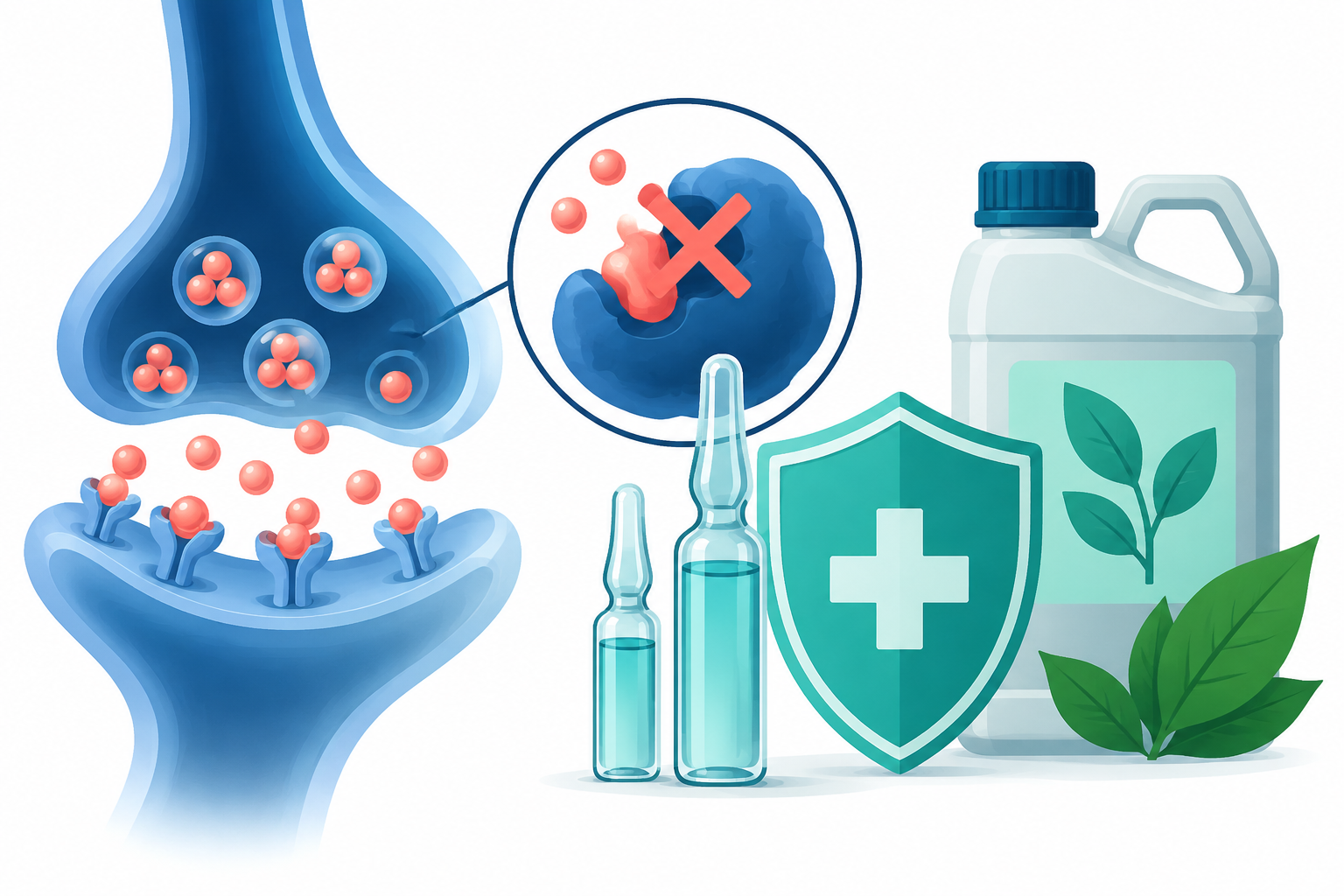
Organophosphate poisoning causes excess acetylcholine, leading to secretions, muscle weakness, and breathing failure. These notes explain hospital drug doses, antidote mechanisms, and key GPAT facts with three practice MCQs.
What is it?
Organophosphate poisoning happens when certain pesticides or nerve agents enter the body. Exposure can occur through swallowing, breathing, or skin contact. These chemicals block acetylcholinesterase, an enzyme needed for normal nerve signalling.
Acetylcholine then builds up at nerve endings. This causes excess secretions, breathing trouble, muscle weakness, and brain symptoms.
This is a medical emergency. The dose chart below is for pharmacy study, not home treatment. Suspected exposure needs urgent hospital care and poison-centre advice.
For GPAT, divide the symptoms into three groups:
- Muscarinic: Small pupils, tears, sweating, salivation, vomiting, diarrhoea, and excess airway secretions. Bronchospasm and a slow heart rate may occur.
- Nicotinic: Muscle twitching, weakness, and paralysis. Blood pressure and heart rate may also rise.
- Central nervous system: Confusion, seizures, reduced consciousness, and respiratory depression.
The classic memory aid SLUDGE means salivation, lacrimation, urination, defecation, gastrointestinal cramps, and emesis. However, breathing failure is the major life-threatening problem.
Dose Chart
These are commonly used initial hospital doses. Local protocols may differ. Treatment is adjusted to breathing, secretions, muscle strength, and clinical response. IV means intravenous.
| Drug / Form | Adult Dose | Child Dose |
|---|---|---|
| Atropine injection, IV | Initially 1–3 mg. Reassess every 3–5 minutes and double successive doses if the response is inadequate. | Initially 0.05 mg/kg. Reassess every 3–5 minutes and double successive doses if the response is inadequate. |
| Atropine maintenance infusion | After initial control, a common starting rate is 10–20% of the total loading dose per hour. Adjust to response. | The same loading-dose-based method may be used under specialist monitoring. |
| Pralidoxime chloride injection, IV | Loading dose: 30 mg/kg, maximum 2 g, infused over 20–30 minutes. Further infusion or repeat doses follow the hospital protocol. | Loading dose: 20–50 mg/kg, maximum 2 g, infused over about 30 minutes. Further treatment follows the hospital protocol. |
| Diazepam injection, IV, for seizures | 5–10 mg slowly, with airway and breathing monitoring. Further doses follow the seizure protocol. | 0.15–0.2 mg/kg slowly, maximum 10 mg per dose, with airway and breathing monitoring. |
Important dose rule: Atropine is increased until airway secretions and bronchospasm improve and circulation is adequate. Pupil size alone is not a treatment target. The usual atropine dose limit used for bradycardia does not apply to severe organophosphate poisoning.
Airway support, oxygen, suction, and ventilation may be lifesaving. Trained staff should remove contaminated clothing and wash exposed skin while avoiding secondary exposure. Do not induce vomiting.
How it Works
Normally, acetylcholinesterase breaks down acetylcholine after it carries a nerve signal. Organophosphates phosphorylate the enzyme and stop its action.
Think of acetylcholinesterase as a switch that turns the signal off. Poisoning leaves the signal switched on.
Atropine blocks muscarinic receptors. It reduces airway secretions and bronchospasm. It also treats muscarinic effects such as bradycardia. It does not reactivate the enzyme and does not directly reverse skeletal muscle paralysis.
Pralidoxime, also called 2-PAM, can reactivate the inhibited enzyme. It removes the phosphate group before the enzyme–poison complex undergoes “aging.” It is especially useful for peripheral effects, including muscle weakness.
Aging makes enzyme reactivation by oximes ineffective. Its speed varies with the organophosphate involved. Therefore, pralidoxime should be considered early rather than after a fixed waiting period. Its clinical benefit depends on the compound, timing, and treatment regimen.
Diazepam enhances GABA-A receptor activity. It helps control seizures. It is not an antidote to excess acetylcholine.
Do not delay atropine or breathing support while waiting for laboratory results. Red-cell acetylcholinesterase and plasma cholinesterase tests can support the diagnosis, but emergency treatment is guided mainly by clinical findings.
Side Effects
The main treatment-related adverse effects are:
- Atropine: Dry mouth, blurred vision, fast heart rate, urinary retention, and reduced sweating. Excess dosing can cause fever, agitation, or delirium.
- Pralidoxime: Nausea, dizziness, blurred vision, and increased blood pressure. Rapid IV administration can cause serious cardiovascular effects, so controlled infusion is important.
- Diazepam: Drowsiness, low blood pressure, and respiratory depression. Breathing must be monitored closely.
A fast pulse alone does not prove atropine toxicity. Poisoning, low oxygen, and other factors can also increase heart rate.
Some patients develop intermediate syndrome, usually about 24–96 hours after poisoning. Neck, proximal limb, and respiratory muscles become weak. This is a complication of poisoning, not simply an atropine side effect.
3 Important Exam Points for GPAT
- Atropine treats muscarinic effects, not neuromuscular paralysis. Improving airway secretions and breathing is more important than making the pupils large.
- Pralidoxime works before aging. It reactivates organophosphate-inhibited acetylcholinesterase. Atropine and pralidoxime have different roles; neither replaces airway support.
- Succinylcholine can cause prolonged paralysis. Organophosphates inhibit plasma cholinesterase, which normally breaks down succinylcholine. This interaction is important during emergency airway management.
3 MCQs
1. Which drug blocks muscarinic effects in organophosphate poisoning?
A. Atropine
B. Neostigmine
C. Physostigmine
D. Pilocarpine
Answer: A
2. Which process prevents pralidoxime from reactivating the inhibited enzyme?
A. Glucuronidation
B. Aging
C. Filtration
D. Acetylation
Answer: B
3. Which finding best supports an adequate initial atropine response?
A. Maximum pupil dilation
B. Complete loss of bowel sounds
C. Reduced airway secretions with improved breathing
D. Severe dry mouth alone
Answer: C
FAQs
Why are atropine and pralidoxime given together?
Atropine blocks muscarinic effects quickly. Pralidoxime can restore enzyme activity before aging. Their actions complement each other.
Does atropine reverse muscle weakness?
Not directly. Skeletal muscle weakness involves nicotinic receptors. Pralidoxime may help, but severe weakness can require mechanical ventilation.
Is pralidoxime routinely used for carbamate poisoning?
Usually not for confirmed pure carbamate poisoning. Carbamate inhibition generally reverses spontaneously. Mixed or uncertain exposures need specialist advice.
What is the most important immediate treatment priority?
Protect breathing and oxygen delivery. Airway care, suction, oxygen, atropine, and ventilation when needed should not wait for test results.
Take Free Test on this Topic
Check what you learned with quick GPAT-style questions.
Start Free Test →Unlock all 14 Classifications and 50+ Mock Tests with our Student Pro plan.
Unlock NowFor educational use only — not medical advice. Always check doses with current prescribing information.