 DrugClass
How to Remember Antidiabetic Drugs With an Organ-Based Memory Map
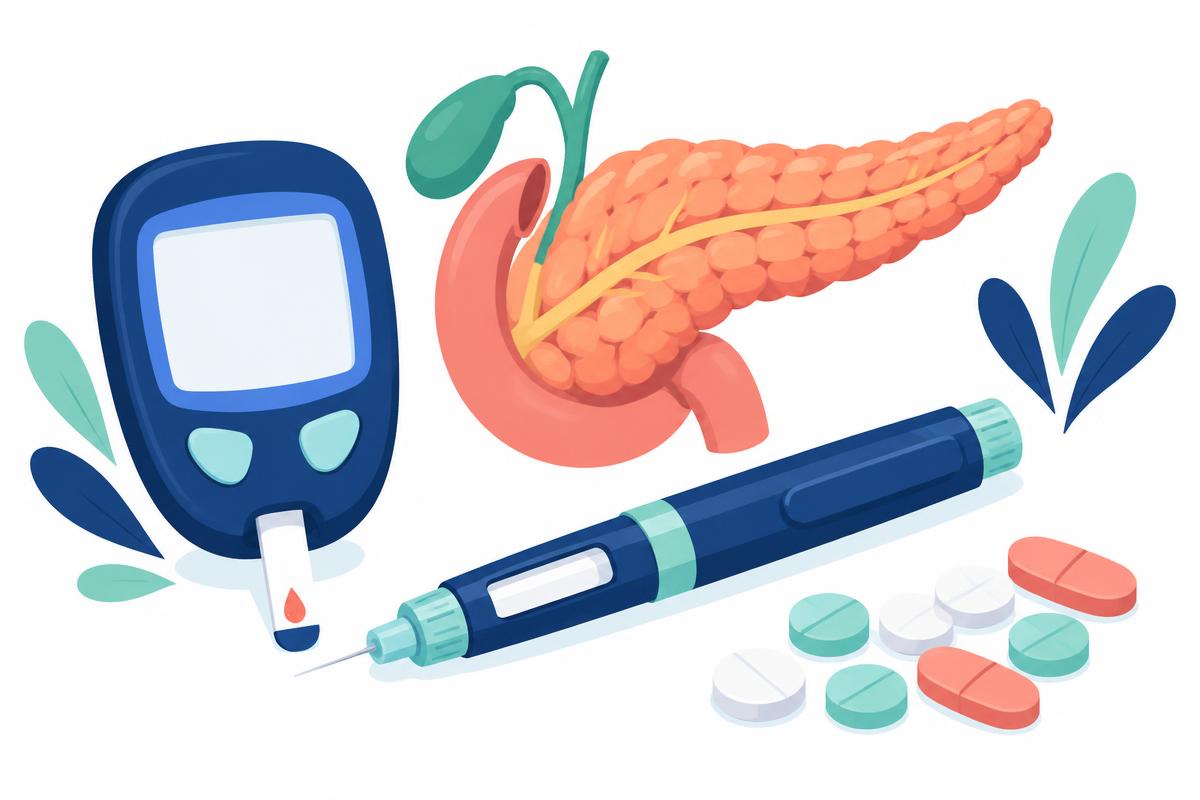
Map antidiabetic drug classes to organs, mechanisms, and adverse effects with an easy revision table.
Introduction: Why Antidiabetic Drugs Need a Map
Antidiabetic medicines do not all lower glucose in the same way. Some increase insulin release. Others improve insulin action, reduce glucose production, or increase glucose loss in urine.
This is why the topic appears in mechanism, adverse-effect, and classification questions. A useful answer depends on the class, not just a familiar medicine name.
Start with the organ. Then connect one drug, one action, and one safety clue.
Easy-Learn: Classify by the Main Job
The Core Memory Map
| Class | Examples | Main study idea |
|---|---|---|
| Insulins | Insulin lispro, Regular insulin, Insulin glargine | Replace or supplement insulin |
| Biguanide | Metformin | Mainly reduces liver glucose production |
| Sulfonylureas | Glimepiride, Gliclazide | Stimulate pancreatic insulin release |
| Meglitinides | Repaglinide | Shorter-acting stimulation of insulin release |
| Thiazolidinedione | Pioglitazone | Improves insulin sensitivity through PPAR-gamma |
| Alpha-glucosidase inhibitors | Acarbose, Miglitol | Slow carbohydrate digestion in the gut |
| DPP-4 inhibitors | Sitagliptin, Linagliptin | Prolong action of natural incretin hormones |
| GLP-1 receptor agonists | Semaglutide, Liraglutide | Activate GLP-1 pathways |
| SGLT2 inhibitors | Empagliflozin, Dapagliflozin | Increase urinary glucose loss |
| Dual GIP/GLP-1 agonist | Tirzepatide | Activates two incretin receptor pathways |
This map covers major classes, not every available agent or regional product.
Group Insulin by Time Profile
- Rapid-acting examples: Insulin lispro, Insulin aspart.
- Short-acting example: Regular insulin.
- Intermediate-acting example: NPH insulin.
- Long-acting examples: Insulin glargine, Insulin degludec.
Exact onset and duration depend on formulation, dose, and patient factors. Learn profiles rather than treating one timing number as universal.
Mechanism of Action: Manage Sugar Traffic
Imagine glucose as traffic moving through a city. Insulin helps cells take in and use glucose.
Metformin reduces extra glucose entering the road from the liver. Acarbose slows glucose entry after carbohydrates are digested in the gut. Empagliflozin lets more glucose leave through the kidney into urine.
The Pancreas and Incretin Branches
Sulfonylureas close ATP-sensitive potassium channels in pancreatic beta cells. This leads to depolarisation, calcium entry, and insulin release.
Think of this as pressing the pancreas's “release insulin” button. It needs functioning beta cells and can cause hypoglycaemia.
GLP-1 receptor agonists increase glucose-dependent insulin secretion and reduce glucagon when appropriate. They also influence appetite and gastric emptying. DPP-4 inhibitors preserve natural incretin signals rather than directly mimicking the receptor signal.
What can be asked in GPAT?
- Which class closes beta-cell ATP-sensitive potassium channels? Sulfonylureas.
- Which receptor does Pioglitazone activate? PPAR-gamma.
- Where do SGLT2 inhibitors act? The proximal renal tubule.
- Which drug slows intestinal carbohydrate digestion? Acarbose.
- Does Metformin usually cause hypoglycaemia when used alone? No; the risk is low compared with insulin secretagogues.
These are study questions, not a prediction of the exam.
Safety and Final Revision
Insulin and sulfonylureas can cause hypoglycaemia. Metformin commonly causes gut upset; renal function and lactic-acidosis risk settings matter. Pioglitazone can cause fluid retention and is unsuitable in some heart-failure settings.
SGLT2 inhibitors can cause genital fungal infections and, rarely, ketoacidosis even without very high glucose. GLP-1-based medicines commonly cause gastrointestinal effects.
Type 1 diabetes requires insulin. Type 2 treatment is individualised; heart disease, kidney disease, weight, cost, and other factors influence selection. Do not memorise one treatment sequence as universal.
Read Merck's oral antihyperglycemic comparison and the Endotext overview of non-insulin agents.
For more simplified pharmacy notes and 50+ mock tests, visit our Pro Dashboard.
Take Free Test on this Topic
Check what you learned with quick GPAT-style questions.
Start Free Test →Unlock all 14 Classifications and 50+ Mock Tests with our Student Pro plan.
Unlock NowFor educational use only — not medical advice. Always check doses with current prescribing information.