 DrugClass
How to Master General Anesthesia for GPAT 2025 Revision
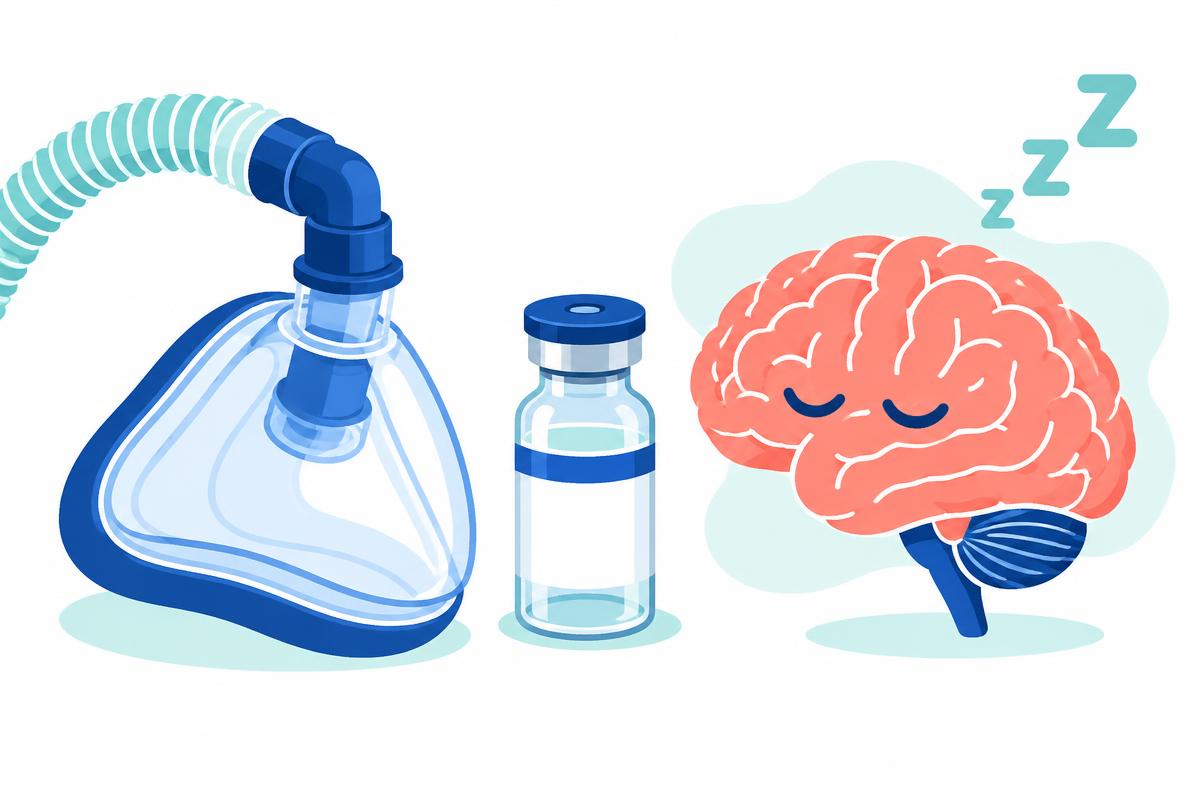
Study general anesthetic classes, mechanisms, MAC, and safety clues; this is historical GPAT 2025 revision, not actual exam questions.
Introduction: What This GPAT 2025 Revision Guide Covers
This is a concept guide using the requested GPAT 2025 topic label. GPAT 2025 is a past exam. This article does not claim to reproduce its questions or predict a paper.
General anesthesia is high-yield because it joins mechanisms, drug properties, and safety. Students must separate unconsciousness from pain relief and muscle relaxation.
One medicine may not provide all three. That is why balanced anesthesia combines medicines with different jobs.
Easy-Learn: Two Main Drug Groups
Classify by How the Drug Reaches the Body
| Group | Examples | Useful exam clue |
|---|---|---|
| Intravenous agents | Propofol, Etomidate, Thiopental, Ketamine | Often used for induction; some also support maintenance |
| Volatile inhaled agents | Sevoflurane, Isoflurane, Desflurane | Delivered as vapour; commonly used for maintenance |
| Inhaled gas | Nitrous oxide | Provides analgesia; too weak for full surgical anesthesia by itself at usual safe concentrations |
Add the Most Useful Drug Clues
- Propofol: rapid onset; can lower blood pressure and depress breathing. It does not provide reliable analgesia.
- Etomidate: relatively stable cardiovascular effects; can suppress adrenal steroid synthesis.
- Ketamine: dissociative anesthesia and analgesia; emergence reactions can occur.
- Thiopental: a barbiturate induction agent; not an analgesic.
- Sevoflurane: less irritating to the airway than some other inhaled agents.
- Nitrous oxide: can expand closed gas spaces, making certain clinical settings unsuitable.
These are anchors, not a complete comparison of every product.
Mechanism of Action: Turn Down Brain Messages
Imagine the brain as a busy classroom. Some signals encourage activity. Others tell the room to quiet down.
Many anesthetics strengthen inhibitory signaling, including signaling through GABA-A receptors. The brain becomes less able to maintain normal awareness.
But there is no single mechanism for all agents. Ketamine mainly blocks NMDA receptors, which normally carry excitatory signals. Nitrous oxide also has important NMDA-related effects.
Anesthesia Is Not the Same as Paralysis
A neuromuscular blocker, such as Rocuronium, acts at the muscle junction. It can stop movement without producing unconsciousness or pain relief.
Think of it as disconnecting the classroom's speaker. The room may still be active even though you cannot hear it. Paralysis must never be mistaken for anesthesia.
What can be asked in GPAT?
- Which anesthetic is classically associated with NMDA blockade? Ketamine.
- Which IV agent can suppress adrenal steroid synthesis? Etomidate.
- What does a lower minimum alveolar concentration, or MAC, indicate? Greater inhaled-anesthetic potency.
- Does Rocuronium provide unconsciousness? No. It produces neuromuscular blockade.
- Which drug treats malignant hyperthermia? Dantrolene.
These are original revision questions, not authenticated GPAT 2025 items.
High-Yield Safety and Historical Stages
Malignant hyperthermia can be triggered in susceptible patients by volatile anesthetics and Succinylcholine. It is a life-threatening reaction requiring immediate treatment. Propofol is not a classic trigger.
Lower blood–gas solubility generally supports faster changes in inhaled-anesthetic depth. Do not confuse this with MAC, which relates to potency.
Guedel's stages are a historical ether-based model: analgesia, excitement, surgical anesthesia, and dangerous medullary depression. Modern balanced anesthesia does not always follow this visible sequence.
For mechanisms, read the University of KwaZulu-Natal anesthetic-agent teaching material. Use the general anesthetics teaching notes for historical-stage revision, not current clinical instructions.
For more simplified pharmacy notes and 50+ mock tests, visit our Pro Dashboard.
Take Free Test on this Topic
Check what you learned with quick GPAT-style questions.
Start Free Test →Unlock all 14 Classifications and 50+ Mock Tests with our Student Pro plan.
Unlock NowFor educational use only — not medical advice. Always check doses with current prescribing information.