 DrugClass
Thyroid Gland Anatomy for GPAT: Hormones and Drug Dose
Learn the thyroid’s location, follicles, cell types, and hormone control pathway. Review levothyroxine and methimazole doses, important side effects, and three GPAT practice questions.
What is it?
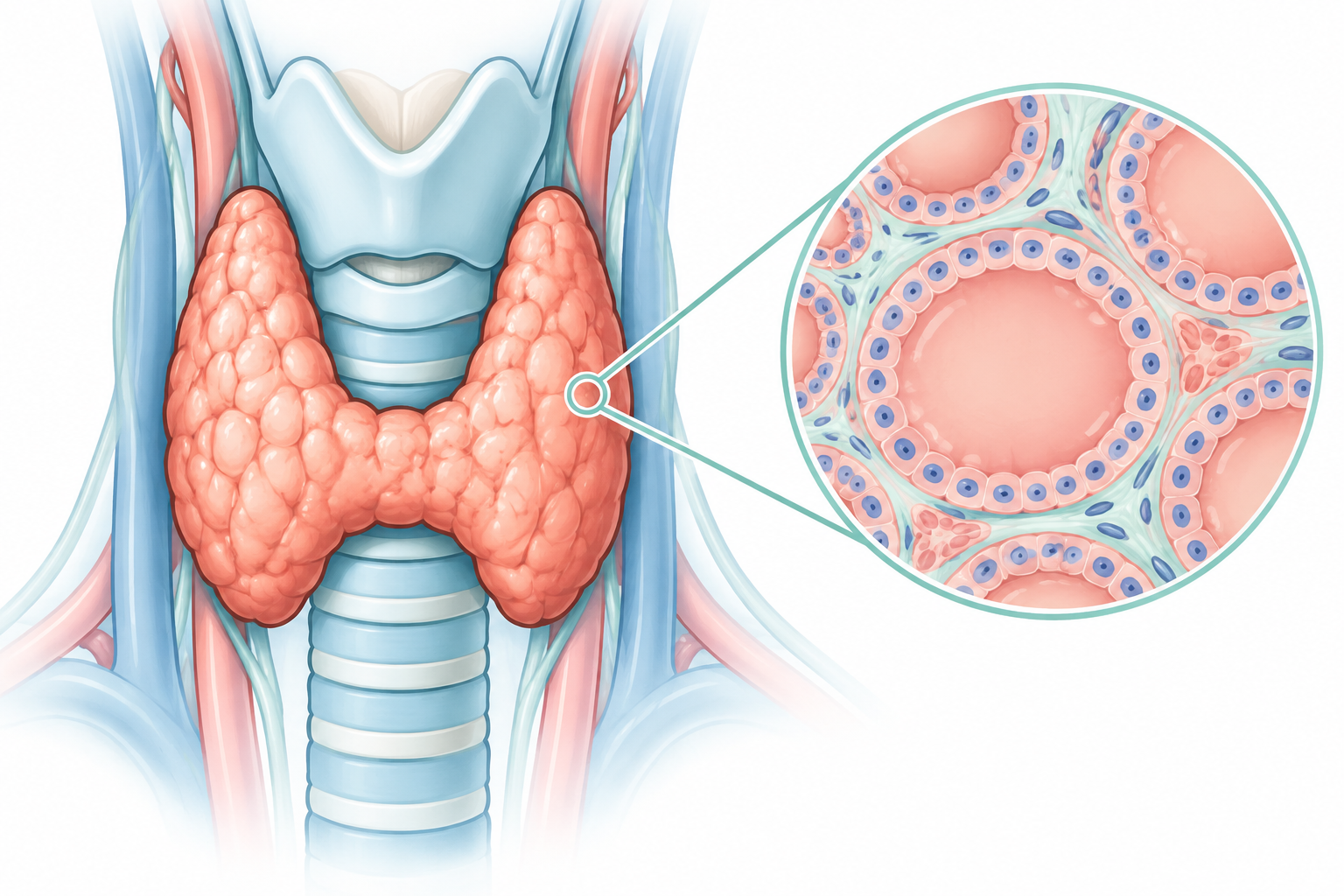
The thyroid gland is a butterfly-shaped endocrine gland in the neck. Endocrine glands release hormones into the blood. Thyroid anatomy is useful for B.Pharma and D.Pharma students because its structure explains hormone production and common drug actions.
The thyroid lies below the larynx, or voice box. It has right and left lobes. A narrow bridge called the isthmus joins them. The isthmus usually crosses the second to fourth tracheal rings.
Some people also have a pyramidal lobe. This is an upward extension of thyroid tissue.
The thyroid receives a rich blood supply. Its main arteries are the superior and inferior thyroid arteries.
Two nearby structures are important:
- Parathyroid glands: Usually four small glands on the back of the thyroid. They produce parathyroid hormone, which helps raise blood calcium.
- Recurrent laryngeal nerves: These pass close to the thyroid. Injury during surgery can cause hoarseness or other voice problems.
Under a microscope, the thyroid contains round sacs called follicles. Follicular cells form their walls. Their centres contain colloid, a material rich in thyroglobulin.
Follicular cells make thyroid hormones. Parafollicular cells, also called C cells, make calcitonin.
Dose Chart
These medicines treat thyroid hormone disorders. They do not treat every neck swelling. Doses depend on the diagnosis, age, body weight, heart health, and blood test results.
| Drug / Form | Adult Dose | Child Dose |
|---|---|---|
| Levothyroxine, oral tablet | Full replacement in otherwise healthy adults: about 1.6 micrograms/kg once daily. Older adults or those with coronary heart disease often start at 12.5–25 micrograms daily, with gradual adjustment. | Congenital hypothyroidism, age 0–3 months: 10–15 micrograms/kg once daily. Older children need age-specific, weight-based doses. |
| Methimazole, oral tablet | Labelled initial daily doses: 15 mg for mild disease, 30–40 mg for moderately severe disease, or 60 mg for severe disease, divided into 3 doses. Maintenance: usually 5–15 mg/day. | For children aged 3 years and above, a standard initial regimen is 0.4 mg/kg/day, divided into 3 doses. Reduce and adjust after thyroid control. Specialist supervision is essential. |
Dose safety: These are reference regimens, not prescriptions. Methimazole schedules vary with disease severity and local guidance. Levothyroxine is measured in micrograms, not milligrams. One milligram equals 1,000 micrograms.
How it Works
From follicles to hormones
The thyroid makes two main hormones:
- T4, or thyroxine: Contains four iodine atoms.
- T3, or triiodothyronine: Contains three iodine atoms and is more active.
Follicular cells take up iodide from the blood. The enzyme thyroid peroxidase, or TPO, helps add iodine to tyrosine residues in thyroglobulin. It also helps couple these residues to form T3 and T4.
These hormones remain stored in the colloid until needed. The gland then releases them into the blood. Many body tissues convert T4 into T3.
Thyroid hormones support growth, brain development, heat production, and normal metabolism.
The control pathway
The hypothalamus releases TRH. This stimulates the anterior pituitary to release TSH. TSH then stimulates the thyroid.
When thyroid hormone levels rise, they reduce TRH and TSH release. This is negative feedback.
Where the medicines act
Levothyroxine is synthetic T4. It replaces missing hormone in hypothyroidism. Take it consistently, usually on an empty stomach, 30–60 minutes before breakfast. Keep iron and calcium supplements at least four hours apart from it.
Methimazole inhibits TPO. It reduces new hormone production in hyperthyroidism. It does not remove hormone already stored in the gland. Therefore, improvement is not immediate.
Side Effects
The side effects below relate to the medicines, not to normal thyroid anatomy.
Too much levothyroxine can cause:
- Fast heartbeat or palpitations.
- Tremor, sweating, and poor sleep.
- Weight loss.
- Atrial fibrillation and bone loss with prolonged overtreatment.
Methimazole can cause:
- Rash, itching, or stomach upset.
- Hypothyroidism if its effect is excessive.
- Rare liver injury.
- Rare agranulocytosis, a severe fall in certain white blood cells.
Fever or a sore throat while taking methimazole needs urgent medical assessment. Stop the medicine and contact the treating clinician promptly for blood testing. Methimazole also needs special review during pregnancy, especially in the first trimester.
3 Important Exam Points for GPAT
- Know the cells: Follicular cells produce T3 and T4. Parafollicular C cells produce calcitonin. Parathyroid hormone comes from the separate parathyroid glands.
- Know the storage site: Thyroid hormones are stored outside cells in follicular colloid, attached to thyroglobulin. This is unusual for an endocrine gland.
- Link anatomy with treatment: Levothyroxine replaces T4. Methimazole blocks new hormone synthesis through TPO inhibition. Neither medicine directly repairs structural damage to the thyroid.
3 MCQs
1. Which thyroid cells produce calcitonin?
A. Follicular cells
B. Parafollicular C cells
C. Pituitary thyrotrophs
D. Parathyroid chief cells
Answer: B
2. Which substance forms the main protein framework for thyroid hormone storage in colloid?
A. Albumin
B. Haemoglobin
C. Thyroglobulin
D. Collagen
Answer: C
3. Methimazole mainly reduces thyroid hormone production by inhibiting which enzyme?
A. Acetylcholinesterase
B. Cyclooxygenase
C. Angiotensin-converting enzyme
D. Thyroid peroxidase
Answer: D
FAQs
Is the thyroid the same as the parathyroid?
No. They are separate glands. The thyroid mainly regulates metabolism through T3 and T4. The parathyroids regulate blood calcium through parathyroid hormone.
What is a goitre?
A goitre is an enlarged thyroid. Thyroid hormone levels may be low, normal, or high. The swelling alone does not show hormone function.
Why does TSH rise in primary hypothyroidism?
The thyroid produces too little hormone. Reduced negative feedback makes the pituitary release more TSH to stimulate it.
Does everyone with hypothyroidism need extra iodine?
No. Iodine deficiency is only one possible cause. Excess iodine can worsen some thyroid disorders. Treatment depends on the cause and test results.
Take Free Test on this Topic
Check what you learned with quick GPAT-style questions.
Start Free Test →Unlock all 14 Classifications and 50+ Mock Tests with our Student Pro plan.
Unlock NowFor educational use only — not medical advice. Always check doses with current prescribing information.