 DrugClass
Adrenaline Drug Dose for Anaphylaxis: Easy GPAT Guide
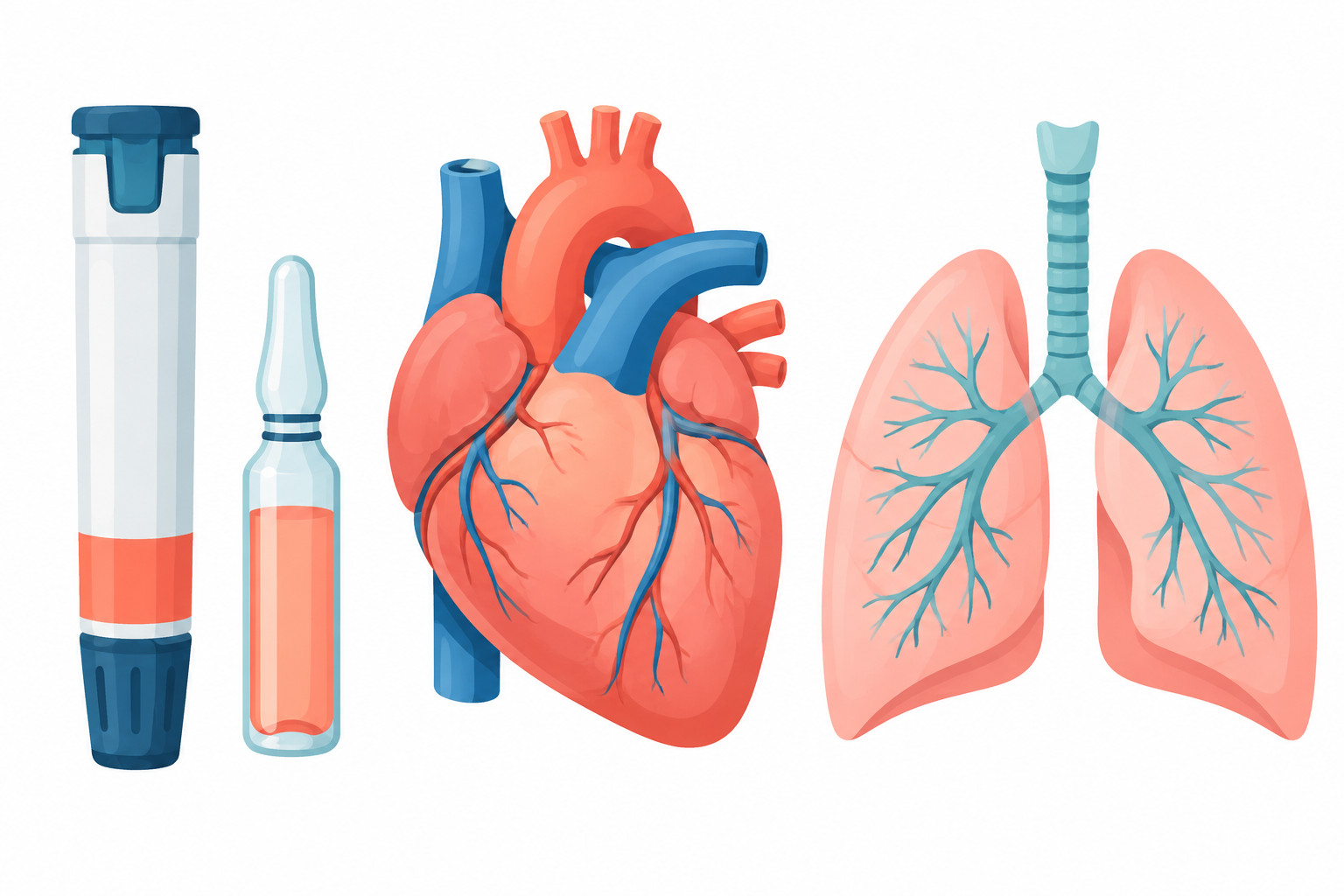
Adrenaline is the first-choice drug for anaphylaxis and is usually given by IM injection into the outer thigh. Review adult and child doses, concentration calculations, receptor actions and common GPAT exam traps.
What is it?
Adrenaline, also called epinephrine, is the first-choice drug for anaphylaxis. Anaphylaxis is a severe allergic reaction that can become life-threatening within minutes. Common triggers include foods, insect stings and medicines.
It may cause throat swelling, wheezing, breathing difficulty or a sudden fall in blood pressure. Hives and itching are common, but skin signs may be absent.
Adrenaline quickly improves breathing and blood pressure. Give it by intramuscular (IM) injection into the middle of the outer thigh when anaphylaxis is suspected.
For B.Pharma and D.Pharma students, this topic connects emergency doses with adrenergic receptors. GPAT questions often test the route, concentration and dose calculation.
These are study notes, not a personal treatment plan. Suspected anaphylaxis needs immediate adrenaline according to the emergency plan and urgent medical help. Do not wait for an antihistamine to work.
Dose Chart
The injection doses below use adrenaline 1 mg/mL, traditionally written as 1:1000. Auto-injectors deliver a fixed dose. Their weight limits can differ by product and country.
| Drug / Form | Adult Dose | Child Dose |
|---|---|---|
| Adrenaline 1 mg/mL injection for anaphylaxis | 0.3–0.5 mg IM into the outer thigh; repeat every 5–15 minutes if needed | 0.01 mg/kg IM into the outer thigh; maximum 0.5 mg per dose; repeat every 5–15 minutes if needed |
| Adrenaline auto-injector, 0.15 mg | Not the usual adult dose | Commonly used for children weighing 15 to under 30 kg, according to the product label |
| Adrenaline auto-injector, 0.3 mg | One device gives 0.3 mg IM | Commonly used for children weighing 30 kg or more, according to the product label |
Important dose notes:
- Many adult emergency protocols use 0.5 mg IM as the standard dose.
- Some paediatric protocols use age-based doses or a lower maximum for younger children. Follow the local protocol.
- Fixed-dose auto-injectors do not match every calculated dose exactly. Device selection depends on weight and the prescribed emergency plan.
- Persistent symptoms may require another auto-injector after 5–15 minutes, according to emergency guidance. Each device is single-use.
Simple calculation: A child weighs 20 kg.
- Required dose = 20 × 0.01 = 0.2 mg.
- At 1 mg/mL, required volume = 0.2 mL.
Keep mg and mL separate. The first is the amount of drug. The second is the volume of solution.
Do not confuse 1 mg/mL with 0.1 mg/mL, traditionally called 1:10,000. These concentrations differ tenfold. Writing the strength in mg/mL helps prevent errors.
Never use the cardiac-arrest dose as the routine anaphylaxis dose. Intravenous adrenaline is not routine first-line treatment for anaphylaxis. A monitored IV infusion may be needed for resistant cases under experienced specialist care. IV bolus errors can cause fatal arrhythmias.
How it Works
Adrenaline stimulates alpha-1, beta-1 and beta-2 receptors. Each action helps reverse a dangerous part of anaphylaxis.
- Alpha-1: Narrows blood vessels. This raises blood pressure and reduces swelling in the airway lining.
- Beta-1: Increases heart rate and the force of contraction. This supports circulation.
- Beta-2: Relaxes bronchial smooth muscle. This opens the airways. It also helps reduce further mediator release from mast cells and basophils.
A simple memory aid is: Alpha squeezes vessels; beta-1 boosts the heart; beta-2 opens bronchi.
IM injection into the outer thigh gives rapid absorption. Subcutaneous injection is not preferred because absorption is slower and less reliable.
Antihistamines may reduce itching and hives. They do not rapidly reverse airway obstruction or shock. Inhaled bronchodilators may help persistent wheezing, but they also cannot replace adrenaline.
Side Effects
Common effects include:
- Fast heartbeat or palpitations.
- Tremor.
- Anxiety or restlessness.
- Headache.
- Sweating and pallor.
These effects follow its sympathetic actions. They are usually less dangerous than untreated anaphylaxis.
Serious effects include severe hypertension, arrhythmias and myocardial ischaemia. Risk rises with excessive doses, concentration mistakes and incorrect IV use.
There is no absolute contraindication to IM adrenaline in anaphylaxis. Heart disease, pregnancy or older age should not delay this life-saving treatment when it is needed.
After treatment, medical observation is important. Symptoms can return after initial improvement. This is called a biphasic reaction. Observation time depends on severity, response and other risk factors.
3 Important Exam Points for GPAT
- First-line drug and route: Adrenaline is first-line treatment for anaphylaxis. Use the IM route in the outer thigh. Antihistamines and corticosteroids are not substitutes.
- Dose and concentration: The usual child dose is 0.01 mg/kg IM. With 1 mg/mL solution, this equals 0.01 mL/kg. Always check the maximum dose and local protocol.
- Receptor link: Alpha-1 reverses vasodilation and reduces airway swelling. Beta-1 supports the heart. Beta-2 produces bronchodilation.
3 MCQs
1. Which is the preferred initial route for adrenaline in anaphylaxis?
A. Oral
B. Intramuscular into the outer thigh
C. Subcutaneous into the forearm
D. Routine intravenous bolus
Answer: B
2. What volume of adrenaline 1 mg/mL provides a dose of 0.3 mg?
A. 3 mL
B. 0.03 mL
C. 0.3 mL
D. 30 mL
Answer: C
3. Which receptor mainly causes adrenaline-induced bronchodilation?
A. Alpha-1
B. Beta-1
C. Muscarinic M3
D. Beta-2
Answer: D
FAQs
Are adrenaline and epinephrine different drugs?
No. They are two names for the same drug. Either name may appear in textbooks, labels or GPAT questions.
Can an antihistamine replace adrenaline?
No. Antihistamines mainly help skin symptoms. They cannot reliably treat shock or dangerous airway swelling.
Does every allergic rash need adrenaline?
No. An isolated mild rash is not always anaphylaxis. Breathing difficulty, throat swelling or circulatory problems suggest a serious reaction needing emergency assessment.
Is the dose the same in cardiac arrest?
No. Adult cardiac arrest uses a different dose and route: typically 1 mg IV or intraosseous every 3–5 minutes during resuscitation. Do not confuse this with IM anaphylaxis dosing.
Take Free Test on this Topic
Check what you learned with quick GPAT-style questions.
Start Free Test →Unlock all 14 Classifications and 50+ Mock Tests with our Student Pro plan.
Unlock NowFor educational use only — not medical advice. Always check doses with current prescribing information.