Lung Anatomy for GPAT: Airways, Alveoli and Drug Dose Chart
Learn the main parts of the lungs, how alveoli exchange gases and why surfactant matters. Review common asthma drug doses, key side effects and GPAT practice questions.
What is it?
Lung anatomy is the study of the lungs and breathing passages. For B.Pharma and D.Pharma students, it helps explain how inhaled drugs reach their targets. It also links basic anatomy with asthma treatment.
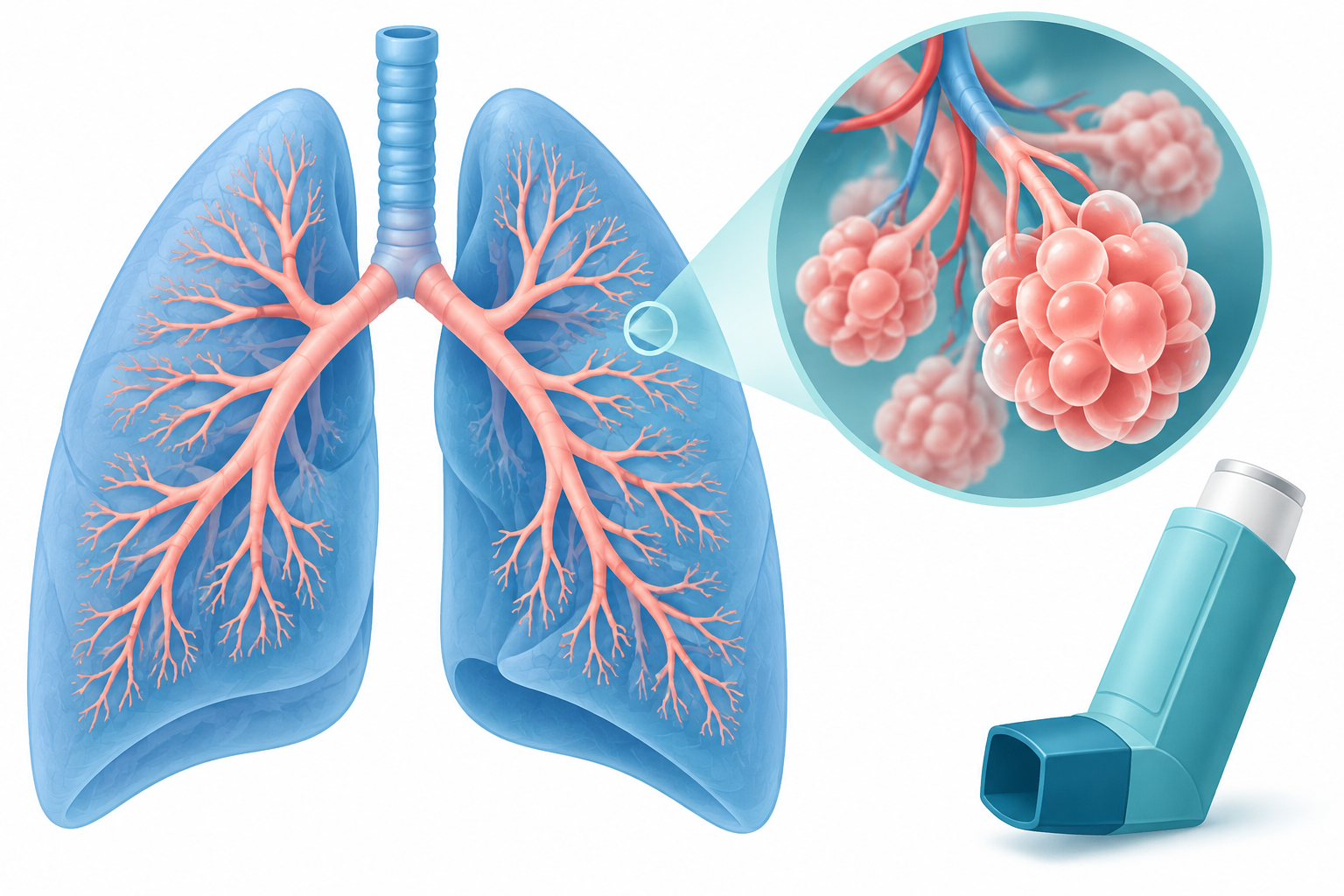
The lungs lie in the chest, on either side of the heart. The right lung has three lobes. The left lung has two lobes and a cardiac notch that makes space for the heart.
Air travels through this pathway:
- Nose or mouth → pharynx → larynx.
- Trachea → main bronchi → smaller bronchi.
- Bronchioles → respiratory bronchioles → alveolar ducts → alveoli.
The trachea has C-shaped cartilage rings. Bronchi also contain cartilage, but bronchioles do not. Bronchioles contain smooth muscle that can narrow the airway when it contracts.
The right main bronchus is wider, shorter and more vertical than the left. Inhaled foreign objects therefore enter it more often.
Each lung has a double-layered covering called the pleura. A thin film of fluid between the layers reduces friction during breathing.
Dose Chart
These common asthma medicines show how lung anatomy connects with pharmacology. Doses below apply to the stated forms and ages. They are study doses, not instructions for self-treatment. Device strength, local approval and the patient's treatment plan matter.
| Drug / Form | Adult Dose | Child Dose |
|---|---|---|
| Salbutamol, also called albuterol: metered-dose inhaler delivering 90 micrograms of base per puff | 2 puffs every 4–6 hours as needed for bronchospasm | Age 4 years and above: 2 puffs every 4–6 hours as needed |
| Budesonide: dry-powder inhaler | Usual starting dose: 360 micrograms twice daily; 180 micrograms twice daily may suit some patients | Age 6–17 years: usual starting dose 180 micrograms twice daily; may increase to 360 micrograms twice daily if needed |
| Prednisolone: oral tablets or liquid for an asthma exacerbation | 40–50 mg once daily for 5–7 days | Age 6–11 years: 1–2 mg/kg once daily, maximum 40 mg/day, usually for 3–5 days |
Important: Salbutamol relieves bronchospasm but does not treat the underlying inflammation. Asthma care should include inhaled corticosteroid-containing treatment, not salbutamol alone. Many current treatment plans prefer an inhaled corticosteroid–formoterol reliever where suitable.
The prednisolone row describes a short course for an exacerbation. It is not a daily maintenance dose. Younger children need age-specific assessment and prescribing.
How it Works
Breathing mechanics: The diaphragm is the main muscle of inspiration. When it contracts, it moves down. Chest volume rises, pressure falls and air enters the lungs. Quiet expiration is mainly passive because the lungs and chest wall recoil.
Gas exchange: Alveoli are tiny air sacs surrounded by capillaries. Oxygen moves from alveolar air into blood. Carbon dioxide moves in the opposite direction. These gases diffuse down their partial pressure gradients.
Two alveolar cell types are especially important:
- Type I pneumocytes: Thin cells that form most of the alveolar surface. They allow rapid gas exchange.
- Type II pneumocytes: Cells that produce surfactant and help repair the alveolar lining.
Surfactant lowers surface tension. It helps prevent alveoli from collapsing, especially during expiration.
Airway protection: Mucus traps inhaled particles. Cilia move this mucus towards the throat. Alveolar macrophages remove particles and microbes that reach the air sacs.
Drug action: Salbutamol stimulates beta-2 receptors on airway smooth muscle. This relaxes the muscle and widens narrowed airways.
Budesonide acts through glucocorticoid receptors. It reduces airway inflammation and swelling. It is a controller medicine, not a rapid rescue drug.
Prednisolone has a wider, systemic anti-inflammatory effect. A short course may be needed during a significant asthma flare.
A spacer can improve medicine delivery from a pressurised metered-dose inhaler. Dry-powder inhalers need a different breathing technique and are not used with spacers.
Side Effects
Lung anatomy itself has no side effects. This section covers the medicines in the chart.
- Salbutamol: May cause hand tremor, palpitations, headache and a fast heartbeat. Frequent or high doses can lower blood potassium.
- Budesonide: May cause oral thrush, throat irritation and a hoarse voice. Rinse the mouth and spit after use. Monitor growth in children receiving long-term inhaled corticosteroids.
- Prednisolone: Short courses may cause stomach upset, poor sleep, mood changes and raised blood glucose. Repeated or prolonged use adds risks such as osteoporosis, infection and adrenal suppression.
Increasing reliever use can signal poor asthma control. Severe breathlessness, blue lips or inability to speak full sentences needs urgent medical care.
3 Important Exam Points for GPAT
- Right versus left lung: The right lung has three lobes; the left has two. The right main bronchus is the more common route for an inhaled foreign body.
- Alveolar cells: Type I pneumocytes mainly support gas exchange. Type II pneumocytes produce surfactant.
- Reliever versus controller: Salbutamol rapidly relaxes airway smooth muscle. Budesonide reduces inflammation and does not give immediate relief.
3 MCQs
1. Which structure lacks cartilage?
A. Trachea
B. Main bronchus
C. Bronchiole
D. Larynx
Answer: C
2. Which cells produce pulmonary surfactant?
A. Type I pneumocytes
B. Type II pneumocytes
C. Red blood cells
D. Alveolar macrophages
Answer: B
3. Salbutamol mainly produces bronchodilation by stimulating which receptor?
A. Alpha-1
B. Beta-1
C. Muscarinic M3
D. Beta-2
Answer: D
FAQs
Why is lung anatomy important for pharmacy students?
It explains drug delivery, airway narrowing and gas exchange. These links help with GPAT questions on respiratory pharmacology.
Are bronchi and bronchioles the same?
No. Bronchi are larger airways supported by cartilage. Bronchioles are smaller branches without cartilage.
Can budesonide stop an asthma attack immediately?
Budesonide alone cannot provide rapid bronchodilation. Follow the prescribed reliever plan during sudden symptoms.
Why should patients rinse after inhaled budesonide?
Rinsing and spitting removes medicine left in the mouth. This lowers the risk of oral thrush.
Take Free Test on this Topic
Check what you learned with quick GPAT-style questions.
Start Free Test →Unlock 500 Blogs for ₹199
Unlock NowFor educational use only — not medical advice. Always check doses with current prescribing information.