 DrugClass
How to Remember Cephalosporin Generations for GPAT

Remember the five cephalosporin generations with anchor drugs, coverage exceptions, and simple GPAT revision questions.
Introduction: Why Cephalosporin Generations Matter
Cephalosporins are beta-lactam antibiotics. Students meet them in antimicrobial classification, bacterial coverage, resistance, and adverse-effect questions.
The names can look almost identical. That makes random memorisation difficult. A better method is to learn one anchor medicine per generation, then add important exceptions.
Remember this early: a higher generation does not mean a medicine is best for every infection. The organism, infection site, and resistance pattern matter.
Easy-Learn: The Five-Generation Map
Learn One Anchor Per Generation
| Generation | Anchor examples | Main exam idea |
|---|---|---|
| First | Cefazolin, Cephalexin | Strong activity against many susceptible Gram-positive organisms |
| Second | Cefuroxime | More Gram-negative activity than first-generation agents |
| Third | Ceftriaxone, Cefotaxime, Ceftazidime | Broader Gram-negative activity; important differences within the group |
| Fourth | Cefepime | Broad activity, including susceptible Pseudomonas |
| Fifth or anti-MRSA group | Ceftaroline, Ceftobiprole | Activity against MRSA; availability and approved uses vary |
Say the anchor chain aloud: Cefazolin → Cefuroxime → Ceftriaxone → Cefepime → Ceftaroline. Write it again without looking.
Add the Exceptions That Win Marks
- Ceftazidime has activity against susceptible Pseudomonas aeruginosa. Do not give this property to every third-generation drug.
- Ceftriaxone does not reliably cover Pseudomonas.
- Cefepime covers susceptible Pseudomonas. That does not mean it covers every resistant strain.
- Ceftaroline covers MRSA but does not reliably cover Pseudomonas.
- Ceftobiprole also has MRSA activity. “Only Ceftaroline covers MRSA” is too absolute.
- Cefoxitin and Cefotetan are cephamycins commonly grouped with second-generation agents. They add useful anaerobic coverage.
Mechanism of Action: Stop the Wall Builders
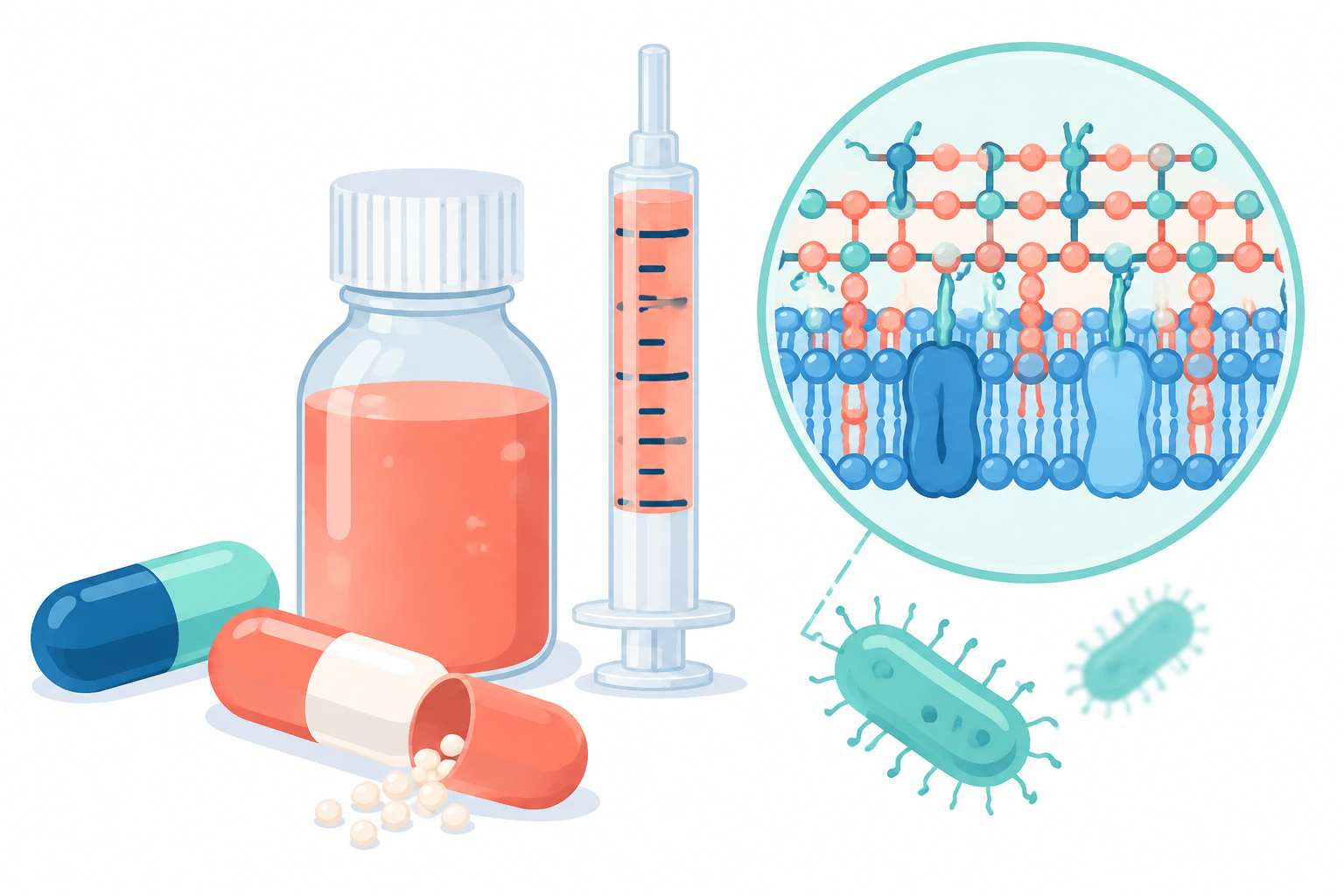
Imagine a bacterium as a house with a strong outer wall. Its wall builders use proteins called penicillin-binding proteins, or PBPs.
Cephalosporins bind to PBPs and interrupt the final linking of the wall material. The growing bacterium cannot build a strong wall. It becomes easier to damage and may die.
Why Coverage Changes Between Drugs
Different medicines enter bacteria differently. They also bind PBPs differently and withstand some bacterial enzymes better than others.
Think of each antibiotic as a tool with a different shape. A newer tool may reach more targets, but it cannot open every lock.
Bacteria can resist treatment by producing beta-lactamases, changing PBPs, or reducing drug entry. Some resistant infections need other agents or specific combinations.
What can be asked in GPAT?
- Which generation contains Cefazolin? First generation.
- Which third-generation example is associated with antipseudomonal activity? Ceftazidime.
- What bacterial structure do cephalosporins affect? The cell wall, through PBPs.
- Which listed drug covers MRSA: Cefazolin, Cefuroxime, or Ceftaroline? Ceftaroline.
- Why is “third generation means Pseudomonas coverage” incorrect? Coverage differs between individual drugs.
These are revision prompts, not confirmed exam questions.
Safety and Final Revision
Allergy history matters. Cross-reactivity with penicillins depends partly on side-chain similarity; do not memorise one percentage as a universal rule. Antibiotic-associated diarrhoea is another important class concern.
Most cephalosporins need attention to kidney function. Ceftriaxone has important biliary elimination and specific neonatal cautions. Learn exceptions alongside the basic classification.
For a reliable overview, read Cephalosporins in the Merck Manual and the NCBI cephalosporin review.
For more simplified pharmacy notes and 50+ mock tests, visit our Pro Dashboard.
Take Free Test on this Topic
Check what you learned with quick GPAT-style questions.
Start Free Test →Unlock all 14 Classifications and 50+ Mock Tests with our Student Pro plan.
Unlock NowFor educational use only — not medical advice. Always check doses with current prescribing information.