 DrugClass
How to Remember Autonomic Nervous System Drugs Classification for GPAT
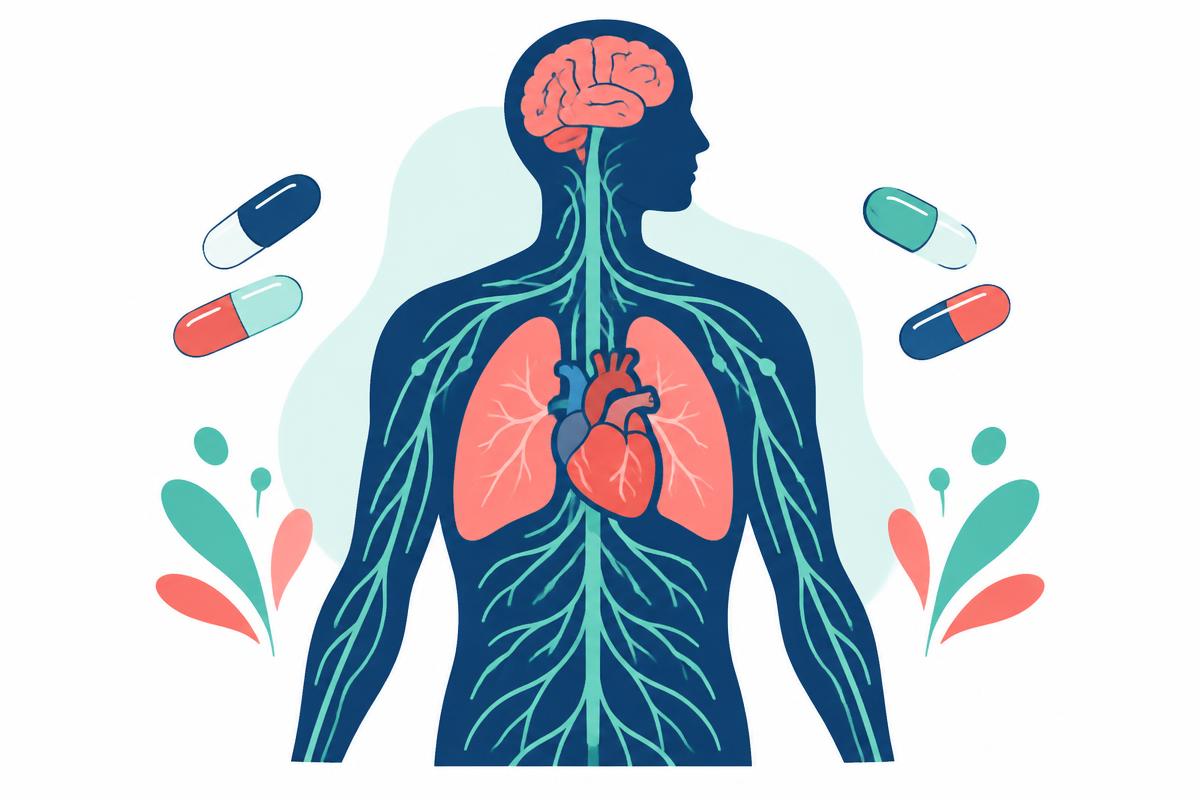
Learn ANS drug groups through a four-box classification, simple receptor analogies, and five GPAT practice questions.
Introduction: Why ANS Drugs Matter in Exams
The autonomic nervous system controls many things you do without thinking. It changes your heart rate, pupil size, and gut movement. It also helps control breathing and bladder emptying.
Autonomic nervous system drugs appear across pharmacology. They connect eye treatment, asthma, blood pressure, and emergency care. A question may give you a symptom and ask which receptor caused it.
Do not begin by memorising a long list. First ask two things: Which receptor is involved? Does the medicine switch its action on or block it?
Easy-Learn: A Four-Box Classification
Start With the Main Groups
| Group | Main action | Drug examples |
|---|---|---|
| Cholinergic agonists | Increase acetylcholine-like effects | Bethanechol, Pilocarpine |
| Cholinergic blockers | Block selected acetylcholine receptors | Atropine, Ipratropium |
| Adrenergic agonists | Activate selected adrenaline-related receptors | Adrenaline, Phenylephrine, Salbutamol |
| Adrenergic blockers | Block selected adrenaline-related receptors | Prazosin, Propranolol, Metoprolol |
This is a study map, not a complete list. Cholinergic drugs also act at nicotinic receptors. Those receptors occur in autonomic ganglia and at the skeletal-muscle junction.
Divide Each Group One Step Further
- Direct cholinergic agonists: Bethanechol and Pilocarpine act on muscarinic receptors.
- Indirect cholinergic drugs: Neostigmine blocks acetylcholinesterase. More acetylcholine remains available at muscarinic and nicotinic sites.
- Muscarinic blockers: Atropine blocks muscarinic receptors. Ipratropium helps open airways through this action.
- Nicotinic blockers: Rocuronium blocks muscle-type nicotinic receptors. It is a neuromuscular blocker, not a sedative.
- Alpha agonists: Phenylephrine mainly activates alpha-1 receptors. Clonidine activates central alpha-2 receptors and reduces sympathetic signals.
- Beta agonists: Dobutamine mainly stimulates beta-1 receptors. Salbutamol mainly stimulates beta-2 receptors.
- Alpha blockers: Prazosin blocks alpha-1 receptors.
- Beta blockers: Propranolol blocks beta-1 and beta-2 receptors. Metoprolol is relatively beta-1 selective.
Mechanism of Action: Think of Keys and Locks
Imagine receptors as locks. An agonist is a key that opens a lock. An antagonist sits in the lock and stops a key from working.
Salbutamol opens the beta-2 “airway relaxation” lock. The muscles around the airways relax. Propranolol can block that lock, which explains its risk in asthma.
An enzyme blocker works differently. Think of acetylcholinesterase as a cleaner that removes messages. Neostigmine slows the cleaner. Acetylcholine messages last longer.
Match the Receptor to the Organ
- Alpha-1: usually contracts blood-vessel muscle.
- Alpha-2: can reduce release of sympathetic signals.
- Beta-1: increases heart activity and renin release.
- Beta-2: relaxes airway muscle.
- Muscarinic receptors: support effects such as gut movement and gland secretion, depending on the organ.
“One heart, two lungs” can help recall beta-1 and beta-2. It is a memory aid, not a rule about where receptors exist.
What can be asked in GPAT?
- Which medicine directly stimulates muscarinic receptors? Bethanechol.
- How does Neostigmine increase acetylcholine action? It inhibits acetylcholinesterase.
- Which receptor mainly explains Salbutamol bronchodilation? Beta-2.
- Why can Propranolol cause bronchospasm? It blocks airway beta-2 receptors.
- Why does Clonidine, an agonist, lower blood pressure? Central alpha-2 activation reduces sympathetic output.
These are practice questions, not predictions of an actual paper.
Quick Revision and Further Reading
Draw the four boxes from memory. Add one receptor and one medicine to each. Then revise the exceptions before adding more names.
Read the ANS medication classes guide and compare the map with DrugClass classification notes.
For more simplified pharmacy notes and 50+ mock tests, visit our Pro Dashboard.
Take Free Test on this Topic
Check what you learned with quick GPAT-style questions.
Start Free Test →Unlock all 14 Classifications and 50+ Mock Tests with our Student Pro plan.
Unlock NowFor educational use only — not medical advice. Always check doses with current prescribing information.