 DrugClass
Pantoprazole 40mg for Acidity: Uses, Dose & Mechanism
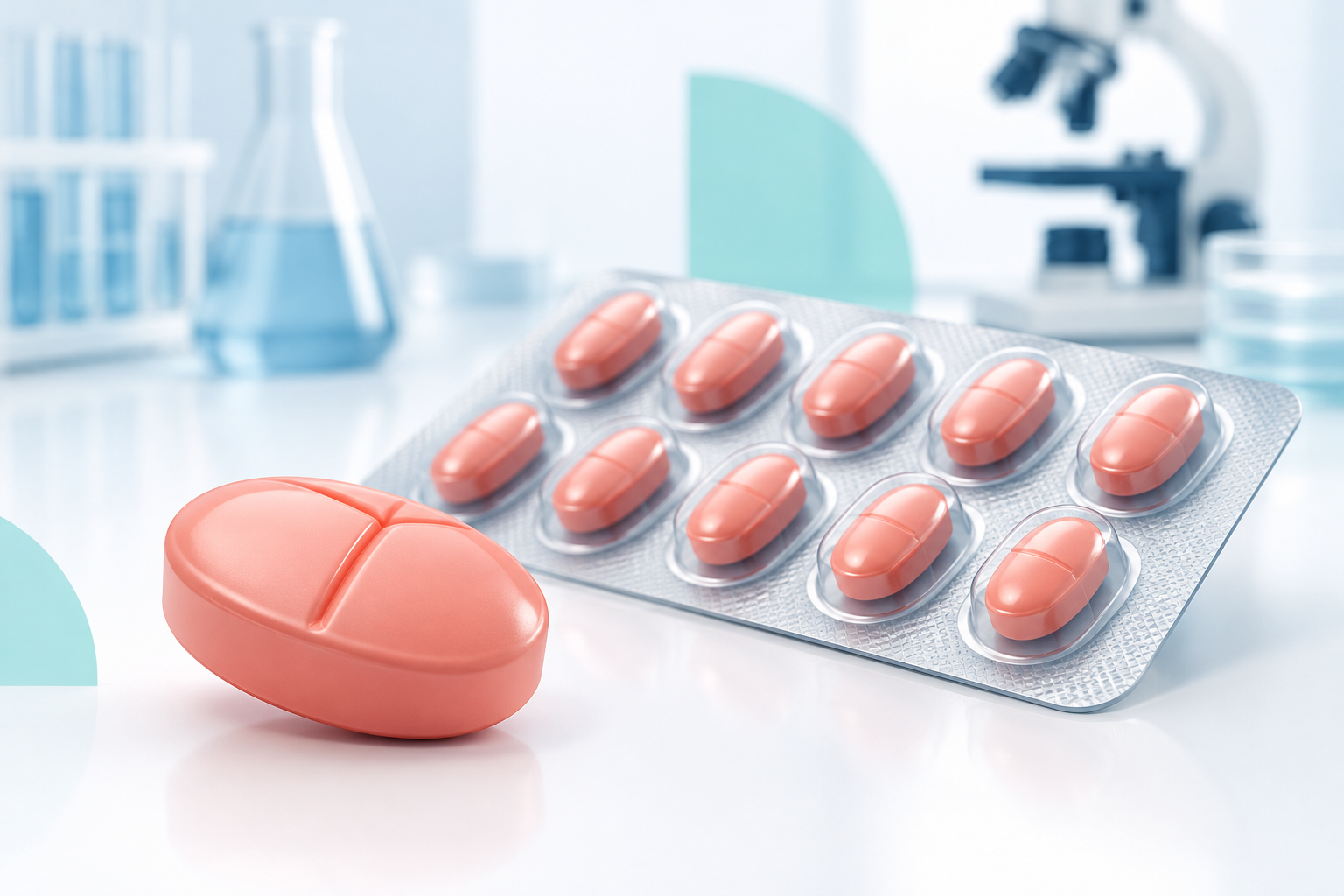
Pantoprazole 40mg is a proton pump inhibitor used to treat acidity and acid reflux. It irreversibly blocks the gastric H+/K+-ATPase enzyme to reduce acid secretion. This guide covers its clinical doses, pharmacology mechanism, and essential GPAT exam points.
What is it?
Pantoprazole is a widely prescribed gastrointestinal drug. It belongs to the class of Proton Pump Inhibitors (PPIs).
Doctors use it to treat acid peptic disorders. These include gastroesophageal reflux disease (GERD), gastric ulcers, and duodenal ulcers. It is also used to treat Zollinger-Ellison syndrome and to prevent NSAID-induced ulcers.
Pantoprazole 40mg is the standard therapeutic adult strength for active ulcer healing and severe reflux symptoms.
Salt and Composition
- Active Chemical Salt: Pantoprazole Sodium Sesquihydrate.
- Chemical Class: Substituted benzimidazole derivative.
- Formulations and Strengths:
- Delayed-release / Enteric-coated tablets: 20 mg, 40 mg.
- Lyophilized powder for IV injection: 40 mg per vial.
- Common Brand Names: Pantocid, Pan-40, Pantodac, Protonix.
Pantoprazole tablets are always enteric-coated. This coating prevents degradation by stomach acid before the drug reaches the intestine.
Dose Chart
| Drug / Form | Adult Dose | Child Dose |
|---|---|---|
| Pantoprazole Tablet (Oral) | 40 mg once daily, taken 30 to 60 minutes before breakfast | 20 mg to 40 mg daily for children weighing > 40 kg (GERD, age ≥ 5 years) |
| Pantoprazole IV Injection | 40 mg once daily as slow IV infusion over 15 minutes | Not routinely recommended; pediatric dosing strictly weight-based under specialist care |
| Zollinger-Ellison Syndrome (Oral) | 40 mg twice daily (titrated up to 240 mg daily) | Safety and efficacy not established |
How it Works in the Human Body
Pantoprazole acts directly on the stomach lining.
- Target Site: The parietal cells of the gastric mucosa.
- Target Enzyme: Hydrogen/Potassium Adenosine Triphosphatase ($H^+/K^+$-ATPase), also known as the proton pump.
Here is the step-by-step mechanism:
- Absorption: The enteric-coated tablet bypasses gastric acid. It dissolves in the alkaline pH of the duodenum and enters systemic circulation.
- Distribution to Parietal Cells: Pantoprazole is a weak base ($pK_a \approx 3.9$). It diffuses from the bloodstream into the acidic canaliculi of gastric parietal cells.
- Protonation and Activation: Pantoprazole is a prodrug. In the highly acidic canalicular lumen ($pH < 2$), it gets protonated and converted into active tetracyclic sulfenamide forms.
- Covalent Binding: The active sulfenamide reacts with sulfhydryl ($-SH$) groups of cysteine residues (specifically Cys813 and Cys822) on the $H^+/K^+$-ATPase enzyme.
- Enzyme Inactivation: It forms a stable, covalent disulfide bond. This irreversibly blocks the pump.
- Acid Suppression: The final common pathway of hydrogen ion secretion is blocked. This halts both basal and stimulated gastric acid production until new enzyme molecules are synthesized.
Side Effects
Pantoprazole is generally well tolerated, but adverse effects can occur.
Common Side Effects
- Headache
- Diarrhea
- Nausea and vomiting
- Abdominal pain
- Flatulence
Long-term or High-dose Risks
- Hypomagnesemia: Low blood magnesium levels caused by reduced intestinal absorption.
- Vitamin B12 Deficiency: Chronic acid suppression impairs dietary B12 release from proteins.
- Bone Fractures: Decreased calcium absorption increases the risk of osteoporosis-related fractures of the hip, wrist, and spine.
- Infections: Lowered gastric acid barrier increases risk of Clostridioides difficile diarrhea and pneumonia.
- Hypergastrinemia: Compensatory release of gastrin due to prolonged low acidity.
3 Important Exam Points for GPAT
- Prodrug Activation in Acidic Canaliculi: Pantoprazole is an inactive prodrug. It requires an acidic environment ($pH < 2$) for conversion to active sulfonamide/sulfenamide. Therefore, simultaneous use with strong antacids reduces its activation.
- Specific Binding Site: Pantoprazole binds covalently to both Cysteine-813 and Cysteine-822 residues on the catalytic alpha subunit of the $H^+/K^+$-ATPase pump. This gives it a slightly longer duration of inhibition compared to omeprazole.
- Lower CYP2C19 Affinity: Among all PPIs, pantoprazole shows lower affinity for the hepatic CYP2C19 enzyme. This makes it the preferred PPI in patients taking Clopidogrel, as it minimizes competitive metabolic inhibition.
3 MCQs
Question 1
Pantoprazole inhibits gastric acid secretion by acting on which target?
A) Histamine $H_2$ receptors
B) Gastric $H^+/K^+$-ATPase
C) Muscarinic $M_1$ receptors
D) Prostaglandin $EP_3$ receptors
Answer: B
Question 2
Why are oral pantoprazole tablets formulated with an enteric coating?
A) To mask the bitter taste
B) To speed up gastric absorption
C) To prevent acid degradation in the stomach
D) To reduce first-pass metabolism
Answer: C
Question 3
Which of the following adverse effects is associated with prolonged, chronic use of Pantoprazole?
A) Hypercalcemia
B) Hypomagnesemia
C) Vitamin D toxicity
D) Hyperkalemia
Answer: B
FAQs
Why should Pantoprazole be taken before food?
PPIs work best when the proton pumps are actively secreting acid. Food stimulates these pumps. Taking pantoprazole 30 to 60 minutes before breakfast ensures peak blood concentrations when the pumps become active.
Can a patient crush or chew a Pantoprazole 40mg tablet?
No. Crushing or chewing destroys the enteric coating. Without this coating, gastric acid degrades pantoprazole before it reaches the small intestine, making the drug ineffective.
How long does the effect of Pantoprazole last?
Although its plasma half-life is short (around 1 to 2 hours), its pharmacological effect lasts 24 to 48 hours. This is because it forms an irreversible covalent bond with the proton pump. Acid secretion recovers only after new pumps are synthesized.
Take Free Test on this Topic
Check what you learned with quick GPAT-style questions.
Start Free Test →Unlock all 14 Classifications and 50+ Mock Tests with our Student Pro plan.
Unlock NowFor educational use only — not medical advice. Always check doses with current prescribing information.