DrugClass
Human Body & Drugs
Human Bones and Calcium Medicines: GPAT Study Guide
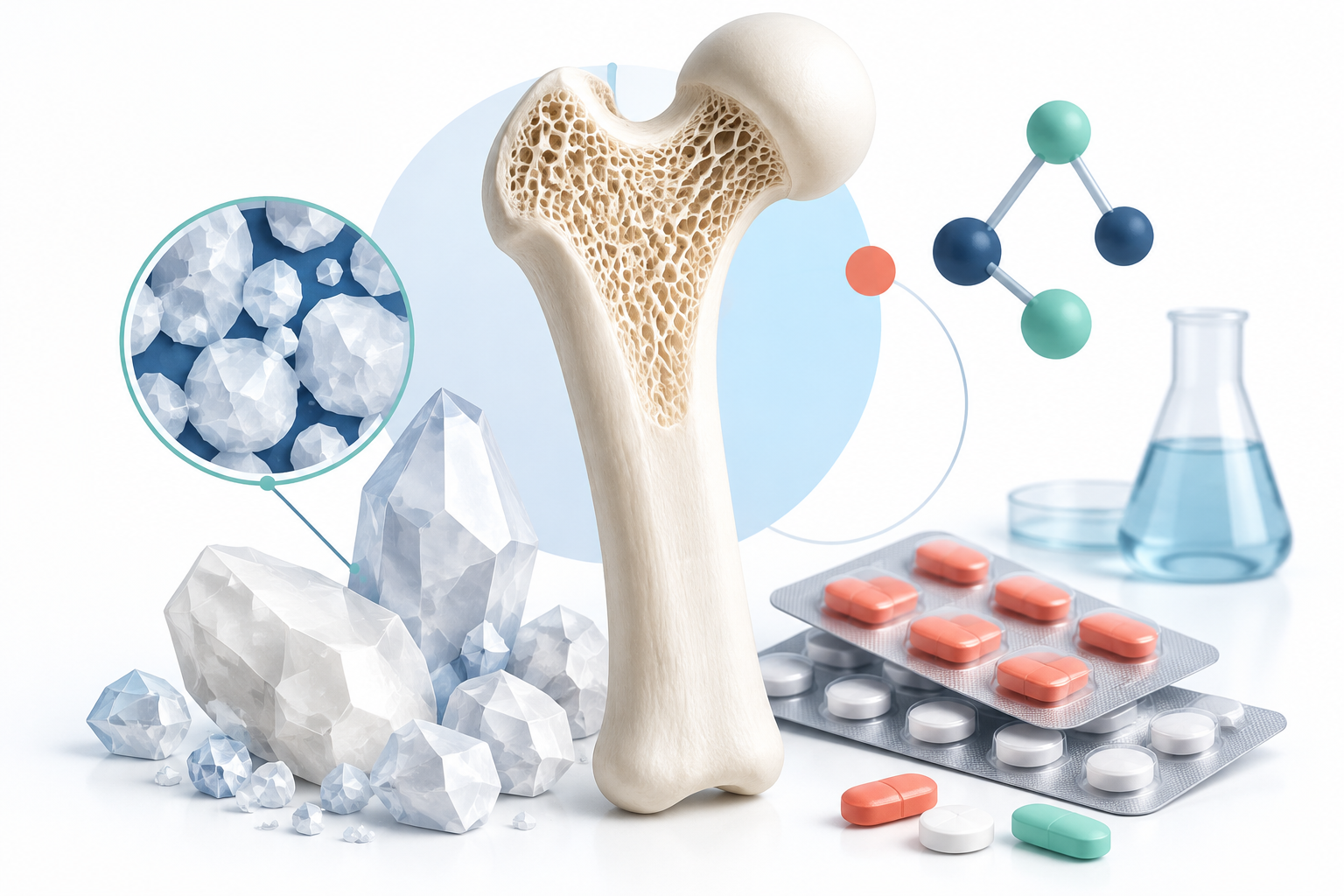
Human bones store nearly all the body's calcium and provide skeletal strength. Calcium medicines treat and prevent conditions like osteoporosis, rickets, and hypocalcemia. This guide breaks down calcium salts, standard doses, bone pharmacology, and key GPAT questions.
What is it?
Bone is a living, dynamic connective tissue. It gives shape to the human body and protects internal organs. It also acts as the primary storage depot for minerals. In fact, about 99% of total body calcium resides in the bones and teeth.
Calcium medicines are therapeutic supplements used to restore and maintain normal calcium levels. When dietary intake is insufficient or the body loses mineral density, bones become weak and fragile. This leads to conditions like osteopenia, osteoporosis, rickets in children, and osteomalacia in adults. Calcium supplements supply elemental calcium to maintain serum levels and rebuild the bone mineral matrix.
Salt and Composition
Calcium cannot be administered as a pure metal. It must be bound to a salt. Different salts provide different amounts of elemental calcium.
- Calcium Carbonate: Contains 40% elemental calcium. It has the highest amount of calcium per tablet. It needs an acidic stomach pH to dissolve properly. Examples include Shelcal 500, Caltrate, and Tums.
- Calcium Citrate: Contains 21% elemental calcium. It dissolves well in low-acid environments. It is ideal for elderly patients or patients taking proton pump inhibitors (PPIs). Examples include Citracal and Calcit.
- Calcium Lactate: Contains 13% elemental calcium. It is gentle on the stomach but requires larger tablets to provide adequate doses.
- Calcium Gluconate: Contains 9% elemental calcium. It is the salt of choice for intravenous (IV) administration because it is non-irritating to veins. Examples include standard Calcium Gluconate 10% injection ampoules.
Many commercial oral formulations also combine calcium with Vitamin D3 (Cholecalciferol) to improve intestinal absorption.
Dose Chart
| Drug / Form | Adult Dose | Child Dose |
|---|---|---|
| Calcium Carbonate (Oral) | 500 mg to 1200 mg elemental Ca/day in divided doses with meals | 45 to 65 mg/kg/day elemental Ca in 3 to 4 divided doses |
| Calcium Citrate (Oral) | 1000 mg to 1200 mg elemental Ca/day in divided doses (with or without food) | 20 to 40 mg/kg/day elemental Ca in 2 to 3 divided doses |
| Calcium Gluconate (10% IV Injection) | 10 mL to 20 mL (1 to 2 g) slow IV push over 10 minutes | 100 to 200 mg/kg (1 to 2 mL/kg) slow IV over 10 to 15 minutes |
Note: Oral calcium should not exceed 500 mg of elemental calcium per single dose for optimal absorption.
How it Works in the Human Body
Bone consists of an organic protein matrix called osteoid (chiefly type I collagen) coated with an inorganic mineral called hydroxyapatite $[Ca_{10}(PO_4)_6(OH)_2]$. Two main cell types control bone turnover: osteoblasts build new bone, while osteoclasts break down old bone.
Here is how calcium works step by step:
- Intestinal Absorption: Ingested calcium reaches the duodenum and upper jejunum. Active transport occurs via the TRPV6 channel, which is stimulated by Calcitriol (active Vitamin D3). Passive paracellular diffusion occurs when intestinal calcium concentration is high.
- Blood Distribution: Absorbed calcium enters the bloodstream. Normal total serum calcium is 8.5 to 10.5 mg/dL. About 50% exists as free ionized $Ca^{2+}$ (the active form), 40% binds to albumin, and 10% complexes with anions.
- Hormonal Regulation:
- If blood calcium drops, Parathyroid Hormone (PTH) increases. PTH stimulates osteoclasts to resorb bone and release calcium into blood.
- If blood calcium is adequate, Calcitonin from thyroid C-cells helps deposit excess calcium back into bone and blocks osteoclasts.
- Bone Mineralization: Free calcium combines with inorganic phosphate. Osteoblasts deposit these ions into the collagen scaffold to form new hydroxyapatite crystals. This process hardens the bone.
Side Effects
- Gastrointestinal upset: Constipation is the most common complaint. Calcium carbonate may cause gas, bloating, and belching due to carbon dioxide formation in the stomach.
- Hypercalcemia: Excess intake can lead to elevated blood calcium. Symptoms include muscle weakness, confusion, nausea, and cardiac arrhythmias.
- Nephrolithiasis: High unabsorbed calcium excreted by the kidneys can form calcium oxalate renal stones.
- Drug Interactions: Calcium binds to tetracyclines and fluoroquinolones in the gut, forming insoluble chelates that reduce antibiotic absorption.
- Milk-Alkali Syndrome: Seen with prolonged, excessive calcium carbonate intake. It leads to hypercalcemia, metabolic alkalosis, and renal failure.
3 Important Exam Points for GPAT
- Elemental Calcium Percentages: GPAT frequently tests elemental calcium values: Calcium Carbonate (40%), Calcium Citrate (21%), Calcium Lactate (13%), and Calcium Gluconate (9%).
- Salt Choice for Tetany: Calcium Gluconate (10% IV) is preferred over Calcium Chloride for acute hypocalcemic tetany. Calcium chloride is highly irritating and causes severe tissue necrosis if it extravasates.
- Crystal Structure: The primary crystalline structure of bone mineral is Hydroxyapatite, with the empirical formula $Ca_{10}(PO_4)_6(OH)_2$. Fluoride replaces the hydroxyl group to form Fluorapatite, which is more resistant to acid erosion.
3 MCQs
Q1. Which calcium salt contains the highest percentage of elemental calcium?
A) Calcium Citrate
B) Calcium Lactate
C) Calcium Carbonate
D) Calcium Gluconate
Answer: C
Q2. Intravenous calcium gluconate is preferred over calcium chloride because:
A) Calcium gluconate has a higher elemental calcium content
B) Calcium gluconate is less prone to cause thrombophlebitis and tissue necrosis
C) Calcium gluconate crosses the blood-brain barrier faster
D) Calcium gluconate does not require renal elimination
Answer: B
Q3. Which hormone directly inhibits osteoclast-mediated bone resorption to lower serum calcium levels?
A) Parathyroid Hormone (PTH)
B) Calcitriol
C) Calcitonin
D) Aldosterone
Answer: C
FAQs
Why should calcium carbonate be taken with meals?
Calcium carbonate needs gastric hydrochloric acid to dissolve and release elemental calcium. Food triggers stomach acid production, which significantly improves absorption.
What is the advantage of calcium citrate over calcium carbonate?
Calcium citrate does not require an acidic gastric environment for dissolution. It is absorbed equally well with or without food. It also causes less gas and constipation.
How does calcium interfere with antibiotic absorption?
Calcium ions form insoluble, non-absorbable coordination complexes (chelates) with drugs like ciprofloxacin and doxycycline. Patients must separate these doses by at least 2 hours.
Take Free Test on this Topic
Check what you learned with quick GPAT-style questions.
Start Free Test →Unlock all 14 Classifications and 50+ Mock Tests with our Student Pro plan.
Unlock NowFor educational use only — not medical advice. Always check doses with current prescribing information.