DrugClass
Human Body & Drugs
Human Stomach Acidity Drugs: GPAT Pharmacology Guide
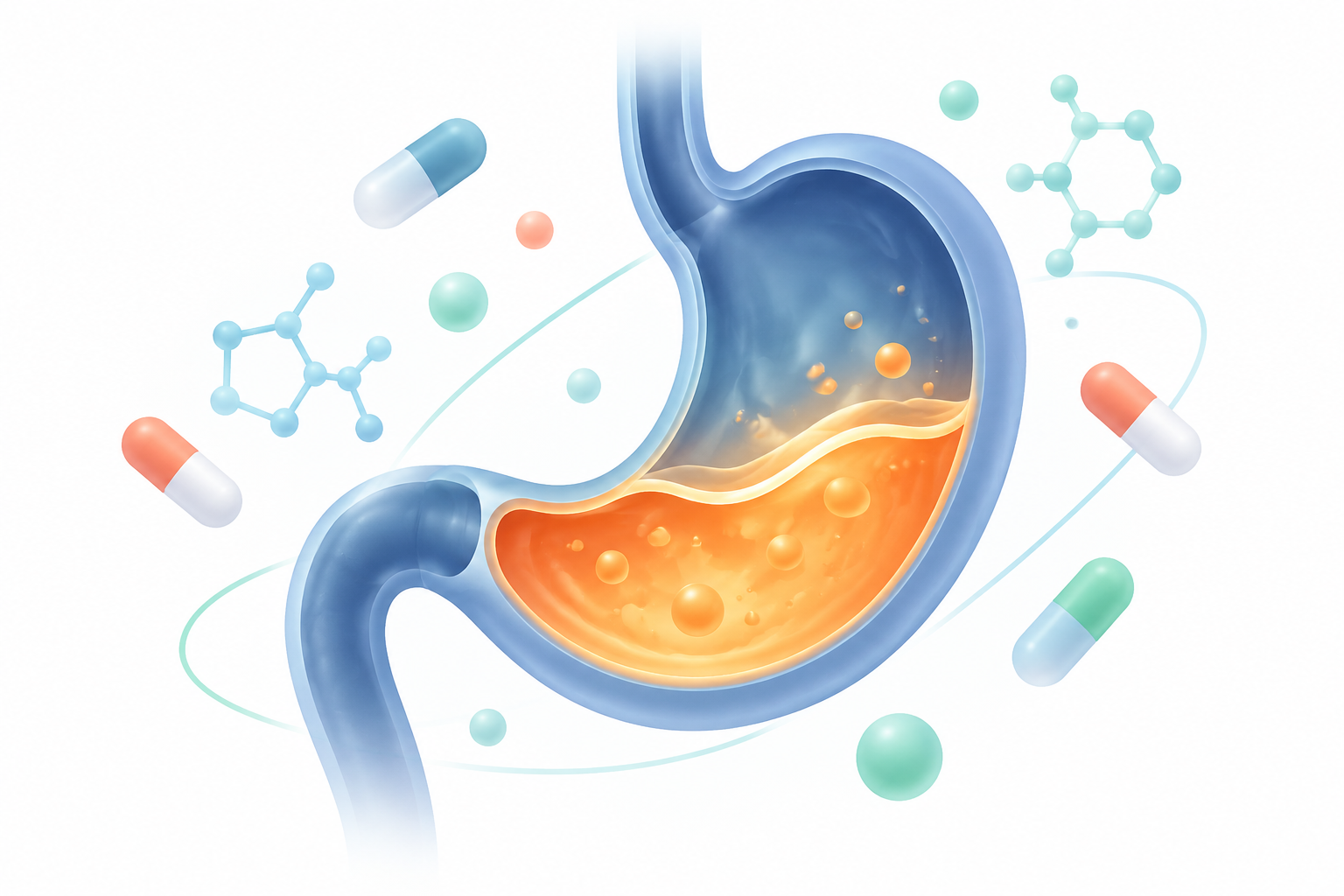
Stomach acidity occurs when parietal cells secrete excess hydrochloric acid. Pharmacological treatments include proton pump inhibitors, H2 receptor blockers, and antacids. This guide explains their mechanisms, dosages, and key points for GPAT aspirants.
What is it?
The human stomach produces gastric juice to digest food. The main component of this juice is hydrochloric acid (HCl). Specialized cells called parietal cells secrete this acid.
Sometimes, the stomach makes too much acid. This condition is called hyperacidity. It can lead to heartburn, gastroesophageal reflux disease (GERD), and peptic ulcers. Acidity drugs are pharmacological agents that reduce, neutralize, or block gastric acid secretion. They protect the gastric mucosa and relieve pain.
Salt and Composition
Acidity drugs fall into three primary therapeutic categories:
-
Proton Pump Inhibitors (PPIs):
- Omeprazole: Available as 10 mg, 20 mg, and 40 mg enteric-coated capsules (Brands: Prilosec, Omez).
- Pantoprazole: Available as 20 mg and 40 mg enteric-coated tablets and injections (Brands: Pantocid, Protonix).
- Rabeprazole Sodium: Available as 20 mg tablets (Brands: Rablet, Aciphex).
-
H2 Receptor Antagonists (H2RAs):
- Famotidine: Available as 20 mg and 40 mg tablets (Brands: Famocid, Pepcid).
- Ranitidine: (Historical standard) 150 mg and 300 mg tablets (Brands: Rantac, Zantac).
-
Antacids and Mucosal Protectants:
- Magnesium Hydroxide + Aluminium Hydroxide: Oral suspension containing Aluminium Hydroxide (approx. 300 mg/5 mL) and Magnesium Hydroxide (approx. 150 mg/5 mL) (Brands: Gelusil, Digene).
- Sucralfate: Basic aluminium salt of sucrose octasulfate, available as 1 g tablets and suspension (Brands: Sucrafil, Carafate).
Dose Chart
| Drug / Form | Adult Dose | Child Dose |
|---|---|---|
| Omeprazole (Enteric capsule) | 20 mg to 40 mg once daily before breakfast | 0.7 to 1 mg/kg/day once daily |
| Pantoprazole (Tablet / IV) | 40 mg once daily before breakfast | 0.5 to 1 mg/kg/day (children >5 years) |
| Famotidine (Oral tablet) | 20 mg twice daily or 40 mg at bedtime | 0.5 mg/kg/day divided into two doses |
| Aluminium + Magnesium Gel | 10 mL to 20 mL after meals and at bedtime | 0.5 mL/kg/dose as needed |
| Sucralfate (Oral tablet / liquid) | 1 g four times daily (1 hour before meals) | 40 to 80 mg/kg/day divided every 6 hours |
How it Works in the Human Body
Gastric acid secretion happens in the parietal cells of the stomach mucosa. Here is the step-by-step process of acid secretion and how drugs stop it:
- Signal Generation: Acetylcholine, gastrin, and histamine bind to receptors on the parietal cell membrane. Histamine acts on H2 receptors, triggering cyclic AMP (cAMP) production.
- Proton Pump Activation: Increased cAMP and intracellular calcium stimulate the enzyme H+/K+ ATPase. This enzyme is known as the proton pump.
- Acid Secretion: The proton pump moves hydrogen ions ($H^+$) out of the cell into the stomach lumen in exchange for potassium ions ($K^+$). Chloride ions join $H^+$ to form hydrochloric acid ($HCl$).
- Mechanism of PPIs: Drugs like omeprazole and pantoprazole are prodrugs. They enter the acidic canaliculi of parietal cells. The acid converts them into active sulfenamide derivatives. They form covalent disulfide bonds with H+/K+ ATPase, permanently inactivating the enzyme.
- Mechanism of H2 Blockers: Drugs like famotidine compete reversibly with histamine at H2 receptors. This lowers cAMP levels and reduces acid production by about 60% to 70%.
- Mechanism of Antacids: Antacids are weak bases. They chemically react with existing luminal HCl to form water and neutral salts. They do not stop acid production.
Side Effects
- Proton Pump Inhibitors: Headache, diarrhea, nausea, vitamin B12 deficiency (long-term use), hypomagnesemia, and increased risk of bone fractures.
- H2 Blockers: Drowsiness, fatigue, dry mouth, and confusion in elderly patients. (Cimetidine causes anti-androgenic effects such as gynecomastia).
- Aluminium-containing Antacids: Constipation, intestinal obstruction, and hypophosphatemia.
- Magnesium-containing Antacids: Osmotic diarrhea and hypermagnesemia in patients with kidney dysfunction.
- Sucralfate: Constipation and bezoar formation.
3 Important Exam Points for GPAT
- PPI Prodrug Activation: PPIs require an acidic environment to get activated into active sulfenamides. They must be formulated as enteric-coated dosage forms to prevent premature activation and degradation in stomach acid before absorption.
- Enzyme Inhibition by Cimetidine: Cimetidine is a potent inhibitor of Cytochrome P450 enzymes (specifically CYP1A2, CYP2C9, and CYP2D6). It increases the plasma levels of warfarin, theophylline, and phenytoin.
- Sucralfate Activation pH: Sucralfate requires an acidic pH (pH < 4) to polymerize into a viscous, sticky paste. Therefore, antacids or PPIs should never be given concurrently with sucralfate, as they lower acidity and prevent its action.
3 MCQs
Q1. Which enzyme is irreversibly inhibited by omeprazole in parietal cells?
- A) Carbonic anhydrase
- B) $Na^+/K^+$ ATPase
- C) $H^+/K^+$ ATPase
- D) Phosphodiesterase
Answer: C
Q2. What is the main reason aluminium hydroxide and magnesium hydroxide are combined in antacid suspensions?
- A) To reduce drug cost
- B) To balance constipation and diarrhea
- C) To improve drug solubility
- D) To increase kidney excretion
Answer: B
Q3. Which H2 receptor antagonist has the highest potential for drug interactions due to CYP450 enzyme inhibition?
- A) Famotidine
- B) Nizatidine
- C) Roxatidine
- D) Cimetidine
Answer: D
FAQs
Why are PPIs taken 30 to 60 minutes before meals?
PPIs target active proton pumps. Food stimulates the insertion and activation of proton pumps in parietal cells. Taking PPIs before breakfast ensures peak drug concentration matches maximum pump activation.
Why does aluminium hydroxide cause constipation?
Aluminium ions relax gastric and intestinal smooth muscle. They also bind to dietary phosphate to form insoluble aluminium phosphate. This slows peristalsis and causes constipation.
Can antacids cure peptic ulcers permanently?
No. Antacids provide fast, temporary symptom relief by neutralizing existing acid. They do not suppress acid secretion or heal ulcers effectively. Definitive ulcer treatment requires PPIs, H2 blockers, or H. pylori eradication therapy.
Take Free Test on this Topic
Check what you learned with quick GPAT-style questions.
Start Free Test →Unlock all 14 Classifications and 50+ Mock Tests with our Student Pro plan.
Unlock NowFor educational use only — not medical advice. Always check doses with current prescribing information.