DrugClass
Human Body & Drugs
Human Lungs and Respiratory Medicines: GPAT Study Guide
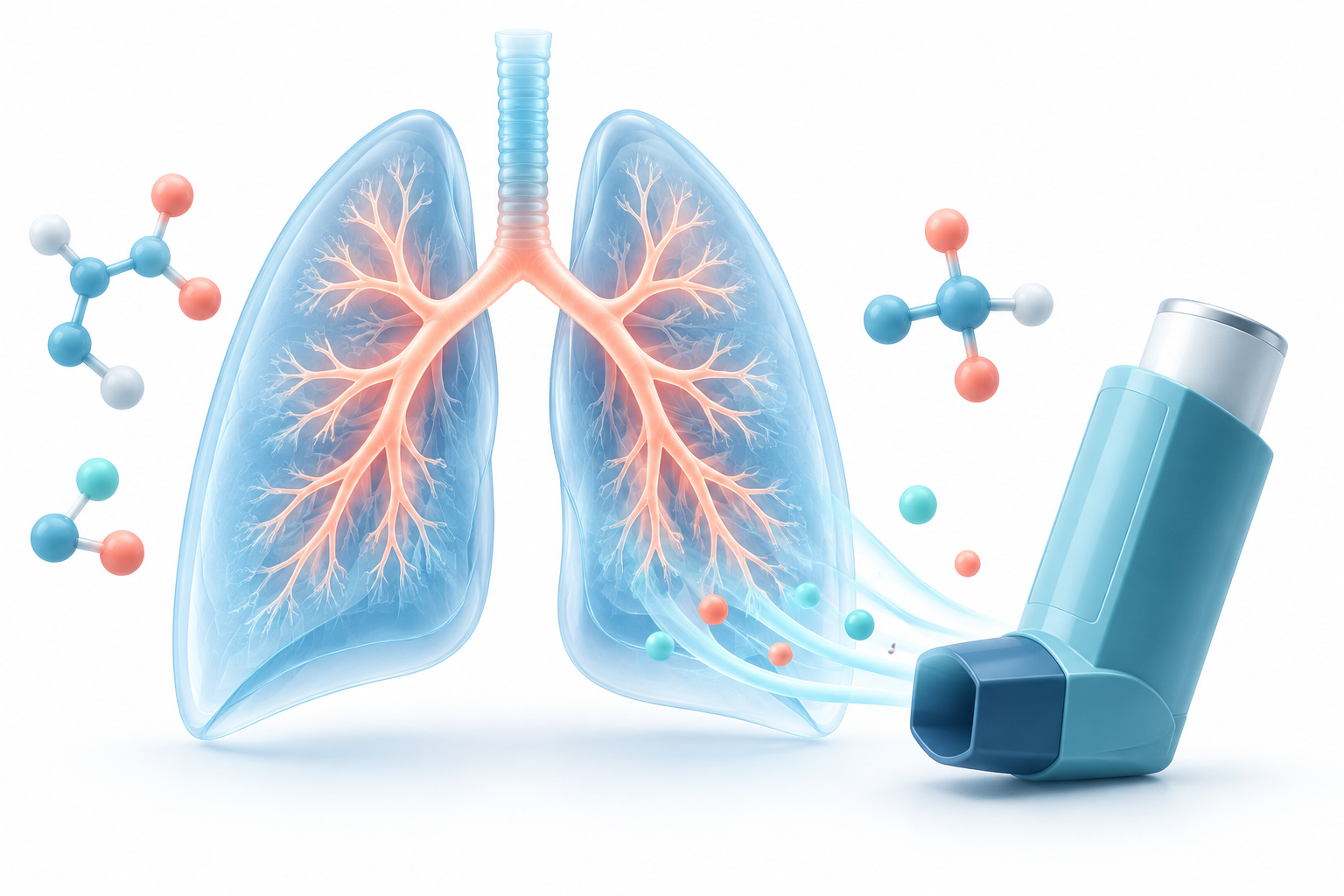
The human lungs provide gas exchange through the bronchial tree and alveoli. Respiratory medicines like bronchodilators and corticosteroids treat conditions like asthma and COPD by widening airways and lowering inflammation. This guide outlines respiratory anatomy, key drug salts, doses, and essential GPAT revision points.
What is it?
The human lungs are a pair of spongy, air-filled organs located in the thoracic cavity. The right lung has three lobes, and the left lung has two lobes. Air travels down the trachea, passes through the bronchi and bronchioles, and reaches the alveoli. The alveoli are tiny air sacs wrapped in capillaries. Gas exchange occurs here. Oxygen enters the blood, and carbon dioxide leaves it.
Respiratory medicines are drugs used to treat airway diseases. The two most common diseases are bronchial asthma and chronic obstructive pulmonary disease (COPD). Asthma involves reversible airway narrowing and chronic inflammation. COPD involves irreversible airflow limitation. Respiratory drugs either relax airway smooth muscles or reduce inflammation.
Salt and Composition
Respiratory medicines fall into several distinct pharmacological classes:
-
Short-Acting Beta-2 Agonists (SABA):
- Salbutamol Sulfate (Albuterol): Available as 100 mcg per metered-dose inhaler (MDI) puff, 2 mg/5 mL syrup, and 2 mg or 4 mg oral tablets (Brand: Asthalin, Ventolin).
-
Long-Acting Beta-2 Agonists (LABA):
- Salmeterol Xinafoate: Available as 25 mcg or 50 mcg inhalers and rotacaps (Brand: Serobid).
- Formoterol Fumarate: Available as 6 mcg and 12 mcg rotacaps (Brand: Foracort when combined with budesonide).
-
Inhaled Corticosteroids (ICS):
- Budesonide: Available as 100 mcg, 200 mcg, and 400 mcg per puff inhalers/rotacaps (Brand: Pulmicort).
- Fluticasone Propionate: Available as 50 mcg, 125 mcg, and 250 mcg per actuation (Brand: Flixonase).
-
Anticholinergics (Muscarinic Antagonists):
- Ipratropium Bromide: Short-acting; available as 20 mcg per puff MDI (Brand: Ipratop).
- Tiotropium Bromide: Long-acting; available as 18 mcg dry powder inhalation capsules (Brand: Tiova).
-
Methylxanthines:
- Theophylline (Anhydrous): Available as 100 mg, 300 mg sustained-release tablets (Brand: Deriphyllin contains theophylline and etofylline).
Dose Chart
| Drug / Form | Adult Dose | Child Dose |
|---|---|---|
| Salbutamol (MDI Inhaler) | 100 to 200 mcg (1–2 puffs) every 4–6 hours PRN | 100 mcg (1 puff) every 4–6 hours PRN |
| Salbutamol (Oral Tablet) | 2 mg to 4 mg 3 to 4 times daily | 1 mg to 2 mg 3 times daily (6–12 years) |
| Budesonide (MDI / Dry Powder) | 200 to 400 mcg twice daily | 100 to 200 mcg twice daily |
| Ipratropium Bromide (MDI) | 20 to 40 mcg (1–2 puffs) 3 to 4 times daily | 20 mcg 3 times daily (over 6 years) |
| Theophylline (Oral Sustained Release) | 200 to 300 mg twice daily | 10 mg/kg/day divided into 2 doses |
How it Works in the Human Body
Respiratory medicines act directly on receptors and enzymes within the tracheobronchial tree.
-
Step 1: Drug Delivery into the Airways
Inhalation routes deliver the drug straight to the target tissue. This ensures rapid action and lowers systemic exposure. Larger particles deposit in the upper trachea, while fine particles (1 to 5 microns) reach the small bronchioles and alveoli. -
Step 2: Beta-2 Receptor Activation (Salbutamol, Formoterol)
Beta-2 adrenergic receptors are located on the bronchial smooth muscle membrane. When a beta-2 agonist binds to these G-protein coupled receptors, it activates the enzyme adenylyl cyclase. This enzyme converts adenosine triphosphate (ATP) into cyclic adenosine monophosphate (cAMP). High cAMP levels activate Protein Kinase A (PKA). PKA lowers intracellular calcium and promotes smooth muscle relaxation. This opens the narrowed bronchi. -
Step 3: Muscarinic Receptor Blockade (Ipratropium, Tiotropium)
Parasympathetic nerves release acetylcholine, which binds to M3 muscarinic receptors on bronchial muscle and submucosal glands. This triggers bronchoconstriction and thick mucus secretion. Anticholinergic drugs block M3 receptors competitively. This leads to bronchodilation and decreases mucus discharge. -
Step 4: Anti-inflammatory Action (Budesonide, Fluticasone)
Corticosteroids diffuse across the cell membrane and bind to cytosolic glucocorticoid receptors. The drug-receptor complex enters the nucleus. It alters gene transcription by switching off inflammatory genes. It reduces the synthesis of cytokines, chemokines, and leukotrienes. This decreases mucosal swelling, microvascular leakage, and hyperresponsiveness in the lungs.
Side Effects
- Beta-2 Agonists (Salbutamol): Fine muscle tremors (most common, mediated by skeletal beta-2 receptors), tachycardia, palpitations, nervousness, and hypokalemia (potassium shifts into cells).
- Inhaled Corticosteroids (Budesonide): Oropharyngeal candidiasis (thrush), dysphonia (hoarse voice), and mild cough or throat irritation.
- Anticholinergics (Ipratropium): Dryness of mouth, bitter taste, urinary retention, and transient blurred vision if sprayed into the eyes.
- Methylxanthines (Theophylline): Gastric irritation, vomiting, insomnia, tachycardia, cardiac arrhythmias, and convulsions at toxic plasma levels.
3 Important Exam Points for GPAT
- Theophylline Therapeutic Window: The therapeutic plasma concentration of theophylline is 10 to 20 mcg/mL. Toxicity occurs above 20 mcg/mL. It acts via phosphodiesterase (PDE-3, PDE-4) inhibition and adenosine receptor antagonism.
- Dose-Limiting Toxicity of Salbutamol: Skeletal muscle tremor is the primary dose-limiting adverse effect of beta-2 agonists. It occurs due to direct action on beta-2 receptors present in skeletal muscle fibers.
- Mouth Rinsing after Inhaled Steroids: Inhaled corticosteroids do not produce acute bronchodilation. Patients must rinse their mouth with water after each use to prevent local immunosuppression leading to oropharyngeal Candida albicans infection.
3 MCQs
Q1. Which enzyme is activated by salbutamol to produce bronchodilation?
A) Phosphodiesterase
B) Adenylyl cyclase
C) Guanylyl cyclase
D) Phospholipase C
Answer: B
Q2. What is the narrow therapeutic plasma concentration range of theophylline?
A) 1 to 5 mcg/mL
B) 10 to 20 mcg/mL
C) 25 to 50 mcg/mL
D) 50 to 100 mcg/mL
Answer: B
Q3. Which adverse effect is most characteristic of inhaled corticosteroid therapy?
A) Hypoglycemia
B) Oropharyngeal candidiasis
C) Skeletal muscle tremors
D) Bradycardia
Answer: B
FAQs
Why are inhalers preferred over oral tablets for asthma?
Inhalers deliver the drug directly to the bronchial tree. This produces a faster onset of action and requires a much smaller dose. As a result, systemic side effects remain minimal.
Can salbutamol be used during an acute asthma attack?
Yes. Salbutamol is a short-acting beta-2 agonist (SABA). It acts within 5 minutes to relax bronchial smooth muscle, making it the primary rescue drug for acute bronchospasm.
Why should patients gargle after using a budesonide inhaler?
Gargling with water removes steroid particles deposited on the pharyngeal mucosa. This simple step prevents oral thrush (fungal infection) and hoarseness of voice.
Take Free Test on this Topic
Check what you learned with quick GPAT-style questions.
Start Free Test →Unlock all 14 Classifications and 50+ Mock Tests with our Student Pro plan.
Unlock NowFor educational use only — not medical advice. Always check doses with current prescribing information.