DrugClass
Calcium and Vitamin D Combination: Uses, Dose, and Mechanism
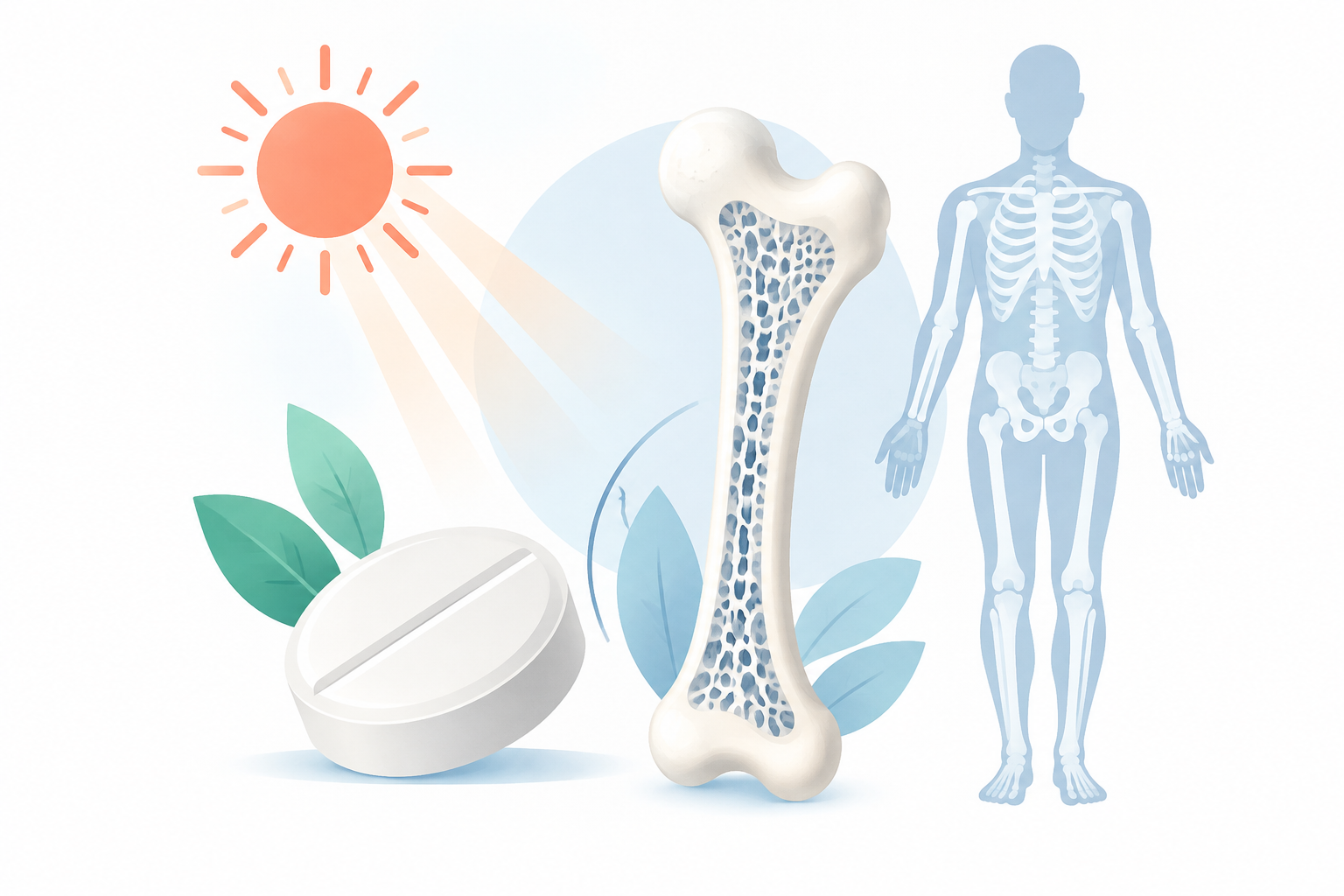
Calcium and Vitamin D is a standard combination used to prevent and treat weak bones. Vitamin D enhances calcium absorption in the intestines. This guide covers its pharmacology, clinical doses, and key GPAT exam concepts.
What is it?
Calcium and Vitamin D is a fixed-dose combination medicine. It is widely prescribed to prevent and treat bone-related disorders. Calcium is an essential mineral needed for strong bones and teeth. Vitamin D is a fat-soluble vitamin that helps the body absorb calcium efficiently.
Doctors use this combination to treat osteoporosis, osteomalacia, rickets, and hypocalcemia. It is also given as a nutritional supplement during pregnancy, lactation, and old age.
Salt and Composition
This medicine combines an inorganic or organic calcium salt with Vitamin D.
Chemical Forms
- Calcium Salts:
- Calcium Carbonate: Contains 40% elemental calcium. It needs stomach acid for absorption.
- Calcium Citrate: Contains 21% elemental calcium. It does not need stomach acid for absorption.
- Vitamin D: Usually present as Cholecalciferol (Vitamin D3) or Ergocalciferol (Vitamin D2).
Common Formulations
- Standard Tablet: Elemental Calcium 500 mg + Vitamin D3 250 IU or 400 IU.
- Forte Formulations: Elemental Calcium 500 mg + Vitamin D3 1000 IU.
- Syrup/Suspension: Elemental Calcium 250 mg + Vitamin D3 200 IU per 5 mL.
Popular Brand Examples
- Shelcal 500 (Torrent)
- Cipcal 500 (Cipla)
- Gemcal (Alkem)
Dose Chart
| Drug / Form | Adult Dose | Child Dose |
|---|---|---|
| Calcium Carbonate (500 mg) + Vit D3 (400 IU) Tablet | 1 tablet once or twice daily with meals | Not usually recommended for young children |
| Calcium Citrate (250 mg) + Vit D3 (200 IU) Tablet | 1 to 2 tablets daily, with or without food | 1 tablet daily (children > 6 years, if prescribed) |
| Calcium + Vitamin D3 Suspension (per 5 mL) | 10 mL to 15 mL once daily | 2.5 mL to 5 mL once daily |
Note: Doses vary based on clinical deficiency and serum calcium levels.
How it Works in the Human Body
Calcium and Vitamin D work as a team in the body. Here is how the process works step by step:
-
Activation of Vitamin D: Cholecalciferol is converted in the liver to 25-hydroxyvitamin D3 (calcifediol). The kidneys then convert it into 1,25-dihydroxyvitamin D3 (calcitriol), which is the active form.
-
Action on the Small Intestine: Calcitriol enters the cells of the duodenum and jejunum. It binds to Vitamin D Receptors (VDR). This stimulates the production of Calbindin-D9k, an intracellular calcium-binding transport protein.
-
Calcium Absorption: With the help of Calbindin, dietary calcium is actively transported across the intestinal wall into the blood. Without adequate Vitamin D, only 10% to 15% of dietary calcium is absorbed.
-
Bone Mineralization: Calcium from the bloodstream is deposited into the bone matrix. It forms hydroxyapatite crystals, which give bones strength and density.
-
Hormonal Regulation: Adequate calcium levels reduce the release of Parathyroid Hormone (PTH). High PTH levels cause bone breakdown, so this feedback protects bone density.
Side Effects
Most people tolerate this combination well. However, some common side effects may occur:
- Gastrointestinal Issues: Constipation, flatulence, bloating, and nausea (more common with calcium carbonate).
- Hypercalcemia: Excess calcium in the blood, causing muscle weakness, confusion, and vomiting.
- Kidney Stones: Long-term high doses can cause nephrolithiasis due to excess calcium in urine.
- Milk-Alkali Syndrome: Seen with massive doses of calcium carbonate, leading to alkalosis and renal failure.
3 Important Exam Points for GPAT
-
Elemental Calcium Percentages: GPAT frequently tests salt forms. Calcium carbonate has the highest elemental calcium content (~40%). Calcium citrate has ~21%, calcium lactate has ~13%, and calcium gluconate has ~9%.
-
Active Form and Calbindin: Vitamin D3 is a prohormone. Its active form is 1,25-dihydroxycholecalciferol (calcitriol). Calcitriol increases calcium absorption specifically by inducing Calbindin synthesis in the enterocytes.
-
Chelation Interaction: Calcium salts chelate with tetracyclines and fluoroquinolones in the gut. This forms insoluble complexes and severely reduces antibiotic absorption. Maintain an interval of at least 2 hours between these medications.
3 MCQs
Q1. Which calcium salt has the highest percentage of elemental calcium?
A) Calcium citrate
B) Calcium gluconate
C) Calcium carbonate
D) Calcium lactate
Answer: C
Q2. Calcitriol enhances intestinal calcium absorption primarily by inducing the synthesis of:
A) Alkaline phosphatase
B) Calbindin
C) Calcitonin
D) Osteocalcin
Answer: B
Q3. Co-administration of Calcium Carbonate reduces the bioavailability of Ciprofloxacin due to:
A) Induction of CYP3A4
B) Insoluble chelate formation
C) Competition for renal tubular secretion
D) Increased gastric motility
Answer: B
FAQs
Why should Vitamin D always be given with Calcium?
Vitamin D is essential for active intestinal calcium transport. Without adequate Vitamin D, the body cannot absorb calcium efficiently, leading to treatment failure.
Should Calcium Carbonate be taken with food?
Yes. Calcium carbonate requires gastric acid to dissolve and ionize. Taking it with meals stimulates stomach acid production, which improves absorption.
How does Calcium Citrate differ from Calcium Carbonate?
Calcium citrate has less elemental calcium (21% vs 40%), but it does not need stomach acid to dissolve. Therefore, it is preferred for elderly patients and those taking proton pump inhibitors (PPIs).
Take Free Test on this Topic
Check what you learned with quick GPAT-style questions.
Start Free Test →Unlock all 14 Classifications and 50+ Mock Tests with our Student Pro plan.
Unlock NowFor educational use only — not medical advice. Always check doses with current prescribing information.