DrugClass
Iron Tablets: When and How to Take, Doses & GPAT Notes
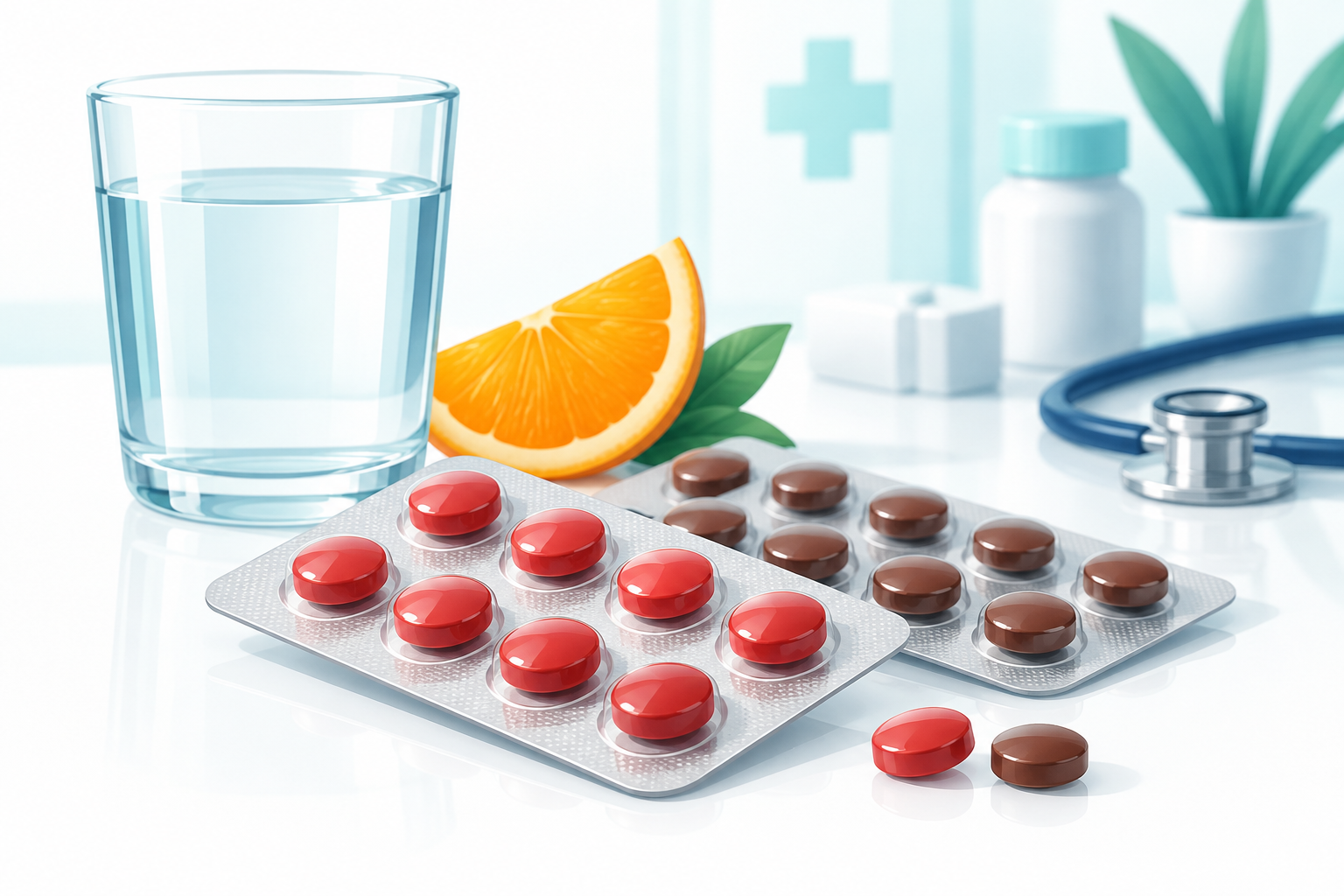
Iron tablets are essential hematinic medicines used to treat and prevent iron deficiency anemia. Taking them correctly with vitamin C optimizes absorption while minimizing gastrointestinal side effects. This guide covers drug salts, dosing schedules, mucosal absorption steps, and GPAT exam MCQs.
What is it?
Iron tablets are oral hematinic medications. They supply essential iron to the body to make hemoglobin. Hemoglobin is the protein in red blood cells that carries oxygen to tissues.
Doctors prescribe iron tablets mainly for iron deficiency anemia. This condition shows microcytic and hypochromic red blood cells under a microscope.
Timing matters when you take iron tablets. Iron is best absorbed on an empty stomach. Take it one hour before meals or two hours after meals with a full glass of water. If you get severe stomach upset, you can take it with light meals. Avoid taking iron with dairy, tea, or coffee because they block absorption.
Salt and Composition
Iron is administered in the ferrous state ($Fe^{2+}$). The ferrous state is absorbed much better than the ferric state ($Fe^{3+}$).
Common salts, elemental iron percentages, and strengths include:
- Ferrous Sulfate (Hydrated): Contains roughly 20% elemental iron. A standard 300 mg tablet provides about 60 mg of elemental iron.
- Ferrous Sulfate (Dried): Contains roughly 30% elemental iron. A 200 mg tablet provides 60 mg of elemental iron.
- Ferrous Fumarate: Contains roughly 33% elemental iron. A 200 mg tablet gives about 66 mg of elemental iron.
- Ferrous Gluconate: Contains roughly 12% elemental iron. A 300 mg tablet provides about 36 mg of elemental iron.
- Carbonyl Iron / Iron Hydroxide Polymaltose Complex (IPC): Non-ionic formulations that cause less gastric irritation.
Common Brand Examples:
- Fefol (Ferrous sulfate + Folic acid)
- Livogen (Ferrous fumarate + Folic acid)
- Autrin (Ferrous fumarate combinations)
- Orofer-XT (Ferrous ascorbate + Folic acid)
Dose Chart
| Drug / Form | Adult Dose | Child Dose |
|---|---|---|
| Ferrous Sulfate (Dried tablet, 200 mg) | 1 tablet twice or thrice daily (100–200 mg elemental iron daily) | 3 to 6 mg elemental iron/kg/day in 2–3 divided doses |
| Ferrous Fumarate (Tablet, 200 mg) | 1 tablet twice daily (approx. 130–200 mg elemental iron daily) | 3 to 6 mg elemental iron/kg/day in divided doses |
| Ferrous Gluconate (Tablet, 300 mg) | 1 to 2 tablets thrice daily | 3 to 6 mg elemental iron/kg/day in divided doses |
| Ferrous Ascorbate (Tablet, 100 mg elemental iron) | 1 tablet once or twice daily | 3 to 5 mg elemental iron/kg/day |
How it Works in the Human Body
Iron absorption and transport follow a precise physiological pathway in the gastrointestinal tract:
- Gastric Acid Action: In the stomach, hydrochloric acid (HCl) creates an acidic pH. This keeps iron in its soluble $Fe^{2+}$ state and prevents conversion to insoluble ferric hydroxide.
- Apical Influx in Duodenum: Iron is absorbed primarily in the duodenum and upper jejunum. The apical membrane of enterocytes takes up $Fe^{2+}$ through the transport protein DMT1 (Divalent Metal Transporter 1).
- Storage inside Enterocyte: Inside the cell, iron can bind to apoferritin to form ferritin for storage.
- Basolateral Efflux: Iron exits the enterocyte into the bloodstream via the transport protein Ferroportin.
- Oxidation by Hephaestin: The enzyme hephaestin oxidizes $Fe^{2+}$ back to $Fe^{3+}$ at the basolateral surface.
- Plasma Transport: Once converted to $Fe^{3+}$, iron binds to transferrin in the plasma.
- Bone Marrow Delivery: Transferrin carries iron to the erythroid precursors in the bone marrow. Proerythroblasts use this iron to synthesize new hemoglobin.
Side Effects
- Gastrointestinal Distress: Nausea, vomiting, epigastric burning, and abdominal cramps.
- Constipation or Diarrhea: Constipation is very common due to local astringent action.
- Dark or Black Stools: Unabsorbed iron turns into iron sulfide in the gut, coloring the feces black. This is harmless but often frightens patients.
- Metallic Taste: A persistent metallic taste in the mouth.
- Teeth Staining: Liquid iron formulations can stain tooth enamel. Patients should drink liquid iron through a straw.
3 Important Exam Points for GPAT
- Hepcidin Regulation: Hepcidin is a peptide hormone synthesized by the liver. It binds to and degrades ferroportin. High hepcidin levels reduce systemic iron absorption and release.
- Drug Interactions: Ascorbic acid (Vitamin C) reduces $Fe^{3+}$ to $Fe^{2+}$ and enhances iron absorption. Conversely, antacids, tetracyclines, fluoroquinolones, tannins (tea), and phytates form insoluble chelates and drastically decrease iron absorption.
- Antidote for Acute Toxicity: Deferoxamine (Desferrioxamine) is the drug of choice for acute iron poisoning. It chelates iron to form ferrioxamine, which is excreted in the urine.
3 MCQs
Q1. Which transporter is responsible for the entry of ferrous iron across the apical membrane of duodenal enterocytes?
A) Ferroportin
B) Divalent Metal Transporter 1 (DMT1)
C) Transferrin Receptor 1
D) Hephaestin
Answer: B
Q2. Which oxidation state of iron is best absorbed in the human gut?
A) Ferric state ($Fe^{3+}$)
B) Elemental state ($Fe^0$)
C) Ferrous state ($Fe^{2+}$)
D) Ferritin state
Answer: C
Q3. What is the specific parenteral chelating agent used to treat acute iron poisoning?
A) BAL (Dimercaprol)
B) Penicillamine
C) Deferoxamine
D) Calcium disodium EDTA
Answer: C
FAQs
Why do iron tablets turn stool black?
Unabsorbed iron reacts with hydrogen sulfide produced by gut bacteria to form black iron sulfide. This reaction is harmless and normal.
Can I take iron tablets with milk or tea?
No. Milk contains calcium, and tea contains tannins. Both bind to iron in the gut and stop it from being absorbed.
What can I take with iron tablets to increase absorption?
You should take iron tablets with water or a beverage rich in vitamin C, such as orange juice. Vitamin C keeps iron in the soluble ferrous state.
Take Free Test on this Topic
Check what you learned with quick GPAT-style questions.
Start Free Test →Unlock all 14 Classifications and 50+ Mock Tests with our Student Pro plan.
Unlock NowFor educational use only — not medical advice. Always check doses with current prescribing information.