DrugClass
Insulin Types and Doses Explained: GPAT Pharmacology Guide
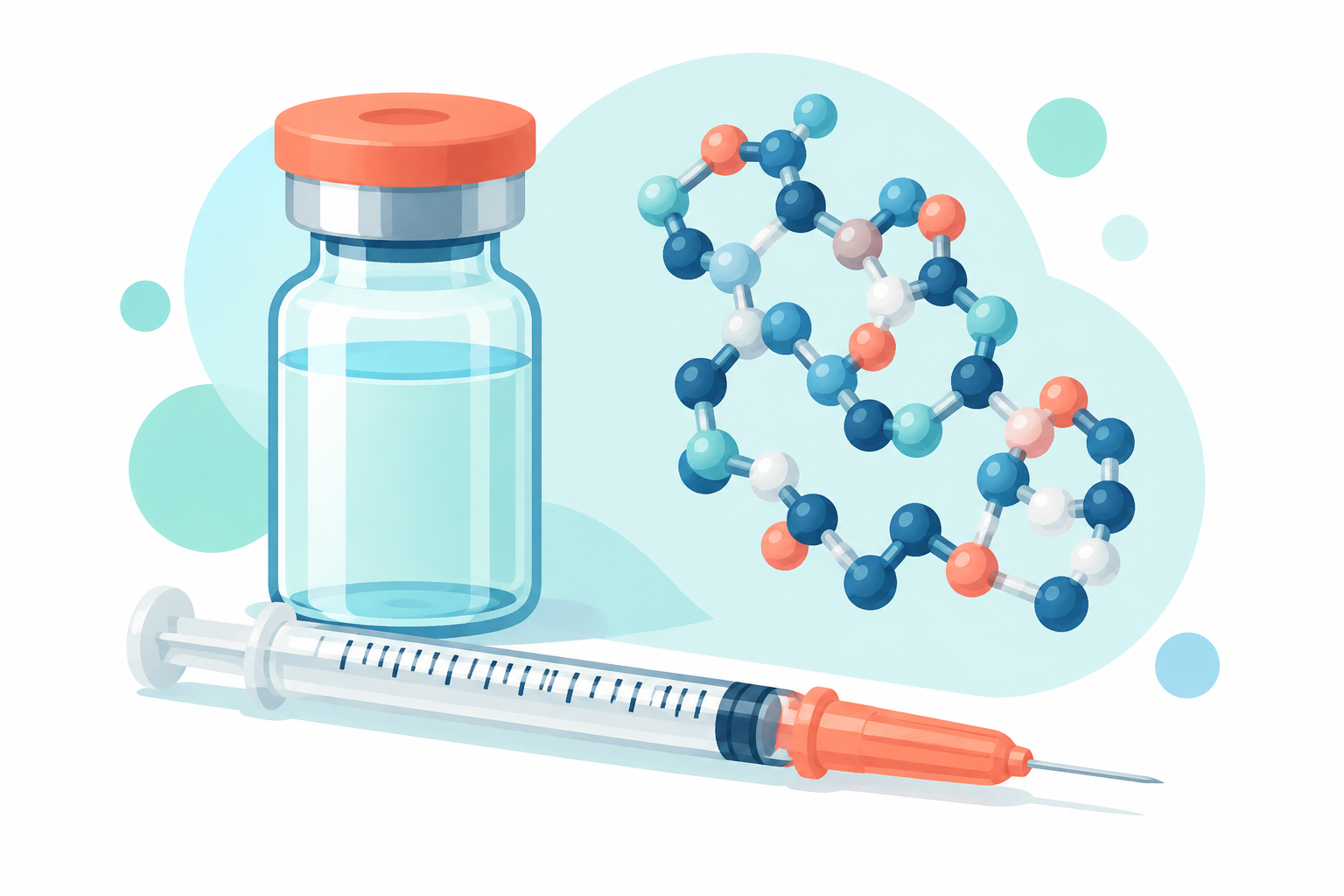
Insulin is a vital peptide hormone used to control blood sugar levels in diabetes mellitus. This guide covers insulin classifications, doses, mechanism of action, and adverse effects. It also highlights high-yield points and practice MCQs for GPAT aspirants.
What is it?
Insulin is an essential peptide hormone. Beta cells in the islets of Langerhans of the pancreas produce it. It maintains normal glucose levels in the blood.
Patients with Type 1 diabetes do not produce insulin. Patients with Type 2 diabetes do not respond well to insulin or do not make enough. Exogenous insulin therapy replaces or supplements natural insulin.
Clinicians classify insulin preparations based on their onset, peak, and duration of action. These classes include rapid-acting, short-acting, intermediate-acting, and long-acting insulins.
Salt and Composition
Natural human insulin contains 51 amino acids. It has two peptide chains connected by disulfide bonds. Chain A has 21 amino acids. Chain B has 30 amino acids.
Modern insulins are made using recombinant DNA technology. They are formulated as crystals, suspensions, or clear solutions.
Common forms and analogues include:
- Rapid-Acting Analogs: Insulin Lispro, Insulin Aspart, Insulin Glulisine.
- Short-Acting (Regular) Insulin: Soluble crystalline zinc insulin.
- Intermediate-Acting Insulin: Neutral Protamine Hagedorn (NPH) or Isophane Insulin. It contains protamine and zinc.
- Long-Acting Analogs: Insulin Glargine, Insulin Detemir, Insulin Degludec.
Common Strengths
- U-40: 40 International Units (IU) per mL (red cap syringe).
- U-100: 100 IU per mL (orange cap syringe; standard global strength).
- U-300: 300 IU per mL (concentrated glargine pens).
Popular Brand Examples
- Huminsulin R (Regular)
- Novorapid (Aspart)
- Humalog (Lispro)
- Lantus (Glargine)
- Levemir (Detemir)
Dose Chart
Doses are individualized based on blood glucose monitoring. The general starting maintenance requirement for total daily insulin in diabetes is 0.5 to 1.0 IU/kg/day.
| Drug / Form | Adult Dose | Child Dose |
|---|---|---|
| Regular Insulin (Short-acting) | 0.5 to 1.0 IU/kg/day (divided before meals) | 0.5 to 0.75 IU/kg/day (divided before meals) |
| Insulin Lispro / Aspart (Rapid-acting) | 0.2 to 0.4 IU/kg/day (given 5-15 min before meals) | 0.2 to 0.4 IU/kg/day (individualized before meals) |
| NPH / Isophane (Intermediate-acting) | 0.3 to 0.5 IU/kg/day (once or twice daily) | 0.2 to 0.4 IU/kg/day (once or twice daily) |
| Insulin Glargine (Long-acting) | 10 IU once daily or 0.2 IU/kg once daily | 0.2 IU/kg once daily (children ≥2 years) |
| Insulin Detemir (Long-acting) | 10 IU once daily or 0.1 to 0.2 IU/kg/day | 0.1 to 0.2 IU/kg/day (children ≥2 years) |
| Diabetic Ketoacidosis (DKA) Regimen | Regular IV infusion: 0.1 IU/kg bolus, then 0.1 IU/kg/hour | Regular IV infusion: 0.05 to 0.1 IU/kg/hour (no bolus) |
How it Works in the Human Body
Insulin controls carbohydrate, lipid, and protein metabolism. It works primarily on three target tissues: the liver, skeletal muscle, and adipose tissue.
- Receptor Binding: Insulin binds to the alpha subunit of the insulin receptor on the cell membrane. This receptor is an enzyme-linked tyrosine kinase receptor.
- Autophosphorylation: Binding triggers autophosphorylation of the intracellular beta subunit.
- Signaling Cascade: The receptor activates Insulin Receptor Substrates (IRS-1 and IRS-2). This triggers the PI3K-Akt signaling pathway.
- GLUT4 Translocation: In muscle and fat cells, Akt activation moves glucose transporter-4 (GLUT4) vesicles to the plasma membrane.
- Glucose Uptake: Glucose enters the cell via facilitated diffusion. Blood glucose levels drop rapidly.
- Metabolic Effects: Insulin stimulates glycogen synthesis (glycogenesis) and protein synthesis. It suppresses glycogen breakdown (glycogenolysis), gluconeogenesis, and lipolysis.
Side Effects
- Hypoglycemia: This is the most common and dangerous adverse effect. Symptoms include sweating, tremors, hunger, tachycardia, confusion, and coma.
- Lipodystrophy: At the injection site, patients may develop lipoatrophy (loss of fat) or lipohypertrophy (fat accumulation). Rotating injection sites prevents this.
- Weight Gain: Insulin promotes fat and glycogen storage.
- Hypokalemia: Insulin shifts potassium ions from extracellular fluid into cells.
- Local Hypersensitivity: Erythema, pruritus, or swelling at the injection site.
3 Important Exam Points for GPAT
- Structural Features: Insulin has a molecular weight of approximately 5808 Da. It has 51 amino acids across two chains linked by two inter-chain disulfide bridges. A third intra-chain disulfide bridge exists within Chain A (between positions 6 and 11).
- Route for Emergencies: Regular (soluble) insulin is the only insulin preparation approved for intravenous (IV) administration. It is the drug of choice for Diabetic Ketoacidosis (DKA).
- Chemistry of Glargine: Insulin Glargine has two extra arginine residues at the C-terminus of Chain B. Asparagine at position 21 of Chain A is replaced by glycine. It is soluble at an acidic pH (pH 4.0). When injected subcutaneously at neutral body pH, it forms microprecipitates. This allows slow, peakless release over 24 hours.
3 MCQs
Q1. Which glucose transporter is insulin-dependent and translocated to the cell membrane by insulin action? A) GLUT1 B) GLUT2 C) GLUT3 D) GLUT4
Answer: D
Q2. Which type of insulin can be safely administered through the intravenous (IV) route in Diabetic Ketoacidosis? A) NPH Insulin B) Insulin Glargine C) Regular Insulin D) Insulin Detemir
Answer: C
Q3. How many total disulfide bridges are present in a molecule of human insulin? A) 1 B) 2 C) 3 D) 4
Answer: C
FAQs
Why should insulin injection sites be rotated regularly?
Repeated injections at the same site cause lipohypertrophy. This creates rubbery fat lumps. These lumps delay and reduce drug absorption, leading to unpredictable blood sugar levels.
What is the difference between NPH and Regular insulin?
Regular insulin is a clear, short-acting soluble zinc preparation. NPH insulin is a cloudy, intermediate-acting suspension bound to protamine to prolong absorption.
How does insulin cause hypokalemia?
Insulin stimulates the sodium-potassium ATPase (Na+/K+ pump) in skeletal muscle. This pushes potassium from the blood into cells, lowering serum potassium levels.
Take Free Test on this Topic
Check what you learned with quick GPAT-style questions.
Start Free Test →Unlock all 14 Classifications and 50+ Mock Tests with our Student Pro plan.
Unlock NowFor educational use only — not medical advice. Always check doses with current prescribing information.