DrugClass
Levothyroxine Drug Dose: Hypothyroidism and GPAT Notes
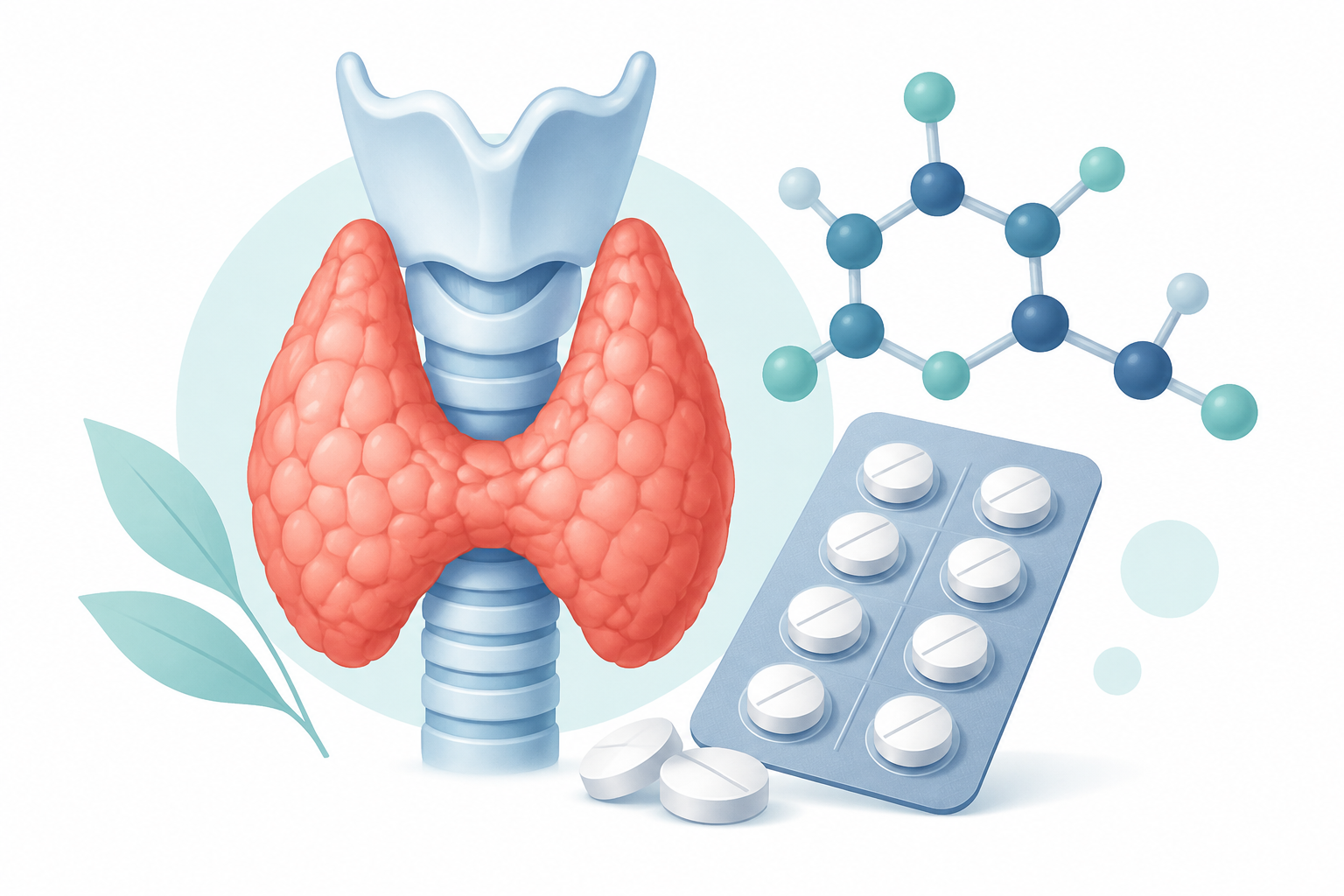
Levothyroxine replaces T4 in hypothyroidism. Its dose depends on age, body size, heart health, and thyroid tests. Key GPAT facts include its long half-life, absorption interactions, and microgram dosing.
What is it?
Levothyroxine is synthetic thyroxine, or T4. It replaces a thyroid hormone that the body normally makes. It is the main medicine used for hypothyroidism, a condition in which thyroid hormone levels are too low.
Low thyroid hormone can cause tiredness, weight gain, constipation, dry skin, and poor tolerance to cold. In children, it can affect growth and brain development.
Common reasons for treatment include:
- Hashimoto thyroiditis, an autoimmune thyroid disease.
- Removal of the thyroid gland.
- Thyroid damage after radioactive iodine treatment.
- Congenital hypothyroidism, which is present at birth.
Levothyroxine is a replacement hormone, not a weight-loss medicine. Using it for weight loss in someone with normal thyroid function can cause serious harm.
These doses are study references. The prescribed dose depends on age, body size, heart health, laboratory results, and the cause of hypothyroidism.
Dose Chart
All doses below refer to oral levothyroxine taken once daily. Micrograms are written as mcg. These are not milligrams.
| Drug / Form | Adult Dose | Child Dose |
|---|---|---|
| Oral levothyroxine: full replacement | About 1.6 mcg/kg/day in otherwise healthy younger adults with little or no thyroid function | Use the age-based doses below |
| Oral levothyroxine: cautious starting dose | Often 12.5–25 mcg/day in patients with coronary artery disease; increase slowly | Not a routine child starting schedule |
| Oral levothyroxine: birth to 3 months | Not applicable | 10–15 mcg/kg/day |
| Oral levothyroxine: 3–6 months | Not applicable | 8–10 mcg/kg/day |
| Oral levothyroxine: 6–12 months | Not applicable | 6–8 mcg/kg/day |
| Oral levothyroxine: 1–5 years | Not applicable | 5–6 mcg/kg/day |
| Oral levothyroxine: 6–12 years | Not applicable | 4–5 mcg/kg/day |
| Oral levothyroxine: over 12 years, growth and puberty incomplete | Not applicable | 2–3 mcg/kg/day |
| Oral levothyroxine: growth and puberty complete | Not applicable | About 1.6 mcg/kg/day |
The child doses are standard replacement ranges. They are adjusted using thyroid tests, growth, and clinical response. Congenital hypothyroidism needs prompt treatment and close specialist follow-up.
Example: At 1.6 mcg/kg/day, the calculated replacement dose for a suitable 60 kg adult is 96 mcg/day. The prescriber selects an available strength and adjusts it after testing. This calculation is not suitable for every patient, especially those with obesity or heart disease.
Important administration rules:
- Take it with water on an empty stomach, usually 30–60 minutes before breakfast.
- A consistent bedtime schedule, at least three hours after the evening meal, is an alternative.
- Keep iron and calcium supplements at least four hours apart from levothyroxine.
- Do not change the dose based on symptoms alone.
In adults, thyroid tests are commonly repeated about 6–8 weeks after starting treatment or changing the dose. Dose changes are often 12.5–25 mcg at a time. Infants need much earlier and more frequent checks.
How it Works
The thyroid normally releases mainly T4 and a smaller amount of T3. T3 means triiodothyronine. It is the more active hormone.
Levothyroxine supplies T4. Enzymes called deiodinases convert some T4 into T3 in body tissues.
T3 binds to thyroid hormone receptors inside cells. These receptors regulate gene expression. The resulting proteins help control metabolism, heat production, growth, and development.
In primary hypothyroidism, the thyroid gland itself is underactive. The pituitary usually responds by releasing more thyroid-stimulating hormone, or TSH. Adequate replacement generally brings TSH back towards its target range.
Levothyroxine has a long half-life, about seven days in a person with normal thyroid status. This supports once-daily dosing. Its full effect is not immediate, so dose changes need time to assess.
Side Effects
At the correct replacement dose, levothyroxine is usually well tolerated. Most side effects suggest that the dose is too high.
Possible effects include:
- Palpitations or a fast heartbeat.
- Tremor, nervousness, and difficulty sleeping.
- Sweating and heat intolerance.
- Diarrhoea and unwanted weight loss.
- Chest pain in susceptible patients.
Long-term overtreatment can increase the risk of atrial fibrillation and bone loss. These risks are especially important in older adults and postmenopausal women.
New chest pain, fainting, or a sustained rapid heartbeat needs urgent medical assessment.
Untreated adrenal insufficiency must be corrected before starting levothyroxine. Thyroid hormone can otherwise precipitate an adrenal crisis.
3 Important Exam Points for GPAT
- Levothyroxine is T4, not T3. Liothyronine is synthetic T3. Levothyroxine is generally preferred for routine replacement because it gives more stable hormone levels.
- Absorption interactions matter. Iron, calcium, and some antacids can reduce absorption. Remember the four-hour separation from iron and calcium supplements.
- Monitoring depends on the diagnosis. TSH usually guides treatment in primary hypothyroidism. In central hypothyroidism, pituitary or hypothalamic disease makes TSH unreliable; free T4 guides dose adjustment.
3 MCQs
1. Levothyroxine is a synthetic form of which hormone?
A. T3
B. T4
C. TSH
D. Calcitonin
Answer: B
2. Which supplement can reduce levothyroxine absorption when taken together?
A. Vitamin C
B. Folic acid
C. Calcium carbonate
D. Vitamin B12
Answer: C
3. Which patient generally needs a low starting dose and slow dose increases?
A. An adult with coronary artery disease
B. Every healthy young adult
C. Every newborn with congenital hypothyroidism
D. Every adolescent who has completed puberty
Answer: A
FAQs
Is levothyroxine taken for life?
Often, yes. Permanent thyroid damage or complete thyroid removal usually requires lifelong replacement. Some temporary causes of hypothyroidism do not.
Can levothyroxine be taken during pregnancy?
Yes. It is the standard treatment for hypothyroidism during pregnancy. Dose needs often rise, so early review and frequent thyroid testing are important.
Why should iron and levothyroxine be separated?
Iron can bind levothyroxine in the gut and reduce absorption. Keep the doses at least four hours apart.
Why are doses written in micrograms?
Levothyroxine works in very small amounts. 1 mg equals 1,000 mcg. Confusing these units can cause a dangerous dosing error.
Take Free Test on this Topic
Check what you learned with quick GPAT-style questions.
Start Free Test →Unlock all 14 Classifications and 50+ Mock Tests with our Student Pro plan.
Unlock NowFor educational use only — not medical advice. Always check doses with current prescribing information.