DrugClass
Human Body & Drugs
How Painkillers Work in Human Body: Mechanism & GPAT Notes
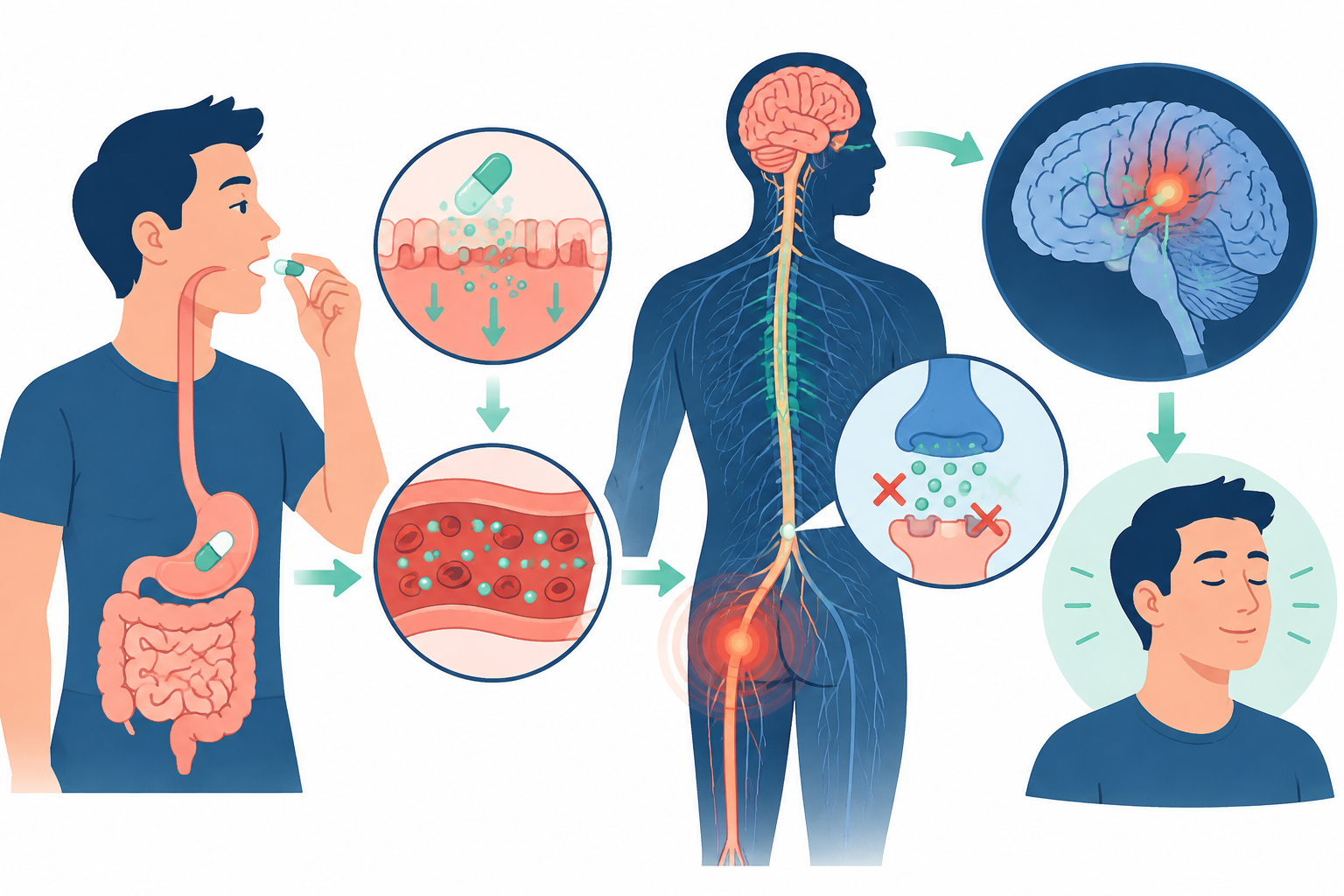
Painkillers relieve pain by blocking pain chemicals or altering pain signals in the brain. They are divided mainly into NSAIDs and opioids. This guide covers their mechanism of action, standard doses, side effects, and essential GPAT exam facts.
What is it?
Painkillers are drugs used to relieve pain. In pharmacology, we call them analgesics. Pain is a warning signal from the body. It tells the brain that tissue damage has occurred.
Analgesics fall into two main classes:
- Non-Opioids (NSAIDs and Paracetamol): Used for mild to moderate pain, inflammation, and fever.
- Opioids: Used for moderate to severe pain, such as post-surgical pain or cancer pain.
Salt and Composition
Different painkillers contain different chemical salts and active forms:
- Paracetamol (Acetaminophen): Available as pure salt tablets or syrups. Common strengths: 500 mg, 650 mg. Brand examples: Crocin, Dolo 650, Calpol.
- Ibuprofen: A propionic acid derivative. Common strengths: 200 mg, 400 mg. Brand examples: Brufen, Combiflam (with Paracetamol).
- Diclofenac Sodium / Potassium: A phenylacetic acid derivative. Common strengths: 50 mg, 75 mg SR, 100 mg SR. Brand examples: Voveran, Voltaren.
- Tramadol Hydrochloride: A centrally acting synthetic opioid. Common strengths: 50 mg, 100 mg. Brand examples: Tramazac, Ultracet (with Paracetamol).
- Morphine Sulphate: A natural opioid alkaloid. Common strengths: 10 mg, 15 mg, 30 mg. Brand examples: Morphitroy, MST Continus.
Dose Chart
| Drug / Form | Adult Dose | Child Dose |
|---|---|---|
| Paracetamol Tablet / Syrup | 500 mg to 1000 mg every 4 to 6 hours (Max: 4000 mg/day) | 10 to 15 mg/kg per dose every 4 to 6 hours |
| Ibuprofen Tablet / Syrup | 200 mg to 400 mg every 6 to 8 hours (Max: 2400 mg/day) | 5 to 10 mg/kg per dose every 6 to 8 hours |
| Diclofenac Sodium Tablet | 50 mg two to three times daily (Max: 150 mg/day) | 1 to 3 mg/kg daily in divided doses (Not for infants) |
| Tramadol HCl Capsule / Tablet | 50 mg to 100 mg every 4 to 6 hours (Max: 400 mg/day) | Not recommended for children under 12 years |
| Morphine Sulphate Tablet | 10 mg to 30 mg every 4 hours as needed | 0.2 to 0.5 mg/kg every 4 to 6 hours (oral) |
How it Works in the Human Body
Pain processing involves the peripheral tissues, the spinal cord, and the brain. Painkillers work at different points in this pathway.
Step 1: Tissue Injury and Chemical Release
When body cells are damaged, an enzyme named Phospholipase A2 breaks down cell membrane phospholipids. This produces Arachidonic Acid.
Step 2: Prostaglandin Synthesis
Arachidonic acid converts into prostaglandins through the Cyclooxygenase (COX) enzyme pathway:
- COX-1: A constitutive enzyme. It protects the stomach lining and maintains kidney blood flow.
- COX-2: An inducible enzyme. It is produced during inflammation and causes pain, swelling, and fever. Prostaglandins sensitize local pain receptors (nociceptors). They send electrical pain signals through nerve fibers to the spinal cord.
Step 3: Action of NSAIDs (Peripheral Action)
NSAIDs like Ibuprofen and Diclofenac inhibit COX-1 and COX-2 enzymes. Paracetamol mainly inhibits COX in the central nervous system (CNS). With less prostaglandin produced:
- Nociceptors stop firing rapid pain signals.
- Local swelling and redness decrease.
- The hypothalamic thermostat resets, reducing fever.
Step 4: Action of Opioids (Central Action)
Opioids like Morphine and Tramadol do not stop inflammation in tissues. Instead, they act directly in the central nervous system (brain and spinal cord):
- They bind to specific opioid receptors, primarily the mu (μ) receptor.
- This binding closes voltage-gated calcium channels on presynaptic nerves. It stops the release of pain transmitters like Substance P and glutamate.
- It also opens potassium channels, hyperpolarizing postsynaptic nerves.
- As a result, pain signals cannot travel up the spinal cord to the sensory cortex.
Side Effects
NSAIDs and Paracetamol
- Gastric Ulcers and Bleeding: Inhibition of protective COX-1 in the stomach reduces mucosal blood flow and mucus secretion.
- Renal Toxicity: Decreased prostaglandin production reduces renal blood flow, causing fluid retention.
- Hepatotoxicity: High doses of Paracetamol deplete glutathione, causing toxic liver injury.
Opioids
- Respiratory Depression: Opioids depress the respiratory center in the brainstem.
- Constipation: Opioids decrease bowel motility by acting on gut opioid receptors.
- Tolerance and Physical Dependence: Prolonged use leads to receptor desensitization and addiction risk.
- Sedation and Drowsiness: Due to general CNS depression.
3 Important Exam Points for GPAT
- Aspirin Acetylates Serine: Aspirin is the only NSAID that binds irreversibly to the COX enzyme. It covalently transfers an acetyl group to a specific serine residue (Ser-530 in COX-1, Ser-516 in COX-2).
- Toxic Metabolite of Paracetamol: Paracetamol toxicity is caused by the reactive metabolite NAPQI (N-acetyl-p-benzoquinone imine). The specific antidote is N-acetylcysteine (NAC), which replenishes liver glutathione stores.
- Reversal Agent for Opioids: Naloxone is a pure opioid antagonist. It has high affinity for mu receptors and is the drug of choice for treating acute opioid overdose and respiratory arrest.
3 MCQs
Q1. Which enzyme is irreversibly inhibited by Aspirin?
A) Phospholipase A2
B) Lipoxygenase
C) Cyclooxygenase
D) Xanthine oxidase
Answer: C
Q2. Paracetamol poisoning causes hepatic necrosis due to the accumulation of which metabolite?
A) N-acetyl-p-benzoquinone imine (NAPQI)
B) Glucuronide conjugate
C) Sulfate conjugate
D) Homogentisic acid
Answer: A
Q3. Which of the following is a pure opioid receptor antagonist used in morphine overdose?
A) Pethidine
B) Naloxone
C) Codeine
D) Fentanyl
Answer: B
FAQs
Why does paracetamol reduce fever but not inflammation?
Paracetamol acts primarily in the brain to inhibit central COX enzymes and reset the temperature center. It does not inhibit peripheral COX enzymes at the site of inflammation because high concentrations of cellular peroxides in inflamed tissues neutralize its action.
Why do NSAIDs cause stomach ulcers?
NSAIDs block COX-1 enzymes. COX-1 normally produces prostaglandins (PGE2 and PGI2) that promote gastric mucus secretion and reduce stomach acid. Blocking this enzyme leaves the stomach wall exposed to acid damage.
How does Naloxone reverse morphine overdose?
Naloxone is a competitive opioid receptor antagonist. It has a higher binding affinity for the mu receptor than morphine. It displaces morphine from the receptor without activating it, quickly reversing respiratory depression.
Take Free Test on this Topic
Check what you learned with quick GPAT-style questions.
Start Free Test →Unlock all 14 Classifications and 50+ Mock Tests with our Student Pro plan.
Unlock NowFor educational use only — not medical advice. Always check doses with current prescribing information.