DrugClass
Human Body & Drugs
Nervous System and Pain Drugs: Pharmacology GPAT Notes
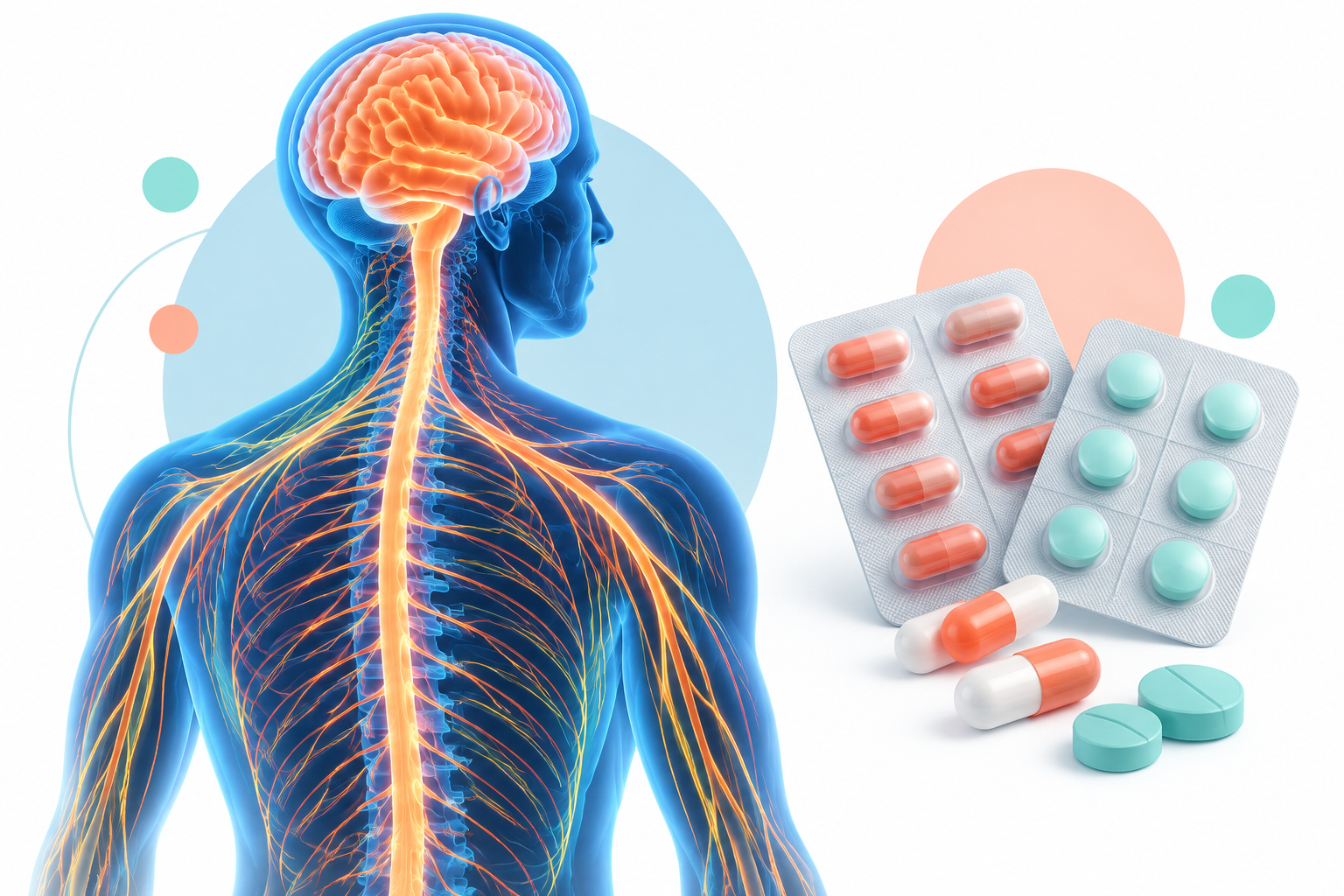
Nervous system and pain drugs manage different types of pain by acting on central and peripheral pathways. This study guide covers opioid and non-opioid analgesics, standard textbook doses, mechanisms, and high-yield GPAT exam points.
What is it?
Pain is an unpleasant sensory and emotional experience. It warns the body about tissue damage. The nervous system carries pain signals from the site of injury to the brain.
Pain drugs are called analgesics. They relieve pain without causing a loss of consciousness. Analgesics fall into three main groups:
- Non-Opioid Analgesics: Drugs like paracetamol and NSAIDs for mild to moderate pain.
- Opioid Analgesics: Drugs like morphine and tramadol for moderate to severe visceral pain.
- Adjuvant or Neuropathic Pain Drugs: Drugs like pregabalin and gabapentin for nerve injury pain.
Salt and Composition
Pain drugs are available in single salts or fixed-dose combinations:
- Paracetamol (Acetaminophen): Available as 500 mg and 650 mg tablets, oral suspension (120 mg/5 mL), and IV infusion (10 mg/mL). Common brands: Crocin, Calpol, Dolo.
- Morphine Sulphate: Available as 10 mg and 15 mg immediate-release tablets, 30 mg sustained-release tablets, and 10 mg/mL ampoules for injection. Common brands: Morcontin, MST Continus.
- Tramadol Hydrochloride: Available as 50 mg capsules, 100 mg sustained-release tablets, and 50 mg/mL injections. Common brands: Tramazac, Supridol.
- Pregabalin: Available as 75 mg and 150 mg capsules. Common brands: Lyrica, Pregalin.
Dose Chart
| Drug / Form | Adult Dose | Child Dose |
|---|---|---|
| Paracetamol (Oral Tablet) | 500 mg to 1000 mg every 4 to 6 hours (Max: 4000 mg/day) | 10 to 15 mg/kg every 4 to 6 hours (Max: 60 mg/kg/day) |
| Ibuprofen (Oral Tablet) | 200 mg to 400 mg every 6 to 8 hours (Max: 1200 mg/day OTC, 2400 mg/day clinical) | 5 to 10 mg/kg every 6 to 8 hours (Max: 40 mg/kg/day) |
| Tramadol (Oral Capsule) | 50 mg to 100 mg every 4 to 6 hours (Max: 400 mg/day) | Not recommended for children under 12 years |
| Morphine Sulphate (Oral Tablet) | 10 mg to 30 mg every 4 hours as needed | 0.2 to 0.5 mg/kg every 4 to 6 hours (oral) |
| Pregabalin (Oral Capsule) | 75 mg twice daily; can increase to 150 mg twice daily (Max: 600 mg/day) | Safety not established in children |
How it Works in the Human Body
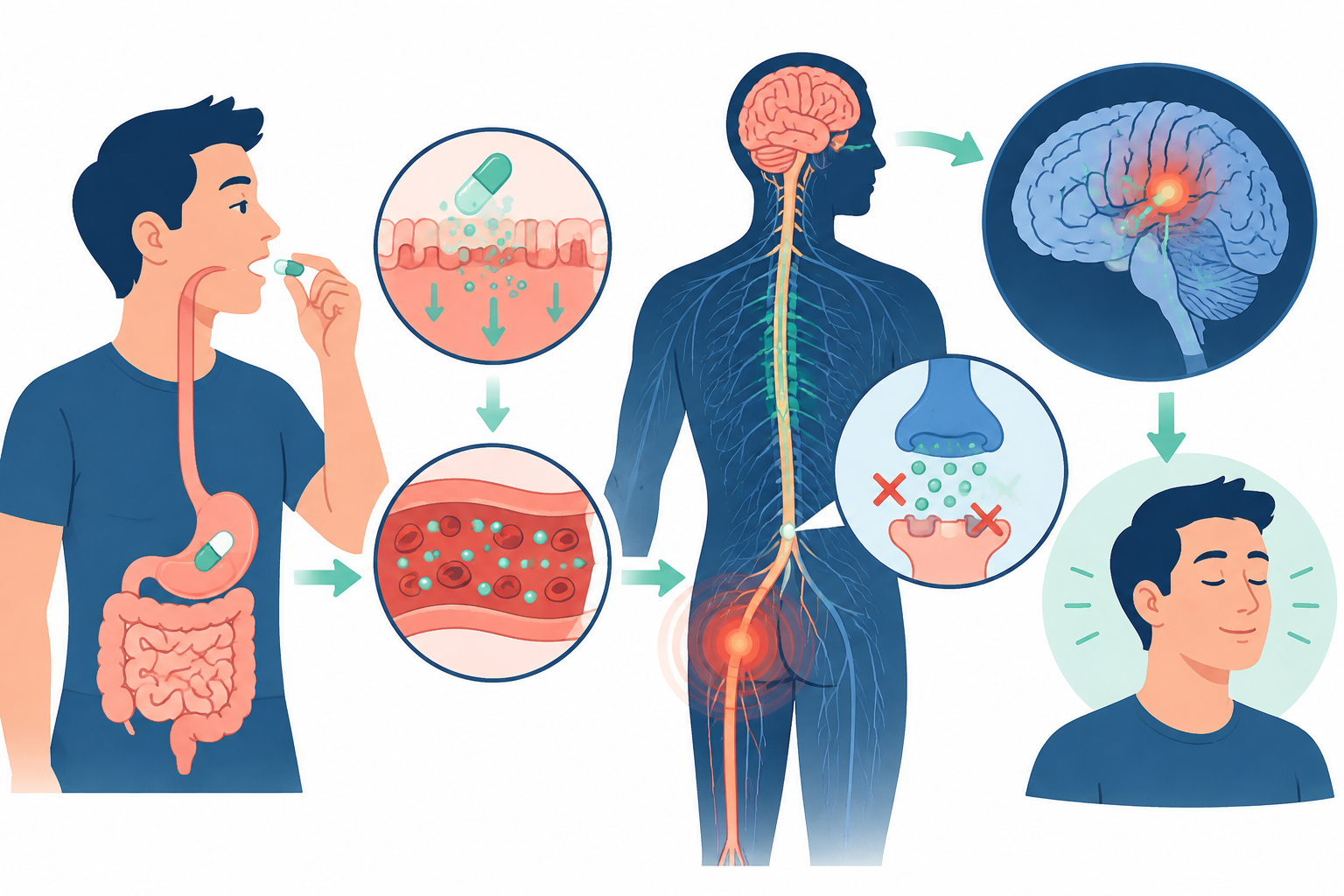
Pain pathways travel from the body tissues to the brain in distinct steps:
- Transduction: Tissue damage releases chemical mediators like prostaglandins, bradykinin, and histamine. These trigger pain receptors called nociceptors.
- Transmission: The pain impulse travels along A-delta and C nerve fibers to the dorsal horn of the spinal cord. It releases neurotransmitters such as Substance P and glutamate. The signal then ascends via the spinothalamic tract to the thalamus and the sensory cortex.
- Perception: The brain recognizes the signal as pain.
- Modulation: The brain sends inhibitory signals back down the spinal cord to reduce pain signals.
Mechanism of Action by Class:
- Paracetamol and NSAIDs: NSAIDs inhibit cyclooxygenase (COX-1 and COX-2) enzymes. This blocks prostaglandin synthesis at the injury site. Paracetamol acts mainly in the central nervous system to inhibit prostaglandin synthesis and reduce pain and fever.
- Opioids (Morphine, Tramadol): Opioids bind to G-protein-coupled opioid receptors (mainly Mu, along with Kappa and Delta). Activation closes voltage-gated calcium channels on presynaptic nerves. This stops the release of Substance P and glutamate. It also opens potassium channels, causing hyperpolarization of the postsynaptic neuron. The pain signal stops.
- Neuropathic Pain Drugs (Pregabalin): These bind to the alpha-2-delta subunit of voltage-gated calcium channels in the central nervous system. This reduces calcium influx and decreases the release of excitatory neurotransmitters.
Side Effects
- Paracetamol: Hepatotoxicity in high doses or overdose due to the toxic metabolite NAPQI.
- NSAIDs: Peptic ulcers, gastric bleeding, platelet dysfunction, and kidney injury.
- Opioids: Constipation, sedation, respiratory depression, nausea, pinpoint pupils (miosis), tolerance, and physical dependence.
- Pregabalin / Gabapentin: Dizziness, drowsiness, peripheral edema, and dry mouth.
3 Important Exam Points for GPAT
- Opioid Triad and Antidote: Acute opioid toxicity presents with a classic triad: coma, pinpoint pupils (miosis), and respiratory depression. Naloxone is the pure opioid antagonist used as an IV antidote.
- Paracetamol Toxicity and Antidote: Paracetamol toxicity happens when glutathione is depleted and NAPQI binds to liver macromolecules. N-acetylcysteine (NAC) acts as the specific antidote by replenishing glutathione stores.
- Opioid Receptor Selectivity: Morphine is a selective agonist at Mu (μ) receptors. Enkephalins bind selectively to Delta (δ) receptors. Dynorphins bind selectively to Kappa (κ) receptors.
3 MCQs
-
Which toxic metabolite causes paracetamol-induced hepatic necrosis? A) N-acetylcysteine
B) N-acetyl-p-benzoquinone imine (NAPQI)
C) Para-aminophenol
D) Glucuronide conjugate
Answer: B -
Morphine relieves pain primarily by acting on which receptor type? A) Nicotinic receptors
B) GABA-A receptors
C) Mu-opioid receptors
D) Beta-2 adrenergic receptors
Answer: C -
What is the mechanism of action of Pregabalin? A) Direct GABA-A receptor agonist
B) COX-2 selective inhibitor
C) NMDA receptor blocker
D) Binding to alpha-2-delta subunit of calcium channels
Answer: D
FAQs
What is the difference between nociceptive and neuropathic pain?
Nociceptive pain happens when body tissues are injured or inflamed, such as in cuts or arthritis. Neuropathic pain happens when there is direct damage or disease affecting the nervous system, such as diabetic neuropathy or sciatica.
Why does morphine cause severe constipation?
Morphine activates Mu receptors in the gastrointestinal tract. This decreases bowel motility, reduces fluid secretions, and increases sphincter tone, leading to hard, dry stools.
What is the maximum safe daily dose of paracetamol for an adult?
The standard maximum safe dose for a healthy adult is 4000 mg (4 grams) in 24 hours. Doses above this level can cause acute liver failure.
Take Free Test on this Topic
Check what you learned with quick GPAT-style questions.
Start Free Test →Unlock all 14 Classifications and 50+ Mock Tests with our Student Pro plan.
Unlock NowFor educational use only — not medical advice. Always check doses with current prescribing information.