DrugClass
Human Body & Drugs
Immune System & Immunosuppressants: GPAT Pharmacy Guide
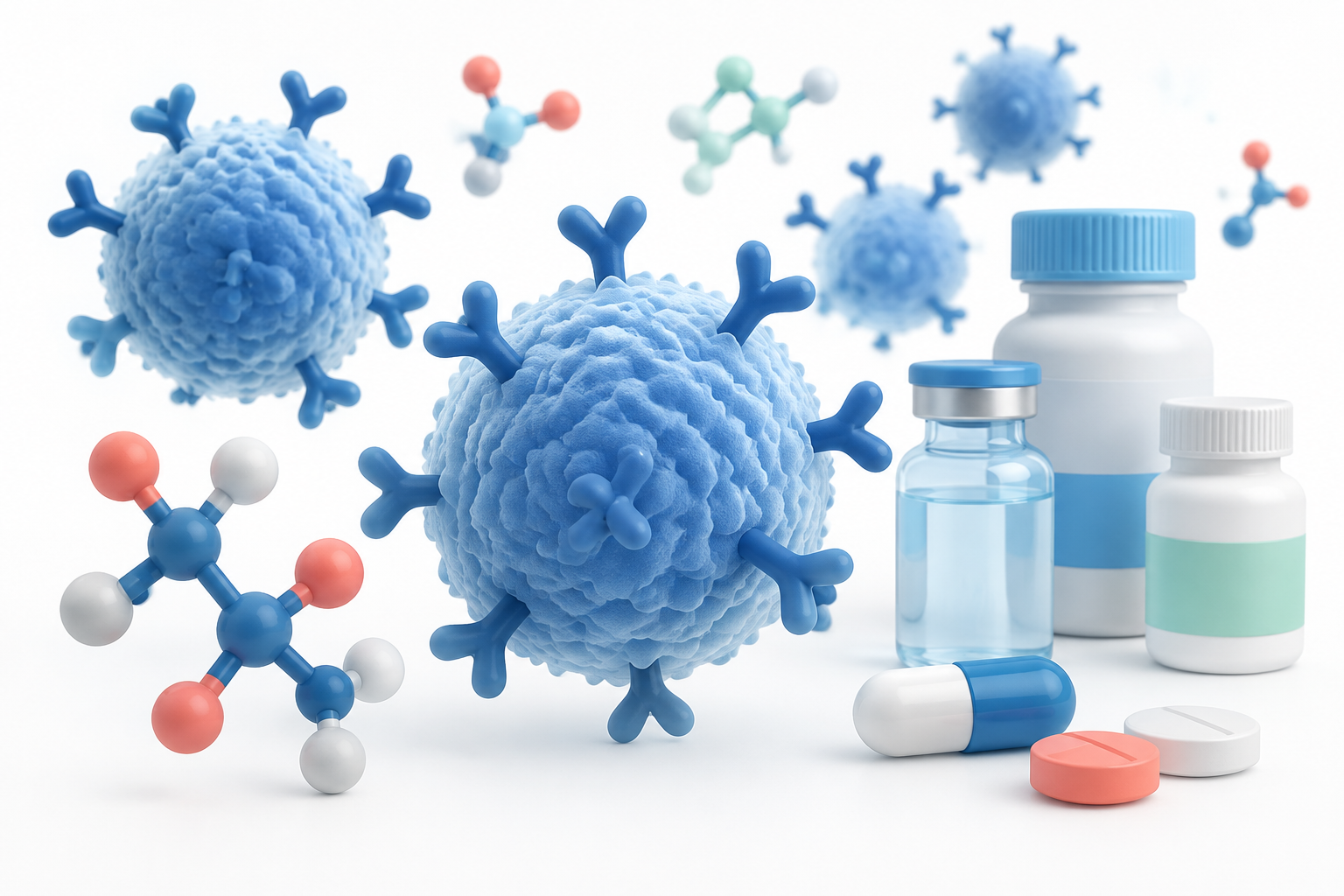
Immunosuppressants are drugs that decrease the activity of the human immune system. They are widely used to prevent organ transplant rejection and to treat severe autoimmune conditions. This guide reviews key classes, mechanism of action, dose charts, and GPAT exam highlights.
What is it?
The immune system protects the human body against harmful pathogens. It includes white blood cells, antibodies, lymph nodes, and the spleen. Sometimes, this defense system attacks healthy body tissue. This reaction causes autoimmune disorders like rheumatoid arthritis and lupus.
In organ transplants, the recipient's immune system sees the new organ as foreign. It attacks the donor tissue to destroy it. This event is called graft rejection.
Immunosuppressants are chemical drugs that quiet or inhibit immune responses. They stop T-lymphocytes and B-lymphocytes from multiplying and attacking. Doctors use them to prevent graft rejection and to treat autoimmune diseases.
Salt and Composition
Immunosuppressant drugs belong to different chemical groups:
-
Calcineurin Inhibitors:
- Cyclosporine: A cyclic polypeptide derived from the fungus Tolypocladium inflatum. Available as soft gelatin capsules (25 mg, 50 mg, 100 mg) and oral solution (100 mg/mL). Brand: Sandimmun, Neoral.
- Tacrolimus (FK-506): A macrolide lactone isolated from Streptomyces tsukubaensis. Available in capsules (0.5 mg, 1 mg, 5 mg) and topical ointment (0.03%, 0.1%). Brand: Prograf, Tacroz.
-
mTOR Inhibitors:
- Sirolimus (Rapamycin): A macrocyclic triene lactone from Streptomyces hygroscopicus. Available as tablets (1 mg, 2 mg) and oral solution (1 mg/mL). Brand: Rapamune.
-
Antiproliferative / Cytotoxic Agents:
- Azathioprine: An imidazolyl derivative of 6-mercaptopurine. Available as tablets (50 mg). Brand: Imuran, Azoran.
- Mycophenolate Mofetil (MMF): 2-morpholinoethyl ester of mycophenolic acid. Available in capsules (250 mg) and tablets (500 mg). Brand: CellCept, Mycept.
-
Glucocorticoids:
- Prednisolone: A synthetic corticosteroid. Available as tablets (5 mg, 10 mg, 20 mg). Brand: Wysolone.
Dose Chart
| Drug / Form | Adult Dose | Child Dose |
|---|---|---|
| Cyclosporine (Oral Capsules) | Initial: 10 to 15 mg/kg/day; Maintenance: 2 to 6 mg/kg/day divided in 2 doses | 10 to 15 mg/kg/day divided in 2 doses (titrated to blood levels) |
| Tacrolimus (Oral Capsules) | 0.10 to 0.20 mg/kg/day in 2 divided doses | 0.15 to 0.20 mg/kg/day in 2 divided doses |
| Sirolimus (Oral Tablets) | Loading: 6 mg once; Maintenance: 2 mg/day once daily | Not recommended for routine use under 13 years |
| Azathioprine (Oral Tablets) | 1 to 3 mg/kg/day taken once daily or divided | 1 to 3 mg/kg/day once daily |
| Mycophenolate Mofetil (Oral Tablets) | 1000 mg twice daily (total 2 g/day) | 600 mg/m² twice daily (up to 2 g/day) |
| Prednisolone (Oral Tablets) | 10 to 60 mg/day depending on indication (tapered slowly) | 0.5 to 2 mg/kg/day in divided doses |
How it Works in the Human Body
The immune response happens inside secondary lymphoid tissues such as lymph nodes and spleen.
- Antigen Presentation: An antigen-presenting cell (APC) displays foreign proteins to a helper T-cell via MHC class II molecules.
- Signal Transduction: This recognition elevates intracellular calcium inside the T-cell. High calcium activates the enzyme calcineurin.
- Gene Transcription: Calcineurin removes phosphate from NFAT (Nuclear Factor of Activated T-cells). Dephosphorylated NFAT moves into the nucleus. It triggers the transcription of Interleukin-2 (IL-2).
- Proliferation: IL-2 acts on T-cell receptors to trigger cell division through the mTOR pathway.
Different drugs block specific steps in this pathway:
- Cyclosporine binds to an intracellular immunophilin called cyclophilin. This complex inhibits calcineurin. As a result, IL-2 synthesis stops.
- Tacrolimus binds to FK-binding protein 12 (FKBP-12). This complex also inhibits calcineurin.
- Sirolimus binds to FKBP-12, but it does not inhibit calcineurin. Instead, it binds to and blocks mTOR (mammalian target of rapamycin). This arrest freezes the cell cycle at the G1 to S phase.
- Mycophenolate Mofetil inhibits the enzyme inosine monophosphate dehydrogenase (IMPDH). This blocks the de novo synthesis of guanine nucleotides. B and T lymphocytes rely mainly on this pathway, so their replication halts.
- Azathioprine releases 6-mercaptopurine inside cells. It forms false purine nucleotides and stops DNA replication.
Side Effects
- Nephrotoxicity: A major dose-limiting toxicity of Cyclosporine and Tacrolimus.
- Infections: Lowered immunity increases the risk of viral (CMV, Herpes), fungal, and bacterial infections.
- Hypertension: Very common with Cyclosporine due to renal vasoconstriction.
- Gingival Hyperplasia and Hirsutism: Characteristic side effects of Cyclosporine (not seen with Tacrolimus).
- Bone Marrow Suppression: Leukopenia, anemia, and thrombocytopenia commonly occur with Azathioprine and Mycophenolate.
- New-Onset Diabetes: Tacrolimus causes pancreatic beta-cell dysfunction leading to hyperglycemia.
- Malignancy Risk: Long-term immunosuppression raises the incidence of lymphomas and skin cancers.
3 Important Exam Points for GPAT
- Binding Protein Differences: Cyclosporine binds to cyclophilin. Tacrolimus and Sirolimus bind to FKBP-12. Cyclosporine and Tacrolimus inhibit calcineurin, while Sirolimus inhibits mTOR.
- Azathioprine-Allopurinol Drug Interaction: Azathioprine is converted to 6-mercaptopurine (6-MP). Xanthine oxidase metabolizes 6-MP into inactive thiouric acid. Allopurinol blocks xanthine oxidase. Combining them causes toxic 6-MP build-up. The dose of Azathioprine must be reduced by 60% to 75%.
- Unique Target of Mycophenolate: Mycophenolate mofetil is a selective, reversible, non-competitive inhibitor of IMPDH (Inosine Monophosphate Dehydrogenase). It specifically suppresses lymphocyte proliferation.
3 MCQs
Which intracellular immunophilin does Cyclosporine bind to in order to exert its action?
A) FKBP-12
B) Cyclophilin
C) Calmodulin
D) Tubulin
Answer: B
Which immunosuppressive agent causes gingival hyperplasia and hirsutism?
A) Tacrolimus
B) Sirolimus
C) Cyclosporine
D) Mycophenolate mofetil
Answer: C
A patient on Azathioprine is prescribed Allopurinol for gout. What clinical adjustment is required?
A) Increase Azathioprine dose
B) Stop Allopurinol and give high-dose aspirin
C) Reduce Azathioprine dose by 60% to 75%
D) No adjustment is needed
Answer: C
FAQs
Why is Tacrolimus preferred over Cyclosporine in many kidney transplants?
Tacrolimus is roughly 50 to 100 times more potent than Cyclosporine. It produces lower rates of acute organ rejection. It also avoids cosmetic side effects like hirsutism and gum hypertrophy.
Can pregnant patients take Mycophenolate Mofetil?
No. Mycophenolate mofetil is strongly teratogenic. It causes severe congenital malformations and early pregnancy loss. It is contraindicated during pregnancy.
How does Prednisolone help in immunosuppression?
Prednisolone binds to intracellular glucocorticoid receptors. It blocks transcription factors like NF-kB. This action reduces the production of inflammatory cytokines like IL-1, IL-2, and TNF-alpha.
Take Free Test on this Topic
Check what you learned with quick GPAT-style questions.
Start Free Test →Unlock all 14 Classifications and 50+ Mock Tests with our Student Pro plan.
Unlock NowFor educational use only — not medical advice. Always check doses with current prescribing information.