DrugClass
Human Body & Drugs
Human Eye and Eye Drop Medicines: GPAT Pharmacology Guide
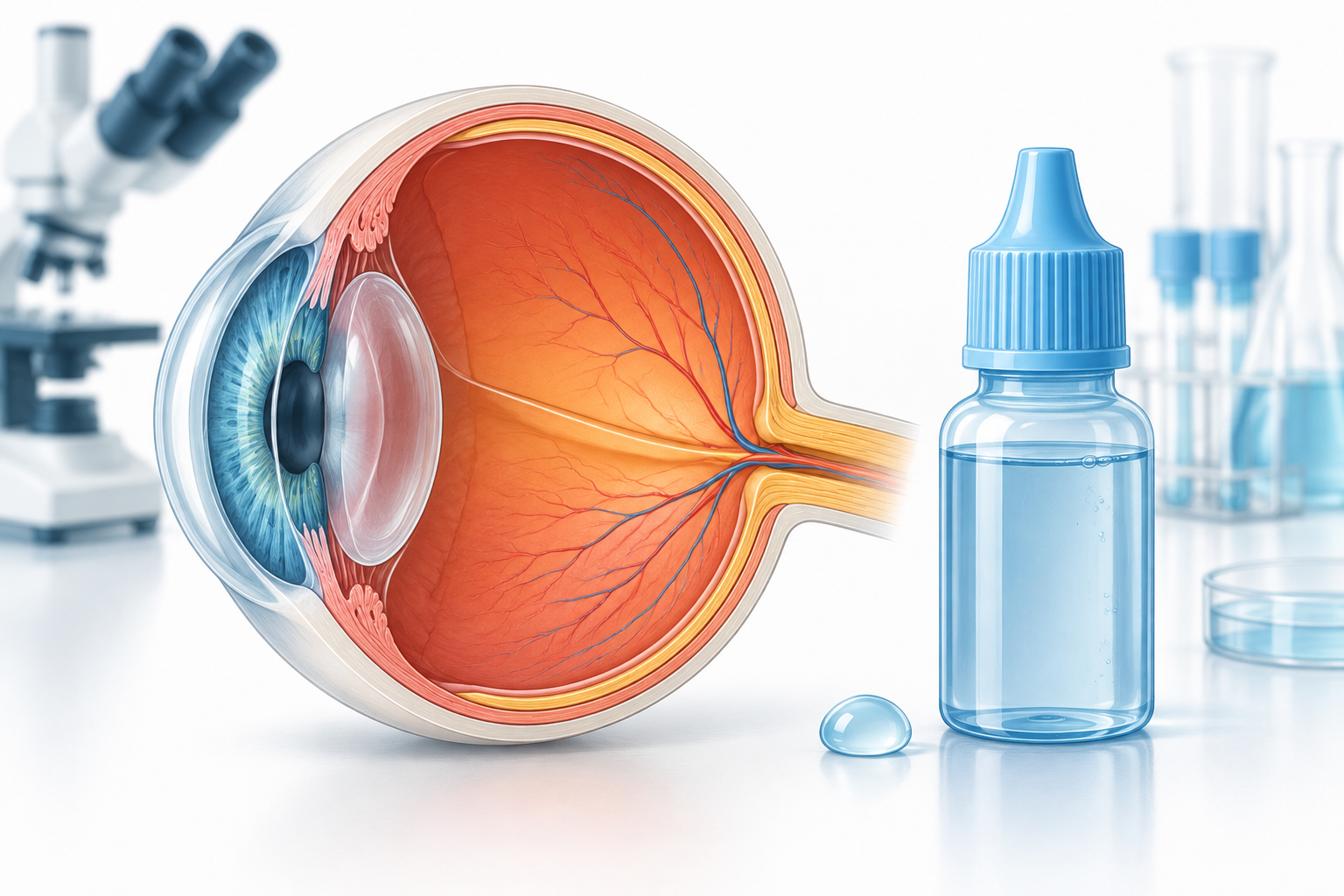
The human eye is a delicate organ treated topically with sterile eye drops. Different ophthalmic drugs treat glaucoma, eye infections, and pupil dilation. This revision guide covers drug mechanisms, standard doses, and high-yield GPAT exam points.
What is it?
The human eye is the sensory organ for vision. It has two main segments: the anterior segment and the posterior segment.
The anterior segment contains the cornea, iris, ciliary body, lens, and anterior chamber filled with aqueous humor. The posterior segment contains the vitreous humor, retina, and optic nerve.
Eye drops are sterile liquid, solution, or suspension dosage forms. They are instilled directly into the lower conjunctival sac (cul-de-sac) for local ocular action. They treat conditions like glaucoma, conjunctivitis, uveitis, and dry eye syndrome.
Salt and Composition
Eye drops contain active pharmaceutical ingredients (APIs), tonicity adjusters, buffers, and preservatives.
- Timolol Maleate (0.25% and 0.5% w/v): A non-selective beta-adrenergic blocker used for glaucoma. Brand example: Timoptol.
- Ciprofloxacin Hydrochloride (0.3% w/v): A broad-spectrum fluoroquinolone antibiotic used for bacterial conjunctivitis and corneal ulcers. Brand example: Ciplox.
- Latanoprost (0.005% w/v): A prostaglandin F2-alpha analog used to reduce high intraocular pressure (IOP). Brand example: Xalatan.
- Tropicamide (0.5% and 1% w/v): An anticholinergic drug used to produce mydriasis (dilation of pupil) and cycloplegia. Brand example: Tropac.
- Carboxymethylcellulose Sodium (0.5% and 1% w/v): A lubricating polymer used as artificial tears for dry eyes. Brand example: Refresh Tears.
Common preservatives used in multi-dose eye drops include Benzalkonium Chloride (0.01% w/v) and Chlorobutanol (0.5% w/v).
Dose Chart
| Drug / Form | Adult Dose | Child Dose |
|---|---|---|
| Timolol 0.5% Drop | 1 drop in affected eye(s) twice daily | Not recommended under 2 years; 1 drop of 0.25% under supervision |
| Ciprofloxacin 0.3% Drop | 1 to 2 drops every 4 hours for 7 days | 1 drop every 4 hours for children above 1 year |
| Latanoprost 0.005% Drop | 1 drop in affected eye(s) once daily in the evening | Safety not established in infants; specialist guidance required |
| Tropicamide 1% Drop | 1 to 2 drops 15 to 20 minutes before eye examination | 1 drop of 0.5% solution 15 minutes before examination |
| Carboxymethylcellulose 0.5% | 1 to 2 drops as needed for ocular dryness | 1 drop as needed for ocular dryness |
How it Works in the Human Body
Ophthalmic drug delivery involves distinct steps across specific eye structures:
-
Corneal Penetration: The drug enters the precorneal tear film. It must pass through the cornea. The cornea has a "fat-water-fat" sandwich structure. The outer epithelium is lipophilic. The middle stroma is hydrophilic. The inner endothelium is lipophilic. Therefore, drugs with both lipid and water solubility (biphasic solubility) penetrate best.
-
Distribution to Anterior Chamber: After crossing the cornea, the drug dissolves into the aqueous humor. It then binds to specific target receptors:
- Beta-blockers (e.g., Timolol): Bind to beta-2 adrenergic receptors on the ciliary epithelium. This reduces the production of aqueous humor, lowering intraocular pressure.
- Prostaglandin Analogs (e.g., Latanoprost): Act on FP prostanoid receptors. They remodel the extracellular matrix in the ciliary muscle. This increases aqueous humor drainage through the uveoscleral pathway.
- Anticholinergics (e.g., Tropicamide): Block M3 muscarinic receptors on the pupillary sphincter muscle and ciliary muscle. This causes pupil dilation (mydriasis) and paralyzes accommodation (cycloplegia).
-
Elimination and Drainage: The excess eye drop fluid drains through the nasolacrimal duct into the nasal cavity. The nasal mucosa can absorb drugs directly into the systemic blood circulation.
Side Effects
Ophthalmic medicines can cause both local and systemic adverse effects.
Local Side Effects:
- Transient burning and stinging sensation
- Redness of the conjunctiva (hyperemia)
- Blurred vision
- Iris color darkening and eyelash lengthening (classic with Latanoprost)
- Superficial punctate keratitis
Systemic Side Effects:
- Bradycardia and Bronchospasm: Timolol eye drops can enter the blood via the tear duct. This can trigger severe asthma attacks or slow the heart rate in cardiac patients.
- Dry Mouth and Tachycardia: Tropicamide can produce systemic anticholinergic effects if absorbed in large amounts.
3 Important Exam Points for GPAT
- Biphasic Solubility Concept: The corneal epithelium and endothelium are lipid-rich, while the stroma is 90% water. A drug must possess moderate lipid solubility and water solubility to cross the intact cornea effectively.
- Uveoscleral Outflow Mechanism: Latanoprost, Bimatoprost, and Travoprost decrease IOP by increasing uveoscleral outflow, not by reducing aqueous production or acting on the trabecular meshwork.
- Nasolacrimal Occlusion: Applying pressure to the inner corner of the eye (punctal occlusion) for 1 to 2 minutes after instillation reduces systemic absorption and prevents unwanted systemic toxicity.
3 MCQs
Question 1
Which drug lowers intraocular pressure by increasing uveoscleral outflow? A) Timolol B) Dorzolamide C) Latanoprost D) Pilocarpine Answer: C
Question 2
Which layer of the cornea serves as the primary rate-limiting barrier to lipophilic ophthalmic drugs? A) Corneal epithelium B) Stroma C) Bowman's membrane D) Descemet's membrane Answer: B
Question 3
Why is Timolol maleate eye drops contraindicated in patients with bronchial asthma? A) It causes corneal ulceration B) It gets absorbed systemically and blocks beta-2 receptors in the lungs C) It causes excessive lacrimation D) It increases intracranial pressure Answer: B
FAQs
What is the normal capacity of the human conjunctival sac?
The human conjunctival sac holds about 7 to 10 microliters of tear fluid comfortably. A standard commercial eye drop delivers about 25 to 50 microliters. Therefore, most of a single drop naturally overflows onto the cheek or drains down the tear duct.
Why should you wait 5 minutes between two different eye drops?
Instilling a second drop immediately washes out the first drop before it can penetrate the cornea. Waiting 5 to 10 minutes ensures the first drug is properly absorbed and not diluted.
What is the primary role of Benzalkonium Chloride in eye drops?
Benzalkonium Chloride (BAC) acts as an antimicrobial preservative. It also acts as a penetration enhancer because it temporarily disrupts the corneal epithelial cell membrane.
Take Free Test on this Topic
Check what you learned with quick GPAT-style questions.
Start Free Test →Unlock all 14 Classifications and 50+ Mock Tests with our Student Pro plan.
Unlock NowFor educational use only — not medical advice. Always check doses with current prescribing information.