DrugClass
Pharmacology Easy Notes
Digoxin: Mechanism of Action, Toxicity, Dose & GPAT Notes

Digoxin is a cardiac glycoside derived from foxglove that inhibits the sodium-potassium ATPase pump. It provides positive inotropic and negative chronotropic effects in heart failure and atrial fibrillation. Because of its narrow therapeutic window, mastering digoxin toxicity and drug interactions is critical for GPAT and medical exams.
Introduction to Digoxin
Digoxin is a classic cardiac glycoside used in cardiology. It is obtained from the leaves of the foxglove plant, specifically Digitalis lanata.
Pharmacy exams like GPAT, NIPER, and university boards test this drug frequently. Digoxin has a narrow therapeutic index. A small change in blood levels can turn a life-saving therapy into a lethal poison. This revision guide covers the mechanism of action, clinical doses, toxicity signs, and key drug interactions you need to remember.
Chemical Nature and Plant Sources
Cardiac glycosides consist of two main components:
- Aglycone (Genin) moiety: Contains a cyclopentanoperhydrophenanthrene (steroid) nucleus attached to an unsaturated lactone ring at C-17. The aglycone part is responsible for the pharmacodynamic actions.
- Glycone (Sugar) moiety: Contains specific sugars (such as digitoxose). The sugar part determines water solubility, cell permeability, and pharmacokinetic properties.
Digitalis purpurea yields digitoxin, whereas Digitalis lanata yields digoxin. Digoxin possesses an extra hydroxyl group at position C-12, making it more polar and shorter-acting than digitoxin.
Digoxin Mechanism of Action
Digoxin produces two distinct actions on the heart: a mechanical effect on contraction and an electrical effect on cardiac conduction.
1. Positive Inotropic Action (Increased Contractility)
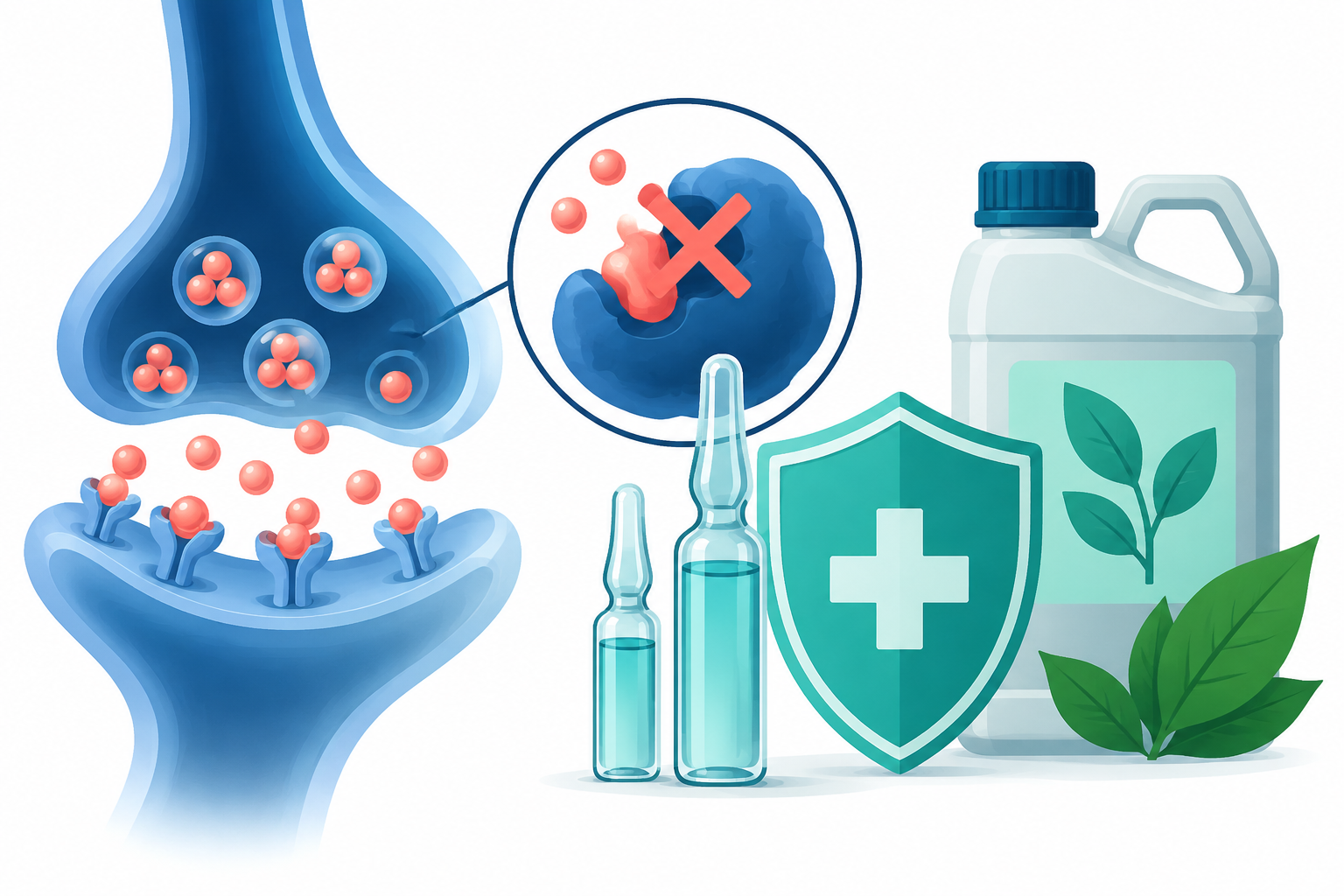
- Digoxin selectively and reversibly binds to the extracellular alpha-subunit of the membrane-bound Na+/K+-ATPase pump in myocardial cells.
- Inhibiting this pump causes intracellular sodium ($Na^+$) to rise.
- The accumulated intracellular sodium reduces the concentration gradient across the membrane.
- This gradient reduction slows down the $Na^+/Ca^{2+}$ exchanger (NCX), preventing calcium efflux.
- As a result, more calcium ($Ca^{2+}$) enters the sarcoplasmic reticulum (SR) via SERCA2.
- During the next depolarization, the sarcoplasmic reticulum releases a larger surge of free calcium to activate troponin C, producing stronger myocardial contraction.
2. Electrophysiological and Vagal Actions
- Vagomimetic action: Digoxin stimulates the central vagal nucleus and sensitizes baroreceptors.
- This increases parasympathetic tone to the sinus and atrioventricular (AV) nodes.
- It decreases AV nodal conduction velocity (negative dromotropy) and slows resting heart rate (negative chronotropy).
- Refractory period of the AV node is prolonged. This property makes digoxin useful for ventricular rate control in atrial flutter and atrial fibrillation.
Pharmacokinetics of Digoxin
- Bioavailability: Tablets have 60% to 80% bioavailability; oral elixir reaches up to 85%.
- Volume of Distribution ($V_d$): Very large (5 to 7 L/kg). Digoxin binds heavily to skeletal muscle and myocardium, not adipose tissue.
- Metabolism: Minimal hepatic metabolism (~10% to 15%). Intestinal bacteria (Eubacterium lentum) metabolize a small fraction into inactive products.
- Elimination: Primarily eliminated unchanged by the kidneys via glomerular filtration and tubular secretion. Renal clearance correlates directly with creatinine clearance.
- Elimination Half-life ($t_{1/2}$): Approximately 36 to 40 hours in adults with normal renal function.
- Therapeutic Serum Range:
- Heart failure: 0.5 to 0.9 ng/mL
- Atrial fibrillation: 0.8 to 1.5 ng/mL
- Toxicity threshold: Symptoms frequently appear above 2.0 ng/mL.
Standard Doses and Clinical Indications
Indications
- Congestive Heart Failure (HFrEF): Reserved as an add-on drug for persistent symptoms despite optimal therapy with ACE inhibitors, beta-blockers, and mineralocorticoid receptor antagonists.
- Atrial Fibrillation or Atrial Flutter: Used to control rapid ventricular response rate, especially in patients with co-existing heart failure.
Standard Doses
- Oral Maintenance Dose: 0.125 mg to 0.25 mg once daily.
- Elderly Patients / Renal Impairment: 0.0625 mg once daily or alternate days.
- Digitalization (Rapid Loading): 0.75 mg to 1.5 mg divided over 24 hours (rarely used now due to safety risks).
Digoxin Toxicity: Signs and Symptoms
Digoxin toxicity is a favorite topic in competitive exams. Toxic features involve the gastrointestinal tract, the central nervous system, and the heart.
Non-Cardiac Manifestations
- Gastrointestinal (Earliest Sign): Anorexia, nausea, vomiting, abdominal discomfort, and diarrhea.
- Neurological / Visual: Fatigue, confusion, headache, dizziness, and xanthopsia (yellow-green color halos around lights).
Cardiac Manifestations
Digoxin can trigger almost any arrhythmia. The most characteristic and common early cardiac sign is ventricular premature complexes (VPCs), often presenting as ventricular bigeminy (alternating normal sinus beat and premature ventricular beat).
Other arrhythmias include:
- Paroxysmal atrial tachycardia (PAT) with 2:1 AV block (highly specific for digitalis toxicity).
- Sinus bradycardia and high-degree AV block.
- Bidirectional ventricular tachycardia.
- Ventricular fibrillation (most common cause of death).
Factors Predisposing to Toxicity
- Hypokalemia: Potassium competes with digoxin for the Na+/K+-ATPase binding site. Low potassium allows more digoxin to bind, dramatically raising toxicity risk.
- Hypomagnesemia: Sensitizes the heart to digitalis-induced arrhythmias.
- Hypercalcemia: Increases intracellular calcium overload and potentiates arrhythmias.
- Renal Impairment: Decreases excretion and drives up serum drug levels.
- Advanced Age: Lower muscle mass and reduced renal filtration rate.
Clinically Important Drug Interactions
| Interacting Drug | Mechanism of Interaction | Clinical Consequence |
|---|---|---|
| Quinidine | Displaces digoxin from tissue binding sites and reduces renal clearance | Serum digoxin level doubles; high risk of toxicity |
| Verapamil & Diltiazem | Inhibit P-glycoprotein and reduce renal clearance; additive AV node suppression | Increased digoxin concentration and severe bradycardia |
| Amiodarone | Inhibits P-glycoprotein renal elimination | Serum digoxin increases by 50% to 100% |
| Loop & Thiazide Diuretics | Induce urinary potassium loss leading to hypokalemia | Precipitates digitalis toxicity without changing digoxin level |
| Clarithromycin / Erythromycin | Eradicate gut flora (E. lentum) that inactivate digoxin | Increased digoxin bioavailability and toxicity |
| Spironolactone | Inhibits tubular secretion of digoxin | Digoxin levels rise moderately |
| Antacids / Cholestyramine | Adsorb digoxin inside the gastrointestinal lumen | Decreased digoxin absorption and reduced efficacy |
Management of Digoxin Toxicity
- Stop Digoxin: Discontinue the drug immediately alongside any potassium-wasting diuretics.
- Monitor Electrolytes and ECG: Check potassium, magnesium, and serum creatinine immediately.
- Administer Potassium: Oral or slow IV potassium chloride is given if hypokalemia is present (contraindicated if high-degree AV block or hyperkalemia exists).
- Antiarrhythmic Therapy:
- Phenytoin or Lidocaine is the drug of choice for ventricular arrhythmias.
- Atropine (0.5 to 1 mg IV) is used for severe sinus bradycardia or AV block.
- Specific Antidote (Digoxin Immune Fab / Digibind):
- Purified Fab fragments from sheep immunized with digoxin.
- Indicated for life-threatening arrhythmias, marked hyperkalemia ($K^+ > 5.5\text{ mEq/L}$), or acute ingestion $>10\text{ mg}$ in adults.
- Each vial (38 to 40 mg) binds approximately 0.5 mg of digoxin.
- Note: Hemodialysis is ineffective because of digoxin's large volume of distribution.
GPAT & NIPER Key Takeaways
- Enzyme target: Membrane-bound $Na^+/K^+$-ATPase.
- Cardiac effect: Positive inotrope, negative chronotrope, negative dromotrope.
- ECG changes at therapeutic levels: PR interval prolongation, ST segment sagging ("hockey stick" or "reverse tick" appearance), T-wave flattening or inversion.
- Earliest symptom of toxicity: Anorexia, followed by nausea and vomiting.
- Most characteristic ECG abnormality in toxicity: Ventricular bigeminy.
- Antidote: Digoxin-specific Fab fragments (Digibind).
Test Yourself: 5 MCQs
1. Digoxin produces a positive inotropic effect primarily by inhibiting which of the following cellular targets?
2. Which of the following electrolyte abnormalities significantly increases the risk of digoxin toxicity?
3. A heart failure patient taking digoxin develops yellow-green tinted vision (xanthopsia). What does this sign indicate?
4. Which antiarrhythmic drug displaces digoxin from tissue binding sites and halves its renal clearance, requiring a 50% digoxin dose reduction?
5. What is the specific and definitive antidote used in life-threatening digoxin overdose?
Take Free Test on this Topic
Check what you learned with quick GPAT-style questions.
Start Free Test →Unlock all 14 Classifications and 50+ Mock Tests with our Student Pro plan.
Unlock NowFor educational use only — not medical advice. Always check doses with current prescribing information.