DrugClass
Losartan 50mg for Hypertension: Mechanism, Dose and GPAT Notes
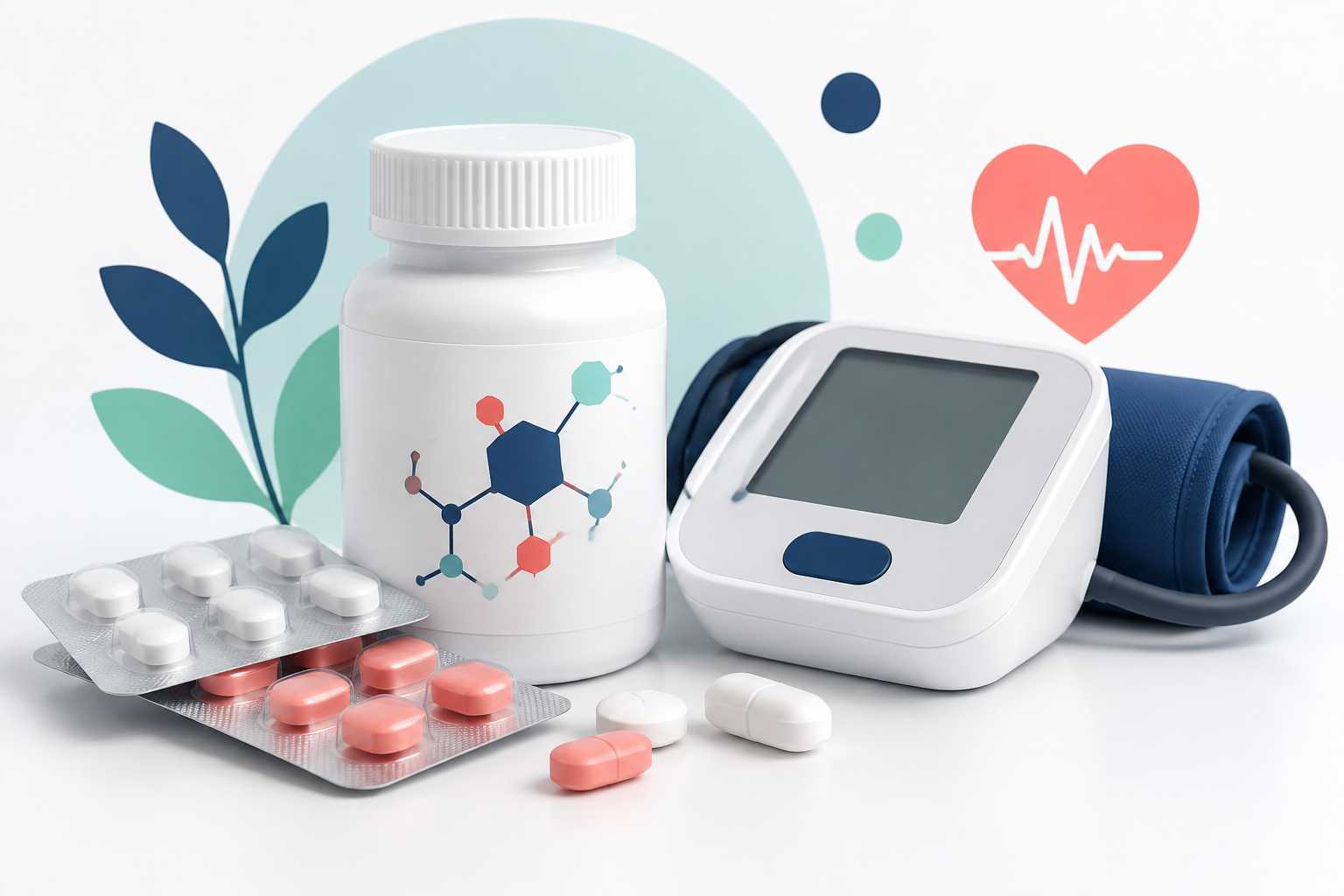
Losartan is an Angiotensin II Receptor Blocker used to treat high blood pressure. It relaxes blood vessels to lower blood pressure and protect kidneys. This guide covers its dosage, mechanism, and essential GPAT exam facts.
What is it?
Losartan is a prescription medicine used to treat high blood pressure (hypertension). It belongs to a class of medicines called Angiotensin II Receptor Blockers (ARBs).
Doctors also prescribe Losartan to lower the risk of stroke in patients with high blood pressure and an enlarged heart. In addition, it protects the kidneys in patients with type 2 diabetes who have diabetic nephropathy.
Controlling high blood pressure helps prevent heart attacks, kidney problems, and strokes. Losartan works gently on the vascular system. It does not cause a dry cough as often as ACE inhibitors do.
Salt and Composition
- Active Salt Form: Losartan Potassium.
- Chemical Class: It is an imidazole-biphenyl-tetrazole derivative.
- Common Strengths: Tablets are available as 25 mg, 50 mg, and 100 mg.
- Common Brand Names: Cozaar (global innovator brand), Losar, Repace, Losakind, and Covance.
- Combinations: It is often combined with a diuretic like Hydrochlorothiazide (e.g., Losartan 50 mg + Hydrochlorothiazide 12.5 mg) for better blood pressure control.
Dose Chart
| Drug / Form | Adult Dose | Child Dose |
|---|---|---|
| Losartan Potassium Tablet | Initial dose: 50 mg once daily. Maintenance dose: 25 mg to 100 mg once daily (or split into two doses). | Children 6 years and older: 0.7 mg/kg once daily (up to 50 mg daily). Not recommended under 6 years. |
| Losartan + Hydrochlorothiazide Tablet | One tablet (50 mg/12.5 mg) once daily if single-drug therapy fails. | Not recommended for pediatric patients. |
How it Works in the Human Body
Losartan acts directly on the Renin-Angiotensin-Aldosterone System (RAAS). Here is how it works step by step:
- Angiotensin II Formation: When blood pressure drops, the kidneys release the enzyme renin. Renin converts angiotensinogen into Angiotensin I. The ACE enzyme then converts Angiotensin I into Angiotensin II.
- The AT1 Receptor: Angiotensin II normally binds to AT1 receptors found in vascular smooth muscle and the adrenal cortex. This binding causes blood vessels to tighten (vasoconstriction) and triggers the release of aldosterone.
- Selective Blockade: Losartan selectively blocks the AT1 receptor subtype. It does not block the AT2 receptor.
- Vasodilation: Because Losartan blocks Angiotensin II from binding to AT1 receptors, smooth muscles relax. Blood vessels widen.
- Reduced Aldosterone: Losartan stops aldosterone secretion. This helps the kidneys remove extra water and sodium while holding onto potassium.
- Blood Pressure Reduction: With relaxed blood vessels and less fluid volume, blood pressure drops smoothly.
Side Effects
Most patients tolerate Losartan very well. However, some common and serious side effects can occur:
- Dizziness and Lightheadedness: Caused by the drop in blood pressure.
- Hyperkalemia: Elevated levels of potassium in the blood.
- Orthostatic Hypotension: A sudden drop in blood pressure when standing up.
- First-dose Hypotension: Common in patients who are dehydrated or on high-dose diuretics.
- Fatigue and Muscle Cramps: Mild weakness reported in some patients.
- Fetotoxicity: Severe injury or death to the developing fetus. Losartan is contraindicated in pregnancy.
3 Important Exam Points for GPAT
- Active Metabolite (EXP-3174): Losartan undergoes hepatic metabolism via CYP2C9 and CYP3A4 to form an active metabolite called EXP-3174. EXP-3174 is a non-competitive antagonist and is 10 to 40 times more potent than Losartan itself.
- Uricosuric Action: Unlike other ARBs, Losartan inhibits the URAT-1 transporter in the proximal renal tubule. This increases uric acid excretion in urine. Therefore, Losartan is the drug of choice for hypertensive patients who also suffer from gout.
- No Bradykinin Accumulation: Losartan blocks the AT1 receptor downstream without inhibiting the ACE enzyme. As a result, it does not stop the breakdown of bradykinin. This is why Losartan rarely causes the dry cough and angioedema typical of ACE inhibitors.
3 MCQs
Q1. Which active metabolite is responsible for the prolonged hypotensive effect of Losartan?
- A) Enalaprilat
- B) EXP-3174
- C) Candesartan cilexetil
- D) Omapatrilat
Answer: B
Q2. Losartan is preferred over other antihypertensive agents in a patient with gout because it:
- A) Inhibits xanthine oxidase
- B) Decreases uric acid reabsorption by blocking URAT-1
- C) Increases renal excretion of potassium
- D) Directly degrades circulating uric acid
Answer: B
Q3. Why is Losartan strictly contraindicated during the second and third trimesters of pregnancy?
- A) It causes neural tube defects
- B) It causes fetal renal failure and oligohydramnios
- C) It causes premature closure of ductus arteriosus
- D) It causes maternal eclampsia
Answer: B
FAQs
Can Losartan cause a dry cough like Enalapril?
No. Enalapril inhibits the ACE enzyme, which causes bradykinin to build up in the lungs and triggers a dry cough. Losartan blocks only the receptor and does not increase bradykinin, so dry cough is rare.
Why should patients avoid potassium supplements while taking Losartan?
Losartan lowers aldosterone secretion, causing the kidneys to retain potassium. Taking extra potassium supplements or salt substitutes containing potassium can cause dangerous hyperkalemia.
Can Losartan be taken with or without food?
Yes. Losartan is absorbed well from the gut, and food does not significantly affect its clinical efficacy. You can take it with or without meals at the same time each day.
Take Free Test on this Topic
Check what you learned with quick GPAT-style questions.
Start Free Test →Unlock all 14 Classifications and 50+ Mock Tests with our Student Pro plan.
Unlock NowFor educational use only — not medical advice. Always check doses with current prescribing information.