DrugClass
Isoniazid Drug Dose, Mechanism and Side Effects for GPAT
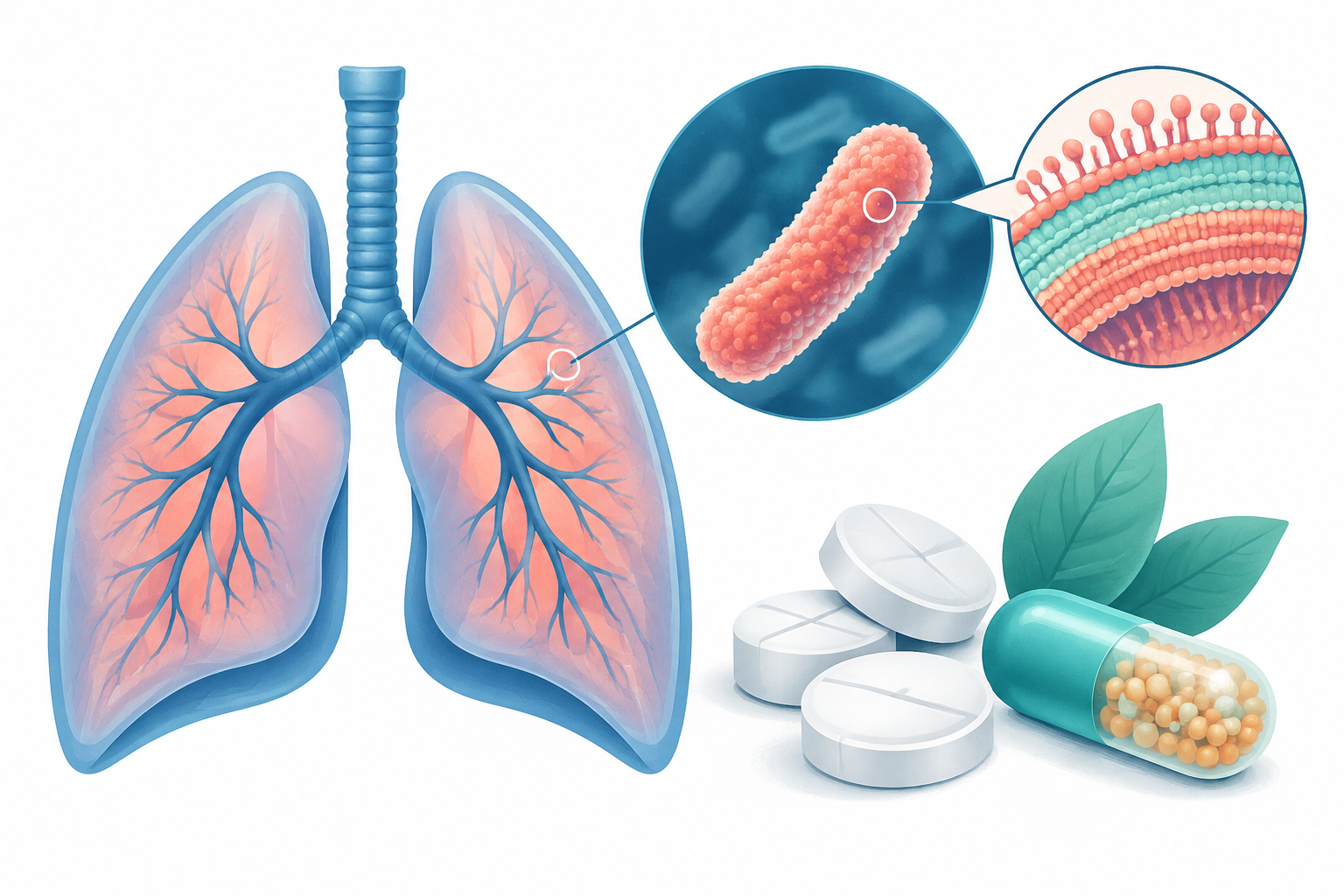
Isoniazid is a first-line TB drug that blocks mycolic acid synthesis after activation by KatG. Learn its daily doses, major side effects and the role of vitamin B6, then revise with three GPAT MCQs.
What is it?
Isoniazid is a first-line medicine used against tuberculosis, or TB. Its common short name is INH. It is also called isonicotinic acid hydrazide.
TB is caused mainly by Mycobacterium tuberculosis. This bacterium has a protective cell wall rich in special fats called mycolic acids. Isoniazid stops the bacterium from making these important wall components.
For B.Pharma and D.Pharma students, isoniazid is a high-yield GPAT drug. Questions often test its activation, liver toxicity, vitamin B6 deficiency and metabolism.
Its main uses are:
- Active TB: Always used with other suitable anti-TB drugs.
- Latent TB infection: May be used alone in selected preventive regimens, after active TB has been excluded.
Latent TB means the bacteria are present without active disease. Treatment lowers the chance of developing active TB later.
This guide is for study. TB treatment needs medical supervision, weight-based dosing and follow-up.
Dose Chart
The chart shows standard daily oral doses. The child dose follows the WHO-recommended daily dosing range. National programmes may use specific weight bands and fixed-dose combinations.
| Drug / Form | Adult Dose | Child Dose |
|---|---|---|
| Isoniazid oral, for active drug-susceptible TB | 5 mg/kg once daily; maximum 300 mg/day | 10 mg/kg once daily; accepted range 7–15 mg/kg/day; maximum 300 mg/day |
| Isoniazid oral, for daily preventive monotherapy when selected | 5 mg/kg once daily; maximum 300 mg/day | 10 mg/kg once daily; accepted range 7–15 mg/kg/day; maximum 300 mg/day |
Important dose notes:
- Active TB requires combination treatment. Never use isoniazid alone for active disease.
- Daily isoniazid preventive monotherapy usually lasts 6 or 9 months, depending on the selected guideline and patient factors.
- Shorter rifamycin-based preventive regimens are often preferred when suitable. Their doses and schedules differ.
- Children need repeat weight checks. Their dose may change as they grow.
- These daily doses must not be copied into an intermittent regimen.
Isoniazid is usually taken on an empty stomach, 1 hour before or 2 hours after food. Food can reduce absorption. If stomach upset occurs, follow the treating team's advice rather than changing the schedule yourself.
Pyridoxine, or vitamin B6, is prescribed for people at increased risk of nerve damage. A common adult preventive dose is 25–50 mg daily. Children's pyridoxine doses need age- and weight-appropriate prescribing.
How it Works
Isoniazid is a prodrug. This means it needs activation before it can act.
Inside the TB bacterium, the KatG catalase-peroxidase enzyme activates isoniazid. The activated drug forms a complex with NAD. This complex inhibits InhA, an enzyme needed for mycolic acid synthesis.
The sequence is easy to remember:
Isoniazid → KatG activation → InhA inhibition → reduced mycolic acid synthesis.
Without enough mycolic acid, the bacterium cannot build its cell wall properly. Isoniazid is strongly bactericidal against actively multiplying TB bacteria. Its action is weaker against dormant organisms.
Resistance can develop through changes in katG or inhA. Combination treatment reduces the chance that resistant bacteria will survive and multiply.
The liver mainly processes isoniazid by N-acetyltransferase 2, or NAT2. Genetic differences produce slow and fast acetylators. Slow acetylators generally have higher drug exposure and a greater risk of some adverse effects, especially peripheral neuropathy.
Side Effects
The two most important adverse effects for GPAT are hepatotoxicity and peripheral neuropathy.
Liver injury
Isoniazid can raise liver enzymes. It can also cause serious hepatitis.
Warning symptoms include:
- Loss of appetite or persistent nausea.
- Unusual tiredness.
- Dark urine.
- Yellow eyes or skin.
- Pain in the upper right abdomen.
These symptoms need prompt medical assessment. Avoid alcohol during treatment because it increases concern about liver injury. Liver tests are especially important in people with liver disease or other risk factors.
Peripheral neuropathy
This causes tingling, burning or numbness, usually in the hands and feet. Isoniazid interferes with vitamin B6 metabolism.
Risk is higher in people with malnutrition, diabetes, HIV, kidney failure or alcohol dependence. Pregnancy and breastfeeding are also situations where pyridoxine supplementation is recommended during isoniazid treatment.
Other effects and interactions
Other possible effects include rash, nausea and a lupus-like syndrome. Seizures can occur, especially in overdose or severe vitamin B6 deficiency.
Isoniazid can increase levels of phenytoin and carbamazepine by reducing their metabolism. Monitoring may be needed.
Remember: orange-red urine and tears are typical of rifampicin, not isoniazid.
3 Important Exam Points for GPAT
- Activation and target: KatG activates isoniazid. The activated drug inhibits InhA and blocks mycolic acid synthesis.
- Characteristic toxicity: Peripheral neuropathy is linked to vitamin B6 deficiency. Pyridoxine helps prevent it in at-risk patients, but does not prevent isoniazid hepatitis.
- Metabolism and treatment rule: NAT2 controls acetylation. Isoniazid must be combined with other drugs for active TB.
3 MCQs
1. Which bacterial enzyme activates isoniazid?
A. DNA gyrase
B. KatG catalase-peroxidase
C. RNA polymerase
D. Dihydrofolate reductase
Answer: B
2. Which vitamin helps prevent isoniazid-associated peripheral neuropathy?
A. Vitamin C
B. Vitamin K
C. Vitamin B6
D. Vitamin B12
Answer: C
3. Isoniazid mainly blocks the synthesis of which substance?
A. Mycolic acid
B. Folic acid
C. Ergosterol
D. Peptidoglycan cross-links
Answer: A
FAQs
Can isoniazid be used alone for TB?
Not for active TB. It may be used alone for latent TB infection in selected regimens, after active disease is excluded.
Why is vitamin B6 given with isoniazid?
It helps prevent peripheral neuropathy in at-risk patients. It does not protect against every adverse effect.
Does every adult take 300 mg daily?
No. The standard daily dose is weight-based, with a maximum of 300 mg. Lower-weight adults may need less.
What is the best GPAT memory link?
Remember: INH blocks mycolic acid; B6 protects nerves. Add KatG activation and NAT2 acetylation for a stronger revision link.
Take Free Test on this Topic
Check what you learned with quick GPAT-style questions.
Start Free Test →Unlock all 14 Classifications and 50+ Mock Tests with our Student Pro plan.
Unlock NowFor educational use only — not medical advice. Always check doses with current prescribing information.