DrugClass
Metoprolol 25mg: Uses, Dose, Mechanism & GPAT Notes
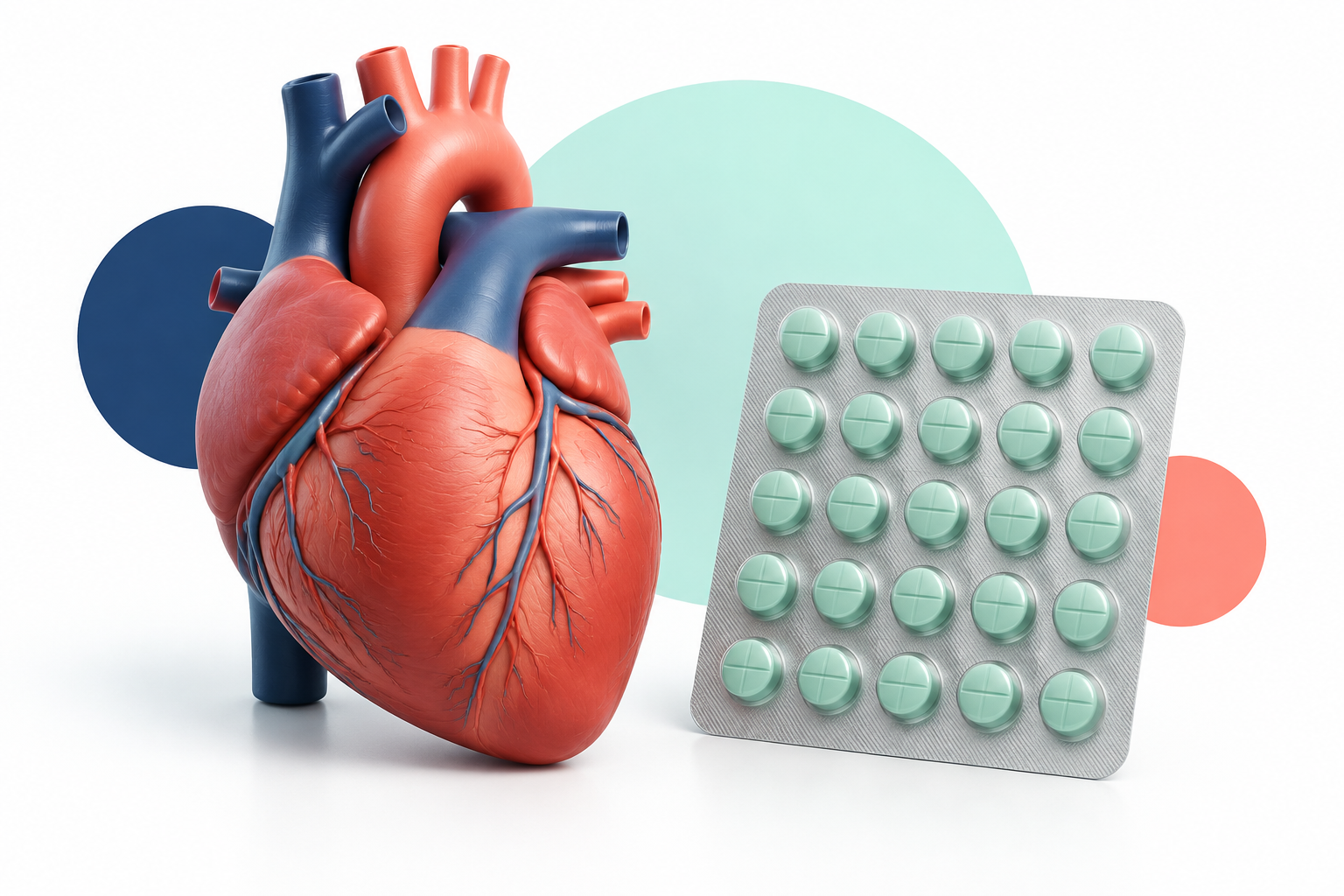
Metoprolol 25mg is a cardioselective beta-blocker widely used to treat hypertension, angina, and heart failure. It works by slowing down the heart rate and reducing cardiac workload. This guide provides essential pharmacology facts, dosing, and key questions for pharmacy students.
What is it?
Metoprolol is a well-known cardiovascular drug. It belongs to the class of medications called beta-adrenergic blockers, or simply beta-blockers.
Doctors prescribe Metoprolol 25mg mainly to control high blood pressure (hypertension). It is also prescribed to prevent chest pain (angina pectoris) and to improve survival after a heart attack (myocardial infarction). In addition, it helps manage chronic heart failure and abnormal heart rhythms (arrhythmias).
Metoprolol reduces the workload on the heart. By doing so, it helps the heart beat more regularly and with less strain.
Salt and Composition
Metoprolol is available in two distinct salt forms in clinical pharmacy:
- Metoprolol Tartrate: This is the immediate-release (IR) form. It requires dosing twice a day.
- Metoprolol Succinate: This is the extended-release (ER or XL) form. It is formulated for once-daily dosing.
Common pharmaceutical strengths include:
- 12.5 mg
- 25 mg
- 50 mg
- 100 mg
- 200 mg
Well-known commercial brand names include:
- Toprol-XL (Metoprolol Succinate)
- Lopressor (Metoprolol Tartrate)
- Betaloc
- Metolar
Dose Chart
| Drug / Form | Adult Dose | Child Dose |
|---|---|---|
| Metoprolol Tartrate (IR Tablet) | 25 mg to 100 mg orally twice daily (Maximum: 400 mg/day) | 1 to 2 mg/kg/day orally in 2 divided doses (Safety under 6 years not established) |
| Metoprolol Succinate (ER Tablet) | 25 mg to 200 mg orally once daily (Maximum: 400 mg/day) | 0.5 to 1 mg/kg/day orally once daily (Maximum: 50 mg/day) |
| Metoprolol Injection (IV) | 2.5 mg to 5 mg slow IV bolus over 2 minutes (Emergency setting) | Not routinely recommended in pediatric emergencies |
Note: Dosing must always be individualized based on blood pressure and heart rate response.
How it Works in the Human Body
Metoprolol targets the sympathetic nervous system, specifically the heart and blood vessels.
- Receptor Targeting: Metoprolol is a cardioselective agent. It selectively binds to beta-1 (β1) adrenergic receptors. These receptors are located primarily on the cardiac muscle tissue and the juxtaglomerular cells in the kidneys.
- Blocking Adrenaline: Under normal conditions, adrenaline and noradrenaline bind to β1 receptors. This binding activates adenylyl cyclase, which increases intracellular cyclic AMP (cAMP) levels. Metoprolol competes with these catecholamines and blocks the receptors.
- Cardiac Effects: By preventing receptor activation, Metoprolol produces three primary cardiac actions:
- Negative Chronotropy: It decreases heart rate by acting on the sinoatrial (SA) node.
- Negative Inotropy: It reduces myocardial contractility, decreasing the force of contraction.
- Negative Dromotropy: It slows conduction speed through the atrioventricular (AV) node.
- Renal Effects: In the kidneys, Metoprolol inhibits β1 receptors in the juxtaglomerular apparatus. This action blocks the release of renin. As a result, the renin-angiotensin-aldosterone system (RAAS) remains inactive, leading to lower blood volume and reduced peripheral vascular resistance.
- Final Outcome: Cardiac output falls and systemic blood pressure drops. The heart consumes less oxygen, which relieves angina symptoms.
Side Effects
Although Metoprolol is cardioselective, adverse effects can occur, especially at higher doses.
- Bradycardia: Abnormally slow heart rate (less than 60 beats per minute).
- Hypotension: Abrupt drops in blood pressure, leading to lightheadedness.
- Fatigue and Lethargy: Reduced cardiac output can make patients feel weak.
- Dizziness: Common during initial therapy or dose escalation.
- Cold Extremities: Decreased peripheral blood flow can cause cold hands and feet.
- Bronchospasm: At high doses, cardioselectivity is lost. It can block beta-2 (β2) receptors in the lungs, triggering asthma attacks.
- Masking Hypoglycemia: It can mask warning signs of low blood sugar, such as tachycardia and tremors, in diabetic patients.
3 Important Exam Points for GPAT
- Cardioselectivity (Second-Generation Beta-Blocker): Metoprolol is a prototype second-generation β-blocker. It is cardioselective because its affinity for β1 receptors is roughly 20 to 50 times higher than for β2 receptors. However, this selectivity is dose-dependent and disappears at high blood concentrations.
- Metabolic Pathway (CYP2D6 Polymorphism): Metoprolol undergoes extensive hepatic first-pass metabolism (bioavailability is roughly 50%). It is primarily metabolized by the cytochrome P450 enzyme CYP2D6. Patients who are CYP2D6 poor metabolizers show significantly higher plasma drug concentrations and longer elimination half-lives.
- Salt Chemistry Differences: For formulation chemistry, remember that Metoprolol Tartrate is freely soluble in water and formulated as an immediate-release tablet. In contrast, Metoprolol Succinate has lower aqueous solubility and is formulated as a micropellet extended-release delivery system (OROS or multi-unit pellet system) to maintain zero-order release kinetics.
3 MCQs
1. Metoprolol produces an antihypertensive effect primarily by blocking which of the following receptors?
- A) Alpha-1 adrenergic receptors
- B) Beta-1 adrenergic receptors
- C) Beta-2 adrenergic receptors
- D) Muscarinic M2 receptors
Answer: B
2. Which cytochrome P450 isoenzyme is primarily responsible for the hepatic metabolism of Metoprolol?
- A) CYP3A4
- B) CYP1A2
- C) CYP2D6
- D) CYP2C9
Answer: C
3. Why should high doses of Metoprolol be avoided in patients with bronchial asthma?
- A) It stimulates alpha-2 receptors
- B) It causes histamine release
- C) It loses its beta-1 selectivity and blocks beta-2 receptors
- D) It directly causes pulmonary edema
Answer: C
FAQs
Can a patient stop taking Metoprolol 25mg suddenly?
No. Abrupt withdrawal can cause rebound hypertension, severe tachycardia, or myocardial ischemia due to beta-receptor up-regulation. The dose must be tapered gradually over 1 to 2 weeks.
What is the major difference between Metoprolol Tartrate and Metoprolol Succinate?
Metoprolol Tartrate is immediate-release and must be taken twice daily with meals. Metoprolol Succinate is extended-release and provides 24-hour plasma coverage when taken once daily.
Does Metoprolol cause erectile dysfunction?
Yes. Beta-blockers can lower peripheral perfusion and reduce central sympathetic tone, which may lead to erectile dysfunction in some male patients.
Take Free Test on this Topic
Check what you learned with quick GPAT-style questions.
Start Free Test →Unlock all 14 Classifications and 50+ Mock Tests with our Student Pro plan.
Unlock NowFor educational use only — not medical advice. Always check doses with current prescribing information.