How the Heart Works with Drugs: GPAT Dose Guide
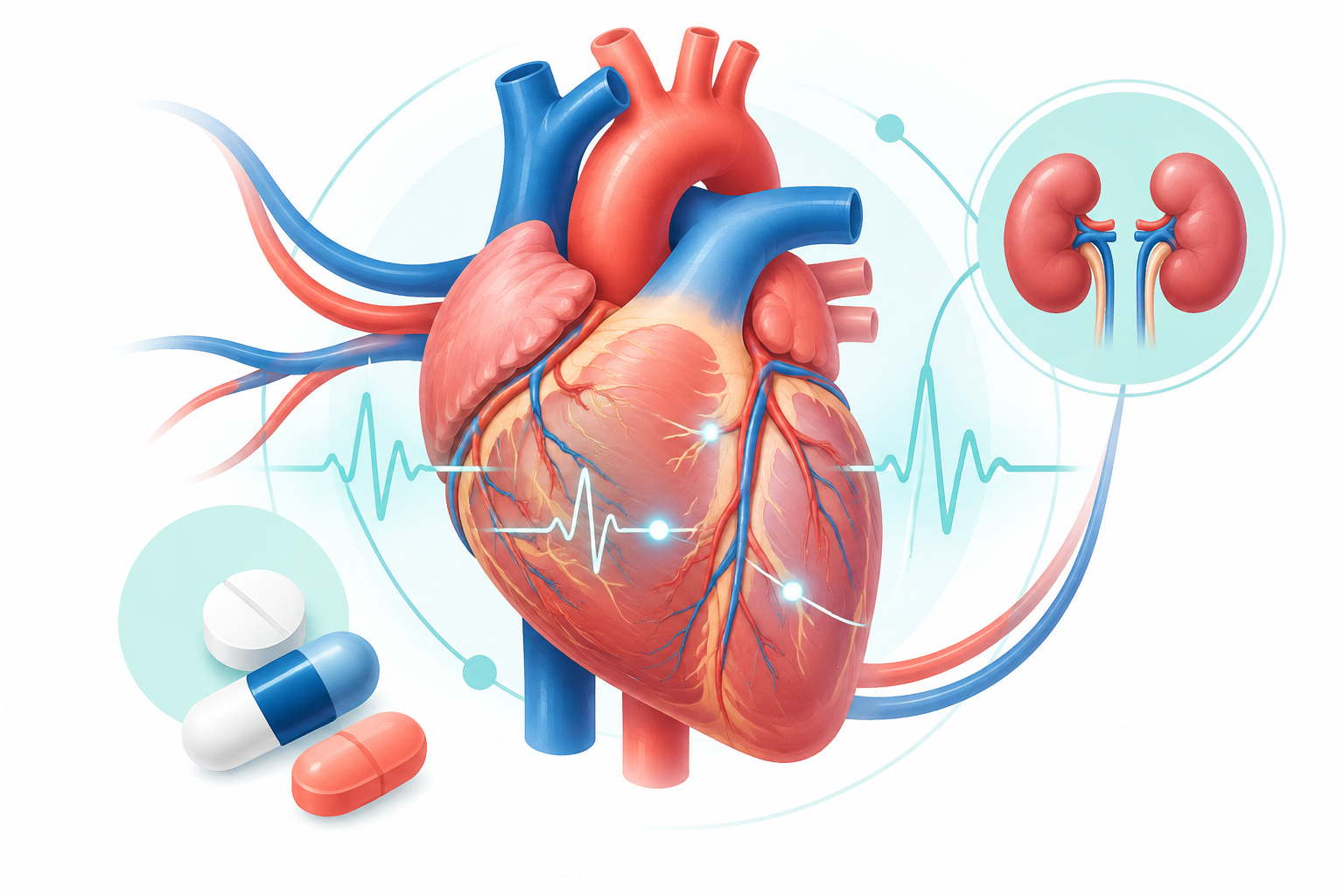
Heart medicines act on the heartbeat, blood vessels, kidneys, and platelets. This GPAT study guide explains common doses, drug actions, side effects, and key exam facts.
What is it?
The heart is a muscular pump. It sends blood to the lungs to collect oxygen. It then pumps oxygen-rich blood around the body. Valves keep blood moving in one direction.
The right side pumps blood to the lungs. The left side pumps it to the body. The left ventricle has a thick muscle wall because it works against higher pressure.
An electrical signal starts each normal heartbeat. It begins in the sinoatrial (SA) node, the natural pacemaker. It passes through the atrioventricular (AV) node and then reaches the ventricles.
Heart medicines can change heart rate, pumping force, blood pressure, or fluid levels. Some prevent harmful blood clots. Understanding these actions helps B.Pharma and D.Pharma students connect physiology with pharmacology.
Dose Chart
These are common textbook doses for the stated uses. Oral doses are shown unless another route is named. Doses vary with the disease, kidney function, and response. This chart is for study, not self-treatment.
| Drug / Form | Adult Dose | Child Dose |
|---|---|---|
| Amlodipine tablet, hypertension | Start 5 mg once daily; maximum 10 mg daily | Ages 6–17 years: 2.5–5 mg once daily |
| Enalapril tablet, hypertension | Usually start 5 mg once daily; usual maintenance 10–40 mg daily, in one or two doses | Age 1 month and older: start 0.08 mg/kg once daily, up to 5 mg initially; further adjustment needs supervision |
| Metoprolol tartrate tablet, angina | Usual starting dose: 50 mg twice daily; adjust to response | No established routine paediatric dose for this indication and form; specialist use only |
| Furosemide tablet, oedema | Initial dose: 20–80 mg; later dose and frequency depend on response | Initial dose: 2 mg/kg; further dosing needs supervision. Doses above 6 mg/kg are not recommended |
| Nitroglycerin sublingual tablet, acute angina | 0.3–0.6 mg under the tongue; may repeat every 5 minutes, up to 3 doses | No established routine paediatric dose; specialist use only |
| Aspirin tablet, prescribed antiplatelet treatment | Common maintenance dose: 75–100 mg once daily | Not for routine use; certain conditions require specialist dosing |
New, severe, or persistent chest pain needs emergency help. Do not delay help while taking repeated nitroglycerin doses. Children's doses must not be guessed from adult doses.
How it Works
The heart needs oxygen to keep pumping. Coronary arteries supply this oxygen. When oxygen supply cannot meet demand, angina can occur.
Two useful terms explain many drug actions:
- Preload: the stretch of the ventricles before contraction. It depends partly on blood returning to the heart.
- Afterload: the pressure the ventricles must overcome to pump blood out.
Reducing either can reduce the heart's workload.
Metoprolol mainly blocks beta-1 receptors. It slows the heart and reduces contraction strength. This lowers oxygen demand. It also reduces renin release from the kidneys.
Amlodipine blocks L-type calcium channels, mainly in blood vessel muscle. Arteries relax, so blood pressure and afterload fall. Unlike verapamil, it has little direct effect on AV conduction at usual doses.
Enalapril blocks angiotensin-converting enzyme, or ACE. Less angiotensin II forms, and aldosterone levels fall. Blood vessels relax, and salt retention decreases. ACE inhibitors also help limit harmful heart remodelling in suitable patients with heart failure.
Furosemide blocks the sodium-potassium-chloride cotransporter in the thick ascending limb of the loop of Henle. More salt and water leave through urine. This reduces fluid overload and helps relieve breathlessness from congestion.
Nitroglycerin releases nitric oxide. It increases cyclic GMP and relaxes blood vessels. At usual doses, its main effect is venous dilation. This reduces preload and oxygen demand.
Aspirin irreversibly blocks platelet COX-1. Less thromboxane A2 forms, so platelets stick together less easily. It does not directly strengthen the heartbeat.
Side Effects
Important adverse effects include:
- Metoprolol: slow pulse, tiredness, and low blood pressure. Do not stop it suddenly.
- Amlodipine: ankle swelling, flushing, and headache.
- Enalapril: dry cough, high potassium, and sometimes kidney injury. Rare angioedema can be dangerous. Avoid it during pregnancy.
- Furosemide: dehydration, low potassium, and low sodium.
- Nitroglycerin: headache, dizziness, and low blood pressure. Never combine it with sildenafil or similar medicines.
- Aspirin: stomach irritation and bleeding. In children with viral illnesses, it is linked to Reye syndrome.
Pulse, blood pressure, kidney function, and electrolytes may need monitoring, depending on the drug.
3 Important Exam Points for GPAT
- Cardiac output = heart rate × stroke volume. Stroke volume is the blood pumped by one ventricle in one beat. A faster pulse does not always mean better output.
- Nitrates mainly reduce preload. Amlodipine mainly reduces afterload through arterial dilation.
- Heart failure benefits differ between drugs. Furosemide relieves congestion. Selected beta blockers improve survival in stable heart failure with reduced ejection fraction. These include metoprolol succinate, not the tartrate form listed above.
3 MCQs
1. Which structure normally starts the heartbeat?
A. AV node
B. SA node
C. Mitral valve
D. Aorta
Answer: B
2. Which drug blocks ACE?
A. Aspirin
B. Amlodipine
C. Enalapril
D. Furosemide
Answer: C
3. Which electrolyte disturbance is commonly caused by furosemide?
A. High potassium
B. High sodium
C. High calcium
D. Low potassium
Answer: D
FAQs
Do all heart drugs slow the heartbeat?
No. Metoprolol slows it. Other medicines mainly act on blood vessels, kidneys, or platelets.
Why are several heart medicines prescribed together?
They target different problems. One may lower blood pressure, while another removes extra fluid or prevents clots.
Can aspirin prevent heart attacks in everyone?
No. Bleeding risk may outweigh benefit. It is often used after certain cardiovascular events, but routine prevention needs individual assessment.
Can heart medicines be stopped when symptoms improve?
Do not stop them without advice. Feeling better may mean the treatment is working. Some drugs cause harm if stopped suddenly.
Take Free Test on this Topic
Check what you learned with quick GPAT-style questions.
Start Free Test →Unlock 500 Blogs for ₹199
Unlock NowFor educational use only — not medical advice. Always check doses with current prescribing information.