 DrugClass
Azithromycin 250mg Uses and Dose: GPAT Study Guide
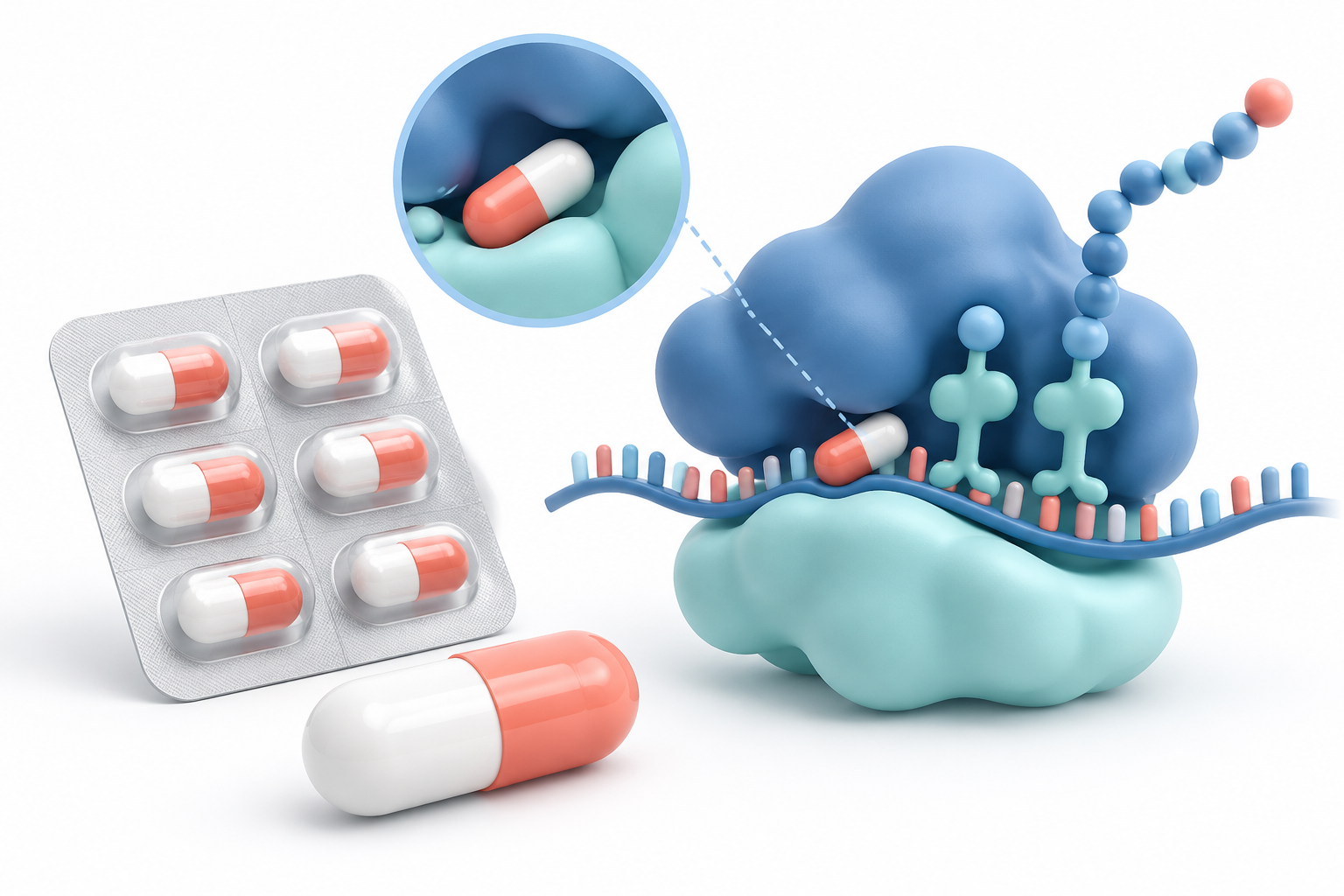
Azithromycin 250mg is a popular azalide antibiotic used to treat bacterial infections. It works by blocking bacterial protein synthesis at the 50S ribosomal subunit. This guide explains its uses, dosage, pharmacology, and key GPAT exam points.
What is it?
Azithromycin is a broad-spectrum antibiotic. It belongs to the macrolide group of medicines. It is specifically called an azalide.
Doctors prescribe it to treat many bacterial infections. It works against gram-positive and some gram-negative bacteria. It does not treat viral infections like the cold or flu.
Common indications include:
- Upper respiratory tract infections like pharyngitis, sinusitis, and tonsillitis.
- Lower respiratory tract infections like bronchitis and community-acquired pneumonia.
- Skin and soft tissue infections.
- Genital infections such as non-gonococcal urethritis and cervicitis caused by Chlamydia trachomatis.
- Enteric infections like mild typhoid fever.
Salt and Composition
Chemical Form / Salt: Azithromycin is formulated as Azithromycin Dihydrate or Azithromycin Monohydrate. Chemically, it is an azalide. It has a 15-membered lactone ring with an incorporated methyl-substituted nitrogen atom. This structure makes it more stable in stomach acid than erythromycin.
Common Strengths:
- Tablets and Capsules: 250 mg and 500 mg.
- Oral Suspensions: 100 mg / 5 mL and 200 mg / 5 mL.
- Injectable Form: 500 mg lyophilized powder for IV infusion.
- Eye Drops: 1% ophthalmic solution.
Popular Brand Names:
- Zithromax (Pfizer)
- Azee (Cipla)
- Azithral (Alembic)
- Zady (Mankind)
Dose Chart
| Drug / Form | Adult Dose | Child Dose |
|---|---|---|
| Azithromycin 250 mg Tablet | Day 1: 500 mg (2 tablets) once daily.<br>Days 2 to 5: 250 mg (1 tablet) once daily. | Not recommended for young children unable to swallow tablets. |
| Azithromycin 500 mg Tablet | 500 mg once daily for 3 consecutive days. For chlamydia: 1 g single dose. | Not recommended for body weight under 45 kg. |
| Oral Suspension (200 mg / 5 mL) | Rarely used in adults (tablets preferred). | 10 mg/kg body weight once daily for 3 days; or 10 mg/kg on Day 1, followed by 5 mg/kg daily on Days 2 to 5. |
| IV Infusion (500 mg) | 500 mg IV once daily for at least 2 days, followed by oral therapy. | Safety and dose are determined by pediatric specialist only. |
Note: Doses must always be verified by a registered medical practitioner based on infection severity.
How it Works in the Human Body
Azithromycin acts on bacterial cells inside the human body. Here is how it works step by step:
- Absorption: The patient takes the drug orally. It is rapidly absorbed from the gastrointestinal tract. It is stable in gastric acid.
- Tissue Uptake: Azithromycin moves quickly from the bloodstream into body tissues. White blood cells, like macrophages and neutrophils, take up the drug in high amounts. These cells carry the drug directly to the infection site.
- Target Binding: Inside the bacteria, azithromycin binds reversibly to the 50S ribosomal subunit. Specifically, it binds near the peptidyl transferase center on the 23S rRNA.
- Protein Synthesis Inhibition: It stops the transpeptidation and translocation steps. The growing peptide chain cannot move forward.
- Bacteriostatic Action: The bacteria can no longer make essential proteins. Bacterial growth stops. The host immune system then clears the remaining bacteria.
Side Effects
Most patients tolerate azithromycin well. However, some adverse reactions may occur.
Common Side Effects:
- Nausea and vomiting
- Diarrhea and loose stools
- Abdominal pain and cramping
- Dyspepsia (indigestion)
Rare but Serious Side Effects:
- QT Interval Prolongation: Can trigger ventricular arrhythmias like Torsades de Pointes.
- Cholestatic Jaundice: Liver dysfunction with elevated enzymes.
- Pseudomembranous Colitis: Caused by Clostridioides difficile overgrowth.
- Hypersensitivity Reactions: Skin rash, angioedema, or Stevens-Johnson syndrome (SJS).
3 Important Exam Points for GPAT
- 15-Membered Azalide Ring: Unlike erythromycin, which has a 14-membered lactone ring, azithromycin possesses a 15-membered ring containing a nitrogen atom. This structural change prevents acid-catalyzed hemiketal formation, giving it superior acid stability.
- Pharmacokinetic Profile: Azithromycin has an exceptionally large volume of distribution ($V_d$) and a very long elimination half-life ($t_{1/2} \approx 40\text{--}68\text{ hours}$). This allows once-daily dosing and short treatment courses (3 to 5 days).
- Low CYP3A4 Inhibition: Erythromycin and clarithromycin strongly inhibit cytochrome P450 3A4 enzymes. Azithromycin does not significantly inhibit CYP3A4. Therefore, it has fewer metabolic drug-drug interactions.
3 MCQs
Q1. Azithromycin belongs to which specific structural class of antibiotics?
- A) 14-membered macrolide
- B) 15-membered azalide
- C) 16-membered macrolide
- D) Aminoglycoside
Answer: B
Q2. Azithromycin exerts its antibacterial action by binding to which ribosomal subunit?
- A) 30S ribosomal subunit
- B) 40S ribosomal subunit
- C) 50S ribosomal subunit
- D) 60S ribosomal subunit
Answer: C
Q3. Why does Azithromycin have a very long terminal half-life?
- A) High binding to serum albumin
- B) Extensive enterohepatic recirculation
- C) Extensive tissue sequestration and slow release
- D) Slow renal tubular secretion
Answer: C
FAQs
Can Azithromycin 250mg be taken with food?
Yes, azithromycin tablets can be taken with or without food. Taking it with food helps reduce common stomach upset. However, high-fat meals may reduce peak plasma concentrations for some capsule formulations.
Why is Azithromycin given for only 3 to 5 days?
Azithromycin accumulates inside body tissues and cells in large amounts. It releases slowly over several days after the last dose. This gives sustained antibacterial action even after therapy stops.
Is Azithromycin safe during pregnancy?
Azithromycin is categorized as Pregnancy Category B. Studies have shown no clear risk of major birth defects. However, it should only be used if clearly needed and prescribed by a doctor.
Take Free Test on this Topic
Check what you learned with quick GPAT-style questions.
Start Free Test →Unlock all 14 Classifications and 50+ Mock Tests with our Student Pro plan.
Unlock NowFor educational use only — not medical advice. Always check doses with current prescribing information.