 DrugClass
Ciprofloxacin 500mg: Uses, Mechanism, Dose & GPAT Notes

Ciprofloxacin 500mg is a broad-spectrum fluoroquinolone antibiotic used for bacterial infections. It works by inhibiting bacterial DNA gyrase and topoisomerase IV. This guide covers key pharmacology facts, doses, and GPAT exam points.
What is it?
Ciprofloxacin is a broad-spectrum antibiotic. It belongs to the second-generation fluoroquinolone class. It kills bacteria, which makes it a bactericidal drug.
Doctors prescribe Ciprofloxacin for many bacterial infections. It works well against both Gram-negative and some Gram-positive bacteria. It treats urinary tract infections, typhoid fever, bone infections, and infectious diarrhea. It does not treat viral infections like the cold or flu.
Salt and Composition
- Salt Name: Ciprofloxacin Hydrochloride
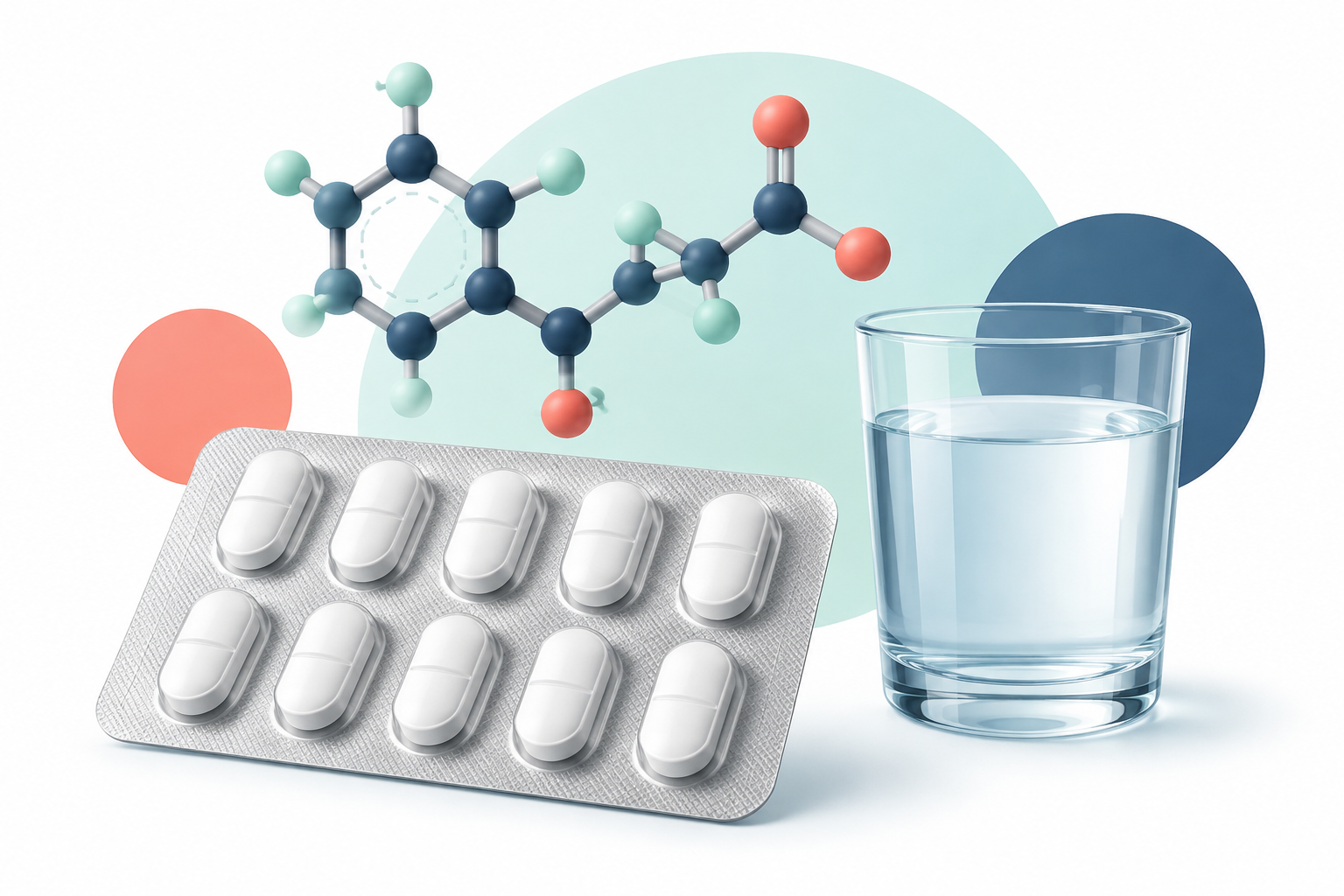
- Chemical Class: Fluoroquinolone (contains a fluorine atom at position 6 and a piperazine ring at position 7)
- Common Strengths:
- Oral Tablets: 250 mg, 500 mg, 750 mg
- Intravenous (IV) Infusion: 200 mg / 100 mL, 400 mg / 200 mL
- Eye/Ear Drops: 0.3% w/v
- Common Brand Names: Ciplox (Cipla), Ciprobid (Zydus Cadila), Cipro (Bayer), Quintor (Torrent)
Dose Chart
| Drug / Form | Adult Dose | Child Dose |
|---|---|---|
| Ciprofloxacin Tablet (Uncomplicated UTI) | 250 mg to 500 mg twice daily for 3 days | Not recommended routinely; 10 to 20 mg/kg/day in two divided doses under strict guidance |
| Ciprofloxacin Tablet (Complicated UTI / Systemic) | 500 mg to 750 mg twice daily for 7 to 14 days | 10 to 20 mg/kg/day in two divided doses (Max: 750 mg/dose) |
| Ciprofloxacin Tablet (Typhoid / GI Infection) | 500 mg twice daily for 7 to 10 days | 15 to 20 mg/kg/day in two divided doses |
| Ciprofloxacin IV Infusion | 200 mg to 400 mg every 12 hours infused slowly over 60 minutes | 6 to 10 mg/kg every 8 to 12 hours (Max: 400 mg/dose) |
| Ciprofloxacin Eye Drops (0.3%) | 1 to 2 drops in the affected eye every 2 to 4 hours | 1 to 2 drops every 2 to 4 hours (for children older than 1 year) |
How it Works in the Human Body
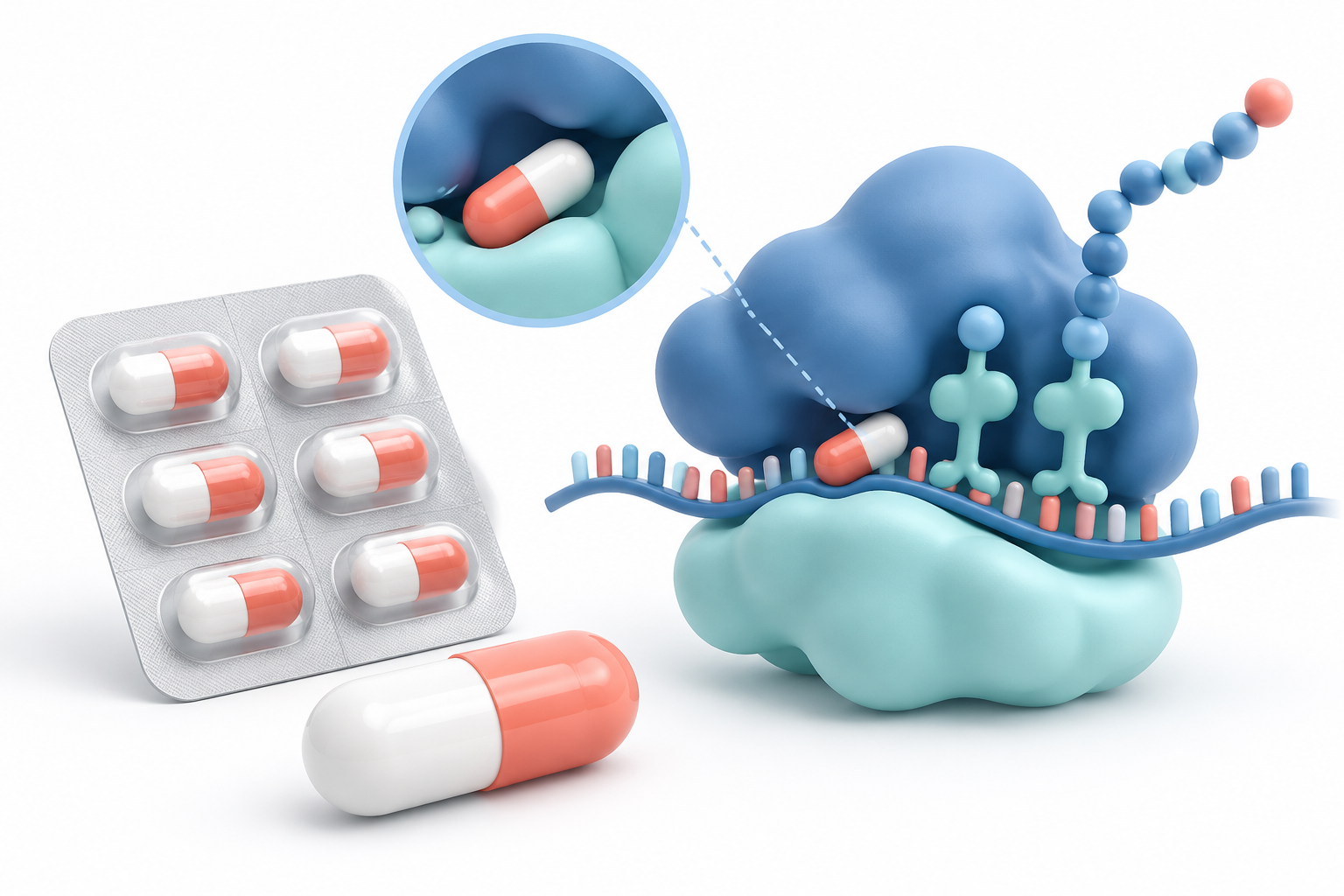
Ciprofloxacin works directly inside the bacterial cell. It stops the bacteria from copying and repairing their genetic material.
- Targeting Enzymes: Bacteria need two key enzymes to handle their DNA. These are DNA gyrase (Topoisomerase II) and Topoisomerase IV.
- In Gram-Negative Bacteria: Ciprofloxacin mainly inhibits DNA gyrase. This enzyme relieves the strain while double-stranded DNA is unwinding. When Ciprofloxacin blocks this enzyme, DNA gets tangled and breaks.
- In Gram-Positive Bacteria: Ciprofloxacin mainly inhibits Topoisomerase IV. This enzyme helps separate daughter DNA strands during cell division. Blocking it stops cell replication.
- Bacterial Cell Death: The blocked enzymes produce double-stranded DNA breaks. The bacterial cell cannot make proteins or divide. This leads to rapid cell lysis and death.
- Absorption and Fate: The drug is well absorbed in the small intestine. It reaches high concentrations in the kidneys, prostate, lungs, and bones. It is excreted mainly through the kidneys by glomerular filtration and tubular secretion.
Side Effects
-
Common Side Effects:
- Nausea and vomiting
- Diarrhea
- Mild abdominal pain
- Headache and dizziness
-
Serious Adverse Effects:
- Tendinitis and Tendon Rupture: It can damage tendons, especially the Achilles tendon.
- Cartilage Toxicity: It causes arthropathy in weight-bearing joints in growing animals and children.
- QT Prolongation: It can cause irregular heart rhythms on an ECG.
- Phototoxicity: Skin becomes very sensitive to sunlight, causing severe sunburns.
- CNS Toxicity: Can lower seizure threshold and cause tremors or confusion.
3 Important Exam Points for GPAT
- Enzyme Specificity: In Gram-negative bacteria, Ciprofloxacin mainly inhibits DNA gyrase (Topoisomerase II). In Gram-positive bacteria, its primary target is Topoisomerase IV.
- Chelation Interaction: Ciprofloxacin forms insoluble chelates with polyvalent metal ions like $Ca^{2+}$, $Mg^{2+}$, $Al^{3+}$, and $Fe^{2+}$. Taking it with milk, antacids, or iron supplements drastically reduces its oral bioavailability.
- Pediatric Contraindication: It is generally contraindicated in children below 18 years and during pregnancy. This is due to the risk of articular cartilage damage (arthropathy) in weight-bearing joints.
3 MCQs
Q1. What is the primary mechanism of action of Ciprofloxacin in Gram-negative bacteria?
A) Inhibition of cell wall synthesis
B) Inhibition of 50S ribosomal subunit
C) Inhibition of DNA gyrase
D) Inhibition of folic acid synthesis
Answer: C
Q2. Which black box warning is strongly associated with the use of fluoroquinolones like Ciprofloxacin?
A) Tendon rupture
B) Aplastic anemia
C) Pulmonary fibrosis
D) Gray baby syndrome
Answer: A
Q3. Co-administration of Ciprofloxacin with which of the following reduces its oral absorption?
A) Paracetamol
B) Aluminium hydroxide antacid
C) Met pre-treatment
D) Vitamin C
Answer: B
FAQs
Why should Ciprofloxacin not be taken with milk?
Milk contains calcium ions. Ciprofloxacin binds to calcium and forms an insoluble complex. This chelation stops the drug from being absorbed in the blood.
Why is Ciprofloxacin avoided in young children?
Ciprofloxacin can cause erosion of cartilage in weight-bearing joints. This can lead to joint pain, swelling, and permanent movement problems in growing children.
Is Ciprofloxacin effective against the common cold?
No. Ciprofloxacin only kills bacteria. The common cold is caused by viruses, so this antibiotic will not work against it.
Take Free Test on this Topic
Check what you learned with quick GPAT-style questions.
Start Free Test →Unlock all 14 Classifications and 50+ Mock Tests with our Student Pro plan.
Unlock NowFor educational use only — not medical advice. Always check doses with current prescribing information.