 DrugClass
Omeprazole vs Pantoprazole: Differences, Dose & GPAT Notes
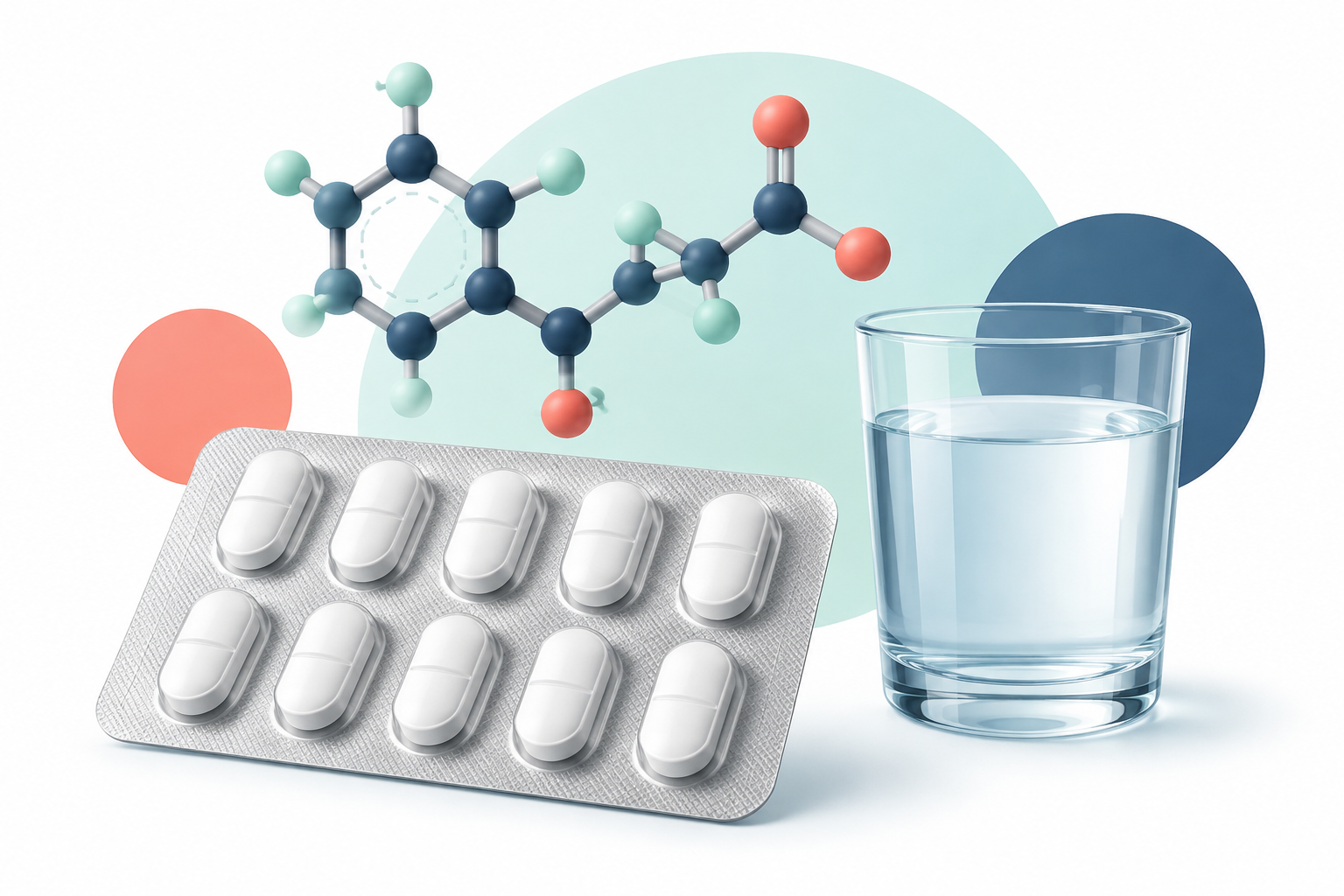
Omeprazole and Pantoprazole are both proton pump inhibitors used to treat acid-related stomach disorders. They reduce gastric acid secretion by blocking the proton pump enzyme in parietal cells. This guide explains their key differences, doses, and essential points for GPAT preparation.
What is it?
Omeprazole and Pantoprazole are medications that belong to the drug class called Proton Pump Inhibitors (PPIs). They are used to treat acid peptic disorders.
Doctors prescribe these drugs for:
- Gastroesophageal reflux disease (GERD)
- Gastric and duodenal ulcers
- Zollinger-Ellison syndrome
- Helicobacter pylori infection (used as part of combination therapy)
- Prevention of ulcers caused by NSAIDs
Omeprazole was the first PPI introduced in clinical medicine. It is considered the prototype drug of this class. Pantoprazole was developed later. Pantoprazole is chemically more stable in neutral to mildly acidic conditions and has fewer drug interactions.
Salt and Composition
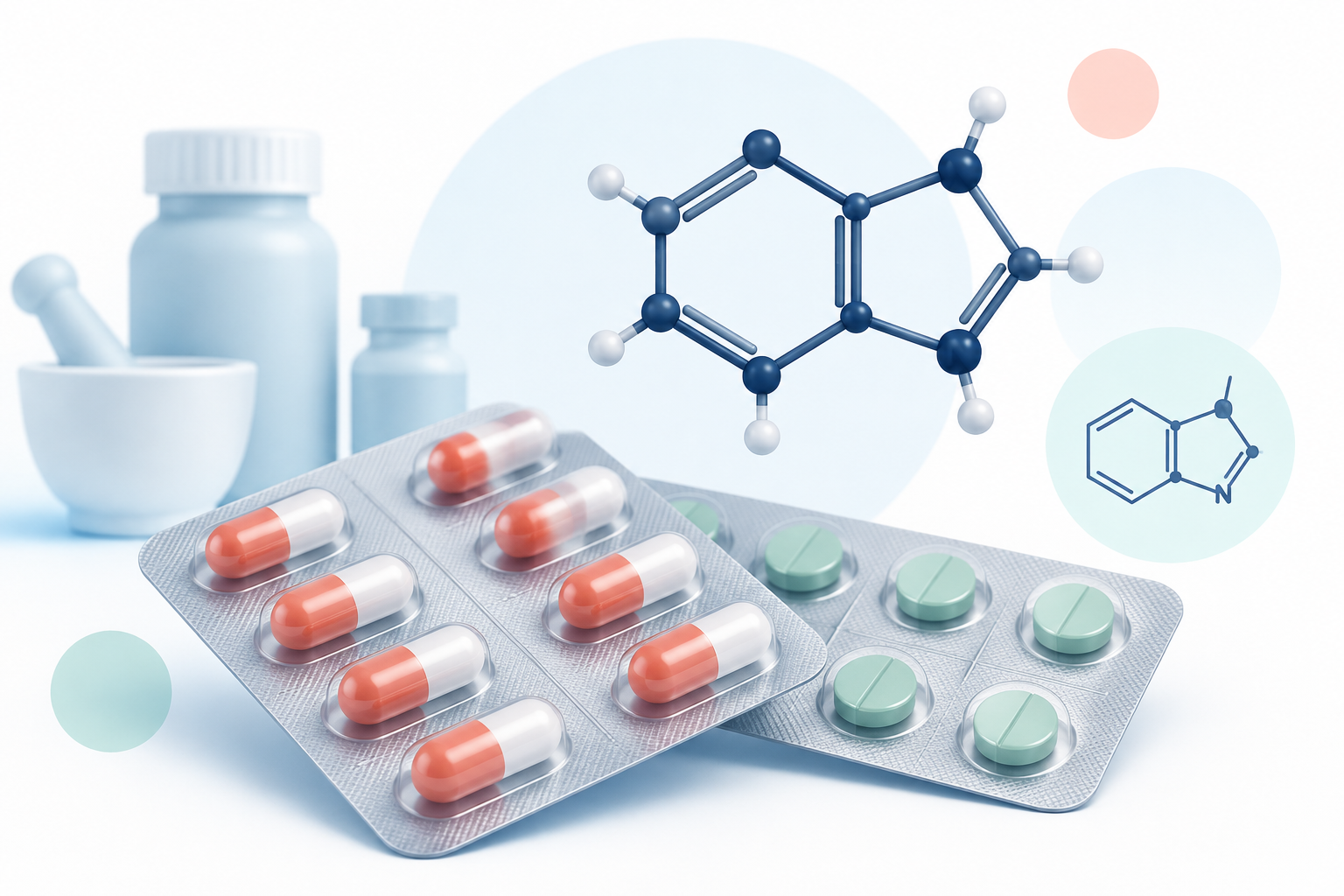
Both drugs belong chemically to the substituted benzimidazole class. They are weak bases that act as prodrugs.
Omeprazole
- Chemical Salt: Omeprazole base or Omeprazole magnesium.
- Common Strengths: 10 mg, 20 mg, and 40 mg.
- Common Dosage Forms: Delayed-release capsules, enteric-coated tablets, and oral suspensions.
- Popular Brand Names: Omez, Prilosec, Ocid, Losec.
Pantoprazole
- Chemical Salt: Pantoprazole sodium sesquihydrate.
- Common Strengths: 20 mg and 40 mg.
- Common Dosage Forms: Enteric-coated tablets and lyophilized powder for intravenous (IV) injection.
- Popular Brand Names: Pan 40, Protonix, Pantocid, Pantodac.
Dose Chart
| Drug / Form | Adult Dose | Child Dose |
|---|---|---|
| Omeprazole (Oral Capsule/Tablet) | 20 mg to 40 mg once daily before meals | 0.7 to 1 mg/kg once daily (children ≥ 1 year / > 10 kg) |
| Omeprazole (IV Infusion) | 40 mg once daily (slow IV injection or infusion) | Safety and dose not widely established in pediatric IV use |
| Pantoprazole (Oral Tablet) | 40 mg once daily in the morning | 20 mg to 40 mg once daily (children ≥ 5 years / ≥ 15 kg) |
| Pantoprazole (IV Injection) | 40 mg once daily over 2 to 15 minutes | Not commonly recommended for routine pediatric use |
Note: Doses are taken 30 to 60 minutes before breakfast for best efficacy.
How it Works in the Human Body
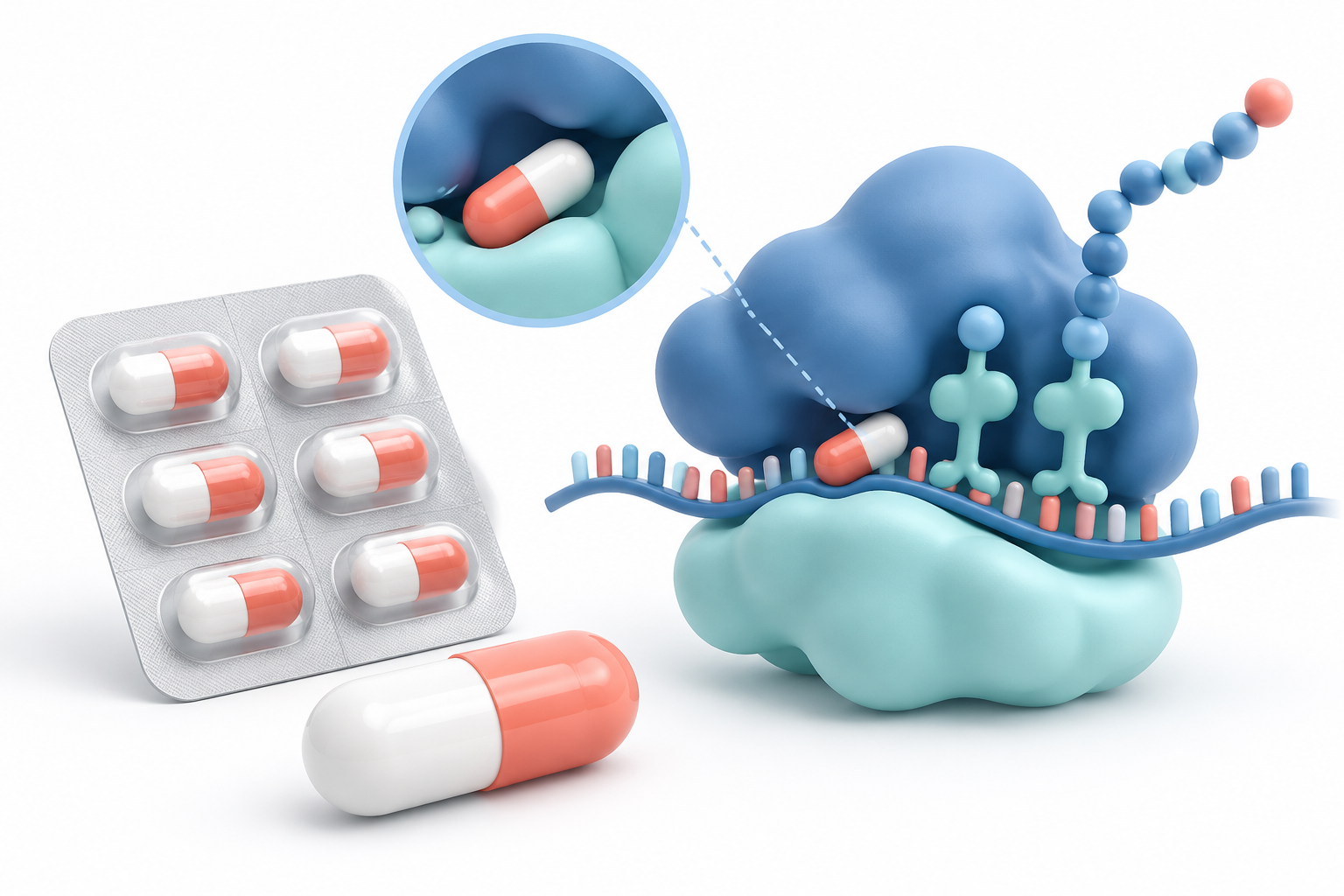
Both drugs act directly on the stomach lining. Here is the step-by-step mechanism of action:
- Absorption in the Intestine: Both drugs are formulated with enteric coatings to prevent breakdown by gastric juice. They pass through the stomach and get absorbed in the small intestine.
- Distribution to Parietal Cells: The drug enters the bloodstream and reaches the gastric parietal cells in the stomach wall.
- Accumulation in Acidic Canaliculi: Parietal cells have tiny canals called secretory canaliculi. These canals have a very low pH (highly acidic).
- Conversion to Active Form: In this acidic environment, the inactive prodrug is protonated. It transforms into an active sulfonamide or sulfenic acid form.
- Enzyme Inhibition: The active molecule forms a covalent disulfide bond with the sulfhydryl (-SH) groups of the $H^+/K^+$ ATPase enzyme (the proton pump).
- Acid Suppression: This enzyme is the final step of acid secretion. Its inhibition stops the transport of hydrogen ions into the stomach lumen. It blocks both basal and stimulated acid production.
Because the binding is irreversible, acid secretion only returns after the cell synthesizes new enzyme molecules.
Side Effects
Both drugs are generally well tolerated, but they can cause adverse effects.
Common Short-Term Side Effects
- Headache
- Diarrhea or constipation
- Abdominal pain
- Nausea and vomiting
- Flatulence
Long-Term Risks (Chronic Use)
- Hypomagnesemia: Low blood magnesium levels.
- Vitamin B12 Deficiency: Acid is needed to absorb vitamin B12 from food.
- Bone Fractures: Decreased calcium absorption can lead to osteoporosis and hip fractures.
- Clostridium difficile Infection: Low stomach acid allows bacterial overgrowth in the gut.
- Hypergastrinemia: The stomach releases excess gastrin to compensate for the loss of acid.
Key Difference in Drug Interactions
Omeprazole strongly inhibits the liver enzyme CYP2C19. Because of this, it reduces the activation of the antiplatelet drug Clopidogrel. Pantoprazole has a much lower affinity for CYP2C19. Therefore, Pantoprazole is preferred in patients taking Clopidogrel.
3 Important Exam Points for GPAT
- Chemical Class: Both drugs are substituted benzimidazoles. They act as prodrugs and require an acidic environment inside parietal cells to convert into active sulfenamide intermediates.
- Drug Interaction with Clopidogrel: Omeprazole significantly inhibits CYP2C19, which reduces the conversion of Clopidogrel into its active form. Pantoprazole has minimal CYP2C19 inhibition and is safer with Clopidogrel.
- Available Dosage Forms: Pantoprazole is widely available and stable as an intravenous (IV) formulation for acute upper gastrointestinal bleeding. Omeprazole is primarily given orally, although IV formulations exist in select regions.
3 MCQs
Q1. Which enzyme is irreversibly inhibited by Omeprazole and Pantoprazole?
- A) Carbonic anhydrase
- B) $H^+/K^+$ ATPase
- C) DOPA decarboxylase
- D) Adenylyl cyclase
Answer: B
Q2. Why is Pantoprazole preferred over Omeprazole in patients taking Clopidogrel?
- A) Pantoprazole increases stomach acidity
- B) Omeprazole has poor oral bioavailability
- C) Pantoprazole has lower inhibition of CYP2C19
- D) Pantoprazole blocks histamine H2 receptors
Answer: C
Q3. Chemically, Proton Pump Inhibitors belong to which heterocyclic class?
- A) Substituted benzimidazoles
- B) Dihydropyridines
- C) Phenothiazines
- D) Indole derivatives
Answer: A
FAQs
When is the best time to take Omeprazole or Pantoprazole?
The best time is 30 to 60 minutes before the first meal of the day. Proton pumps are most active during eating, which allows the drugs to achieve maximum inhibition.
Can Pantoprazole be given through an injection?
Yes. Pantoprazole is readily available as an intravenous (IV) injection. It is commonly used in hospital settings for patients who cannot swallow or have acute bleeding peptic ulcers.
Which drug is safer for long-term heart patients?
Pantoprazole is considered safer for heart patients who take Clopidogrel. It does not interfere with the antiplatelet action of Clopidogrel as much as Omeprazole does.
Take Free Test on this Topic
Check what you learned with quick GPAT-style questions.
Start Free Test →Unlock all 14 Classifications and 50+ Mock Tests with our Student Pro plan.
Unlock NowFor educational use only — not medical advice. Always check doses with current prescribing information.