 DrugClass
Naloxone: Drug Dose, Mechanism and GPAT Exam Guide
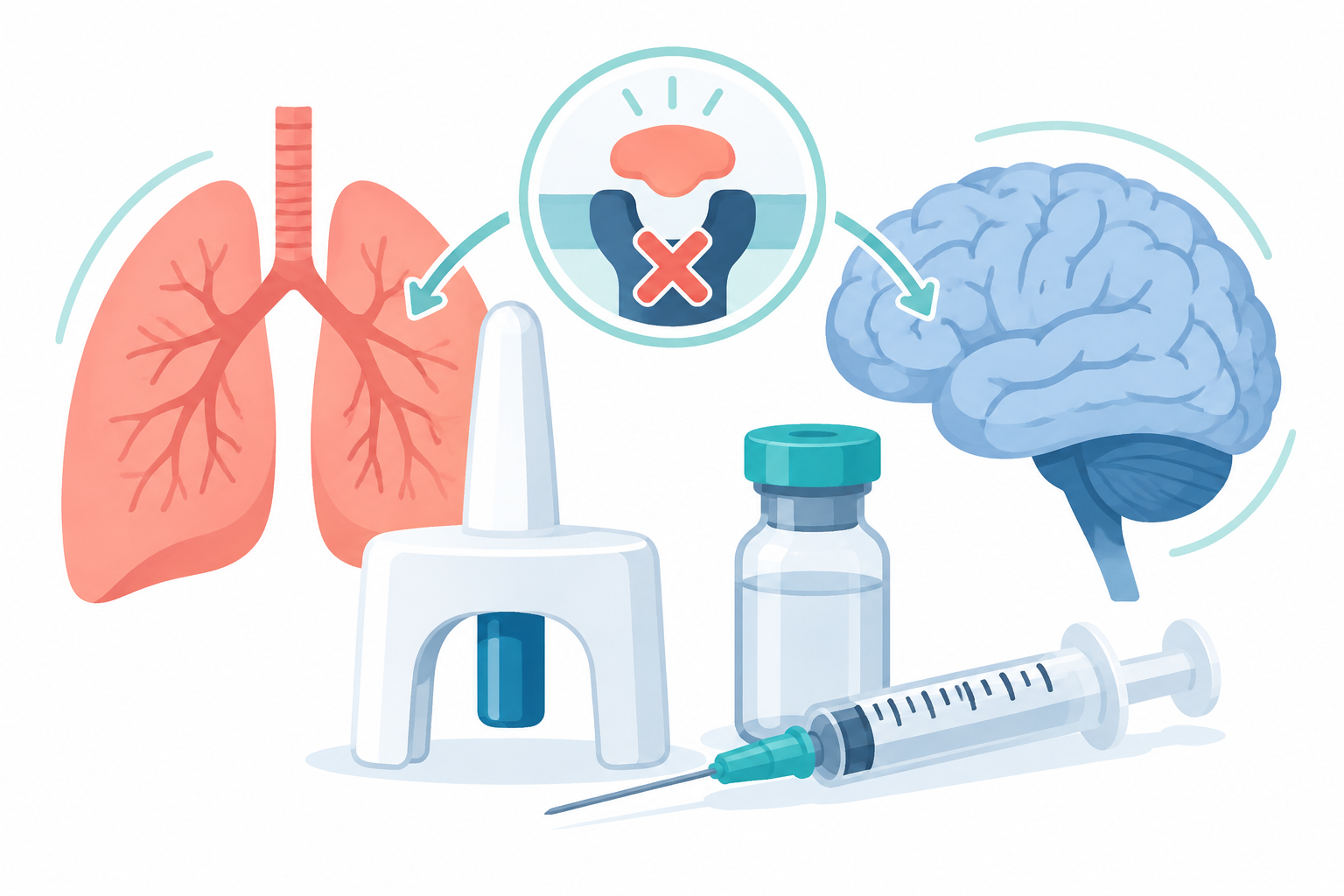
Naloxone blocks opioid receptors and reverses opioid-induced breathing problems. Learn its standard doses, withdrawal-related side effects and the GPAT reason why repeat doses may be needed.
What is it?
Naloxone is an antidote for opioid overdose. It reverses dangerous effects caused by opioids such as morphine, heroin and fentanyl. Its most important action is to restore breathing when opioids have slowed or stopped it.
Naloxone is an opioid receptor antagonist. This means it blocks opioid receptors without producing the usual opioid effects. It does not provide pain relief or cause an opioid “high.”
For B.Pharma and D.Pharma students, naloxone connects receptor pharmacology with emergency care. It is a useful example of competitive antagonism.
Suspect opioid overdose when a person is difficult to wake and has slow, shallow or absent breathing. Pinpoint pupils are common, but they are not always present.
An opioid overdose is an emergency. Call emergency services. Give naloxone if available. Support breathing and follow the emergency operator’s instructions for rescue breathing or CPR. Do not wait for the medicine to work before seeking help.
Dose Chart
These are standard reference doses for suspected opioid overdose. Injectable naloxone is used by trained healthcare professionals. Nasal products differ in strength, so always check the device label.
| Drug / Form | Adult Dose | Child Dose |
|---|---|---|
| Naloxone injection, intravenous route | 0.4–2 mg IV initially. Repeat every 2–3 minutes if needed, based on breathing and response. | 0.01 mg/kg IV initially. If the response is inadequate, a subsequent dose of 0.1 mg/kg may be given. Further treatment needs medical supervision. |
| Naloxone nasal spray, 4 mg single-use device | Give one spray, containing 4 mg, into one nostril. Repeat with a new device every 2–3 minutes if needed. | For a 4 mg product labelled for paediatric use, give one spray into one nostril. Repeat with a new device every 2–3 minutes if needed. |
Important dose notes:
- Use a fresh nasal device for each dose. Alternate nostrils for repeat doses.
- Do not test or prime a single-use nasal device. This wastes its dose.
- Intramuscular or subcutaneous injection may be used when IV access is unavailable, according to the product instructions and clinical protocol.
- Clinicians may start with smaller IV doses and titrate carefully in opioid-dependent patients who are still breathing.
- The treatment target is adequate breathing, not necessarily full alertness or complete loss of pain relief.
- Repeated doses or an IV infusion may be needed for long-acting opioids. This requires monitored hospital care.
These doses are for study and reference. Emergency treatment depends on the patient, exposure and available formulation.
How it Works
Opioids act mainly at mu, kappa and delta receptors. Mu receptors are especially important for pain relief, euphoria and respiratory depression.
These receptors are coupled to inhibitory G proteins, called Gi/o proteins. When an opioid activates them, it reduces adenylyl cyclase activity. It also reduces calcium entry into nerve endings and increases potassium movement out of some neurons. Overall, nerve signalling becomes less active.
In the brainstem, excessive opioid action reduces the drive to breathe. Carbon dioxide rises, while oxygen may fall. This can lead to brain injury or death.
Naloxone competes with opioids for receptor binding. Its clinically important action is blocking mu receptors. By preventing opioid activation, it can reverse respiratory depression.
Remember this sequence:
Opioid receptor activation → reduced breathing drive → naloxone blocks receptors → breathing can improve.
IV naloxone usually starts working within about 1–2 minutes. Nasal administration generally takes a few minutes.
Its effect is often shorter than the effect of the opioid. Respiratory depression can therefore return after an initial improvement. This is why emergency assessment and observation remain essential.
Naloxone does not directly reverse alcohol, benzodiazepine or other non-opioid poisoning. However, it can reverse an opioid component in a mixed overdose.
Side Effects
The main problem is precipitated opioid withdrawal in someone who is physically dependent on opioids.
Possible features include:
- Agitation, anxiety and sweating.
- Nausea, vomiting and diarrhoea.
- Abdominal cramps and body aches.
- Fast heart rate and raised blood pressure.
- Sudden return of pain when opioid analgesia is reversed.
Vomiting can increase the risk of aspiration in a drowsy person. Continue airway monitoring after treatment.
Rare serious events, including pulmonary oedema and abnormal heart rhythms, have been reported after reversal. Monitoring is especially important in patients with heart disease or recent surgery.
Fear of withdrawal should not delay naloxone when opioid overdose is causing dangerous breathing problems.
3 Important Exam Points for GPAT
- Drug class: Naloxone is a competitive opioid receptor antagonist. It has no clinically useful opioid agonist action and does not provide analgesia.
- Main indication: It reverses opioid-induced respiratory depression. Airway support and ventilation remain essential parts of treatment.
- Duration matters: Naloxone may wear off before the opioid. Repeat doses, observation or an infusion may be required. Do not confuse it with longer-acting naltrexone, which is not the usual emergency overdose antidote.
3 MCQs
1. Which receptor is most important in opioid-induced respiratory depression?
A. H1 receptor
B. Mu opioid receptor
C. Beta-2 receptor
D. Muscarinic M3 receptor
Answer: B
2. Naloxone acts mainly by which mechanism?
A. Inhibiting opioid metabolism
B. Increasing opioid release
C. Competitively blocking opioid receptors
D. Activating GABA-A receptors
Answer: C
3. Why can repeat naloxone doses be necessary?
A. Naloxone always causes sedation
B. Naloxone permanently damages opioid receptors
C. Naloxone increases opioid absorption
D. Some opioids act longer than naloxone
Answer: D
FAQs
Does naloxone treat every type of overdose?
No. It reverses opioid effects. Other poisons need their own supportive care and, where available, specific antidotes.
Can naloxone cause dependence?
No. Naloxone does not cause opioid dependence. However, it can trigger withdrawal in someone already dependent on opioids.
Is one nasal dose always enough?
No. Give further doses according to the product instructions if breathing does not improve or worsens again. Emergency help is still needed.
Is naloxone the same as naltrexone?
No. Both block opioid receptors. Naloxone is used for rapid overdose reversal. Naltrexone is longer acting and is used in selected dependence-treatment plans.
Take Free Test on this Topic
Check what you learned with quick GPAT-style questions.
Start Free Test →Unlock all 14 Classifications and 50+ Mock Tests with our Student Pro plan.
Unlock NowFor educational use only — not medical advice. Always check doses with current prescribing information.