DrugClass
Human Body & Drugs
Human Heart and Cardiac Drugs: GPAT Pharmacology Guide
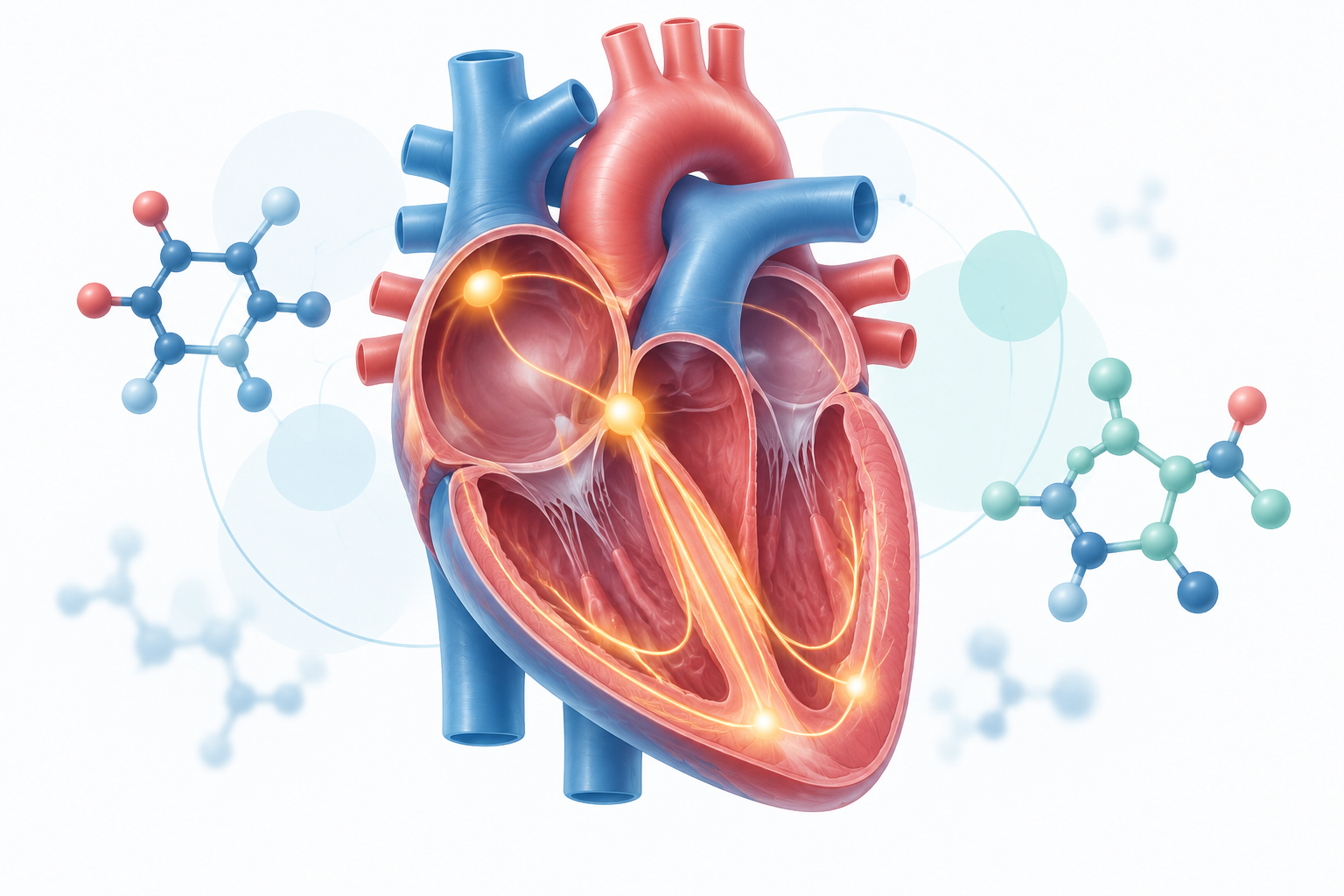
The human heart pumps oxygenated blood to body tissues using a precise electrical conduction system. Cardiovascular drugs alter heart rate, contractility, and rhythm to treat heart failure, angina, and arrhythmias. This guide simplifies cardiac pharmacology for B.Pharma students preparing for GPAT.
What is it?
The human heart is a muscular organ. It acts as a pump for the circulatory system. It has four chambers: two atria and two ventricles. The heart works using electrical impulses. These impulses begin at the Sinoatrial (SA) node. The impulse travels to the Atrioventricular (AV) node, the Bundle of His, and Purkinje fibers.
Drugs that affect the heart are called cardiovascular drugs. They change three main properties of the heart:
- Inotropy: The force of muscle contraction.
- Chronotropy: The heart rate.
- Dromotropy: The speed of electrical conduction.
These drugs treat conditions like congestive heart failure (CHF), hypertension, angina pectoris, and arrhythmias.
Salt and Composition
Many different drug classes act directly on heart tissue. Here are standard prototype salts, their strengths, and common market brands:
-
Digoxin (Cardiac Glycoside)
- Form: Pure crystalline glycoside from Digitalis lanata leaves.
- Strengths: 0.25 mg tablets, 0.05 mg/mL pediatric elixir, 0.5 mg/2 mL injection.
- Brand Examples: Lanoxin, Digon.
-
Atenolol (Cardioselective Beta-1 Blocker)
- Form: Atenolol free base.
- Strengths: 25 mg, 50 mg, 100 mg tablets.
- Brand Examples: Tenormin, Betacard.
-
Diltiazem (Non-Dihydropyridine Calcium Channel Blocker)
- Form: Diltiazem hydrochloride.
- Strengths: 30 mg, 60 mg tablets; 90 mg, 120 mg sustained-release capsules.
- Brand Examples: Dilzem, Cardizem.
-
Amiodarone (Class III Antiarrhythmic)
- Form: Amiodarone hydrochloride (iodinated benzofuran derivative).
- Strengths: 100 mg, 200 mg tablets; 150 mg/3 mL injection.
- Brand Examples: Cordarone, Paceron.
Dose Chart
| Drug / Form | Adult Dose | Child Dose |
|---|---|---|
| Digoxin (Oral Tablet) | 0.125 mg to 0.25 mg once daily | 10 to 15 mcg/kg (micrograms/kg) in divided doses |
| Atenolol (Oral Tablet) | 50 mg to 100 mg once daily | 0.5 to 1 mg/kg once daily (rarely used in children) |
| Diltiazem (Oral Tablet) | 30 mg to 60 mg three times daily | 1.5 to 2 mg/kg/day in divided doses |
| Amiodarone (Oral Tablet) | 200 mg to 400 mg daily (maintenance) | 5 to 10 mg/kg daily (specialized use only) |
| Nitroglycerin (Sublingual) | 0.3 mg to 0.6 mg as needed for angina | Not recommended for pediatric use |
How it Works in the Human Body
Drugs change cardiac function by acting on specific receptors and ion channels. Here is how they work step by step:
-
Targeting Receptors and Pumps:
- Cardiac cells have beta-1 adrenergic receptors and muscarinic M2 receptors.
- Cell membranes also contain ion channels for Sodium (Na+), Potassium (K+), and Calcium (Ca2+), as well as the Na+/K+-ATPase pump.
-
Changing Ion Movement:
- Digoxin: Inhibits the membrane-bound Na+/K+-ATPase pump. This increases intracellular sodium. Next, the Na+/Ca2+ exchanger reverses its work. This traps calcium inside the cardiac cell. More free calcium binds to troponin-C. This increases the force of contraction (positive inotropic effect).
- Beta-Blockers (e.g., Atenolol): Block beta-1 receptors. This stops cyclic AMP (cAMP) production. Intracellular calcium drops. Heart rate slows down (negative chronotropic effect) and myocardial oxygen demand decreases.
- Calcium Channel Blockers (e.g., Diltiazem): Block L-type voltage-gated calcium channels in the AV node and myocardium. This slows AV conduction and relaxes vascular smooth muscles.
-
Result on Blood Circulation:
- The heart beats more efficiently or slows down to rest.
- Blood pressure falls, and cardiac workload decreases.
Side Effects
Cardiac drugs have narrow safety margins. Common side effects include:
- Bradycardia: Heart rate drops below 60 beats per minute (common with beta-blockers and diltiazem).
- Hypotension: Low blood pressure causing dizziness and fainting.
- Cardiac Arrhythmias: Extra beats, heart block, or ventricular tachycardia.
- Digoxin Toxicity: Nausea, vomiting, abdominal pain, yellow-green visual halos (xanthopsia), and heart block.
- Electrolyte Imbalance: Hypokalemia (low potassium) makes digoxin toxicity worse.
- Pulmonary Fibrosis and Thyroid Issues: Amiodarone contains iodine and can cause lung damage or thyroid dysfunction.
3 Important Exam Points for GPAT
- Digoxin Mechanism and Poisoning Antidote: Digoxin inhibits the Na+/K+-ATPase pump. It has a low therapeutic index (0.5 to 2.0 ng/mL). The specific antidote for severe toxicity is Digoxin-specific Fab fragments (Digibind).
- Vaughan Williams Classification of Antiarrhythmics:
- Class I: Sodium channel blockers (e.g., Quinidine, Lidocaine, Flecainide).
- Class II: Beta-adrenergic blockers (e.g., Propranolol, Esmolol).
- Class III: Potassium channel blockers (e.g., Amiodarone, Sotalol).
- Class IV: Calcium channel blockers (e.g., Verapamil, Diltiazem).
- Wolff-Parkinson-White (WPW) Contraindication: Digoxin and Verapamil are strictly contraindicated in WPW syndrome with atrial fibrillation. They accelerate conduction down the accessory pathway (Bundle of Kent), causing fatal ventricular fibrillation.
3 MCQs
Q1. Which ion directly causes the positive inotropic effect of Digoxin inside cardiac myocytes? A) Potassium B) Sodium C) Calcium D) Magnesium
Answer: C
Q2. Amiodarone belongs to which class of the Vaughan Williams classification? A) Class I B) Class II C) Class III D) Class IV
Answer: C
Q3. Which visual disturbance is a classic sign of digitalis toxicity? A) Red-green blindness B) Yellow-green halos (Xanthopsia) C) Total night blindness D) Loss of peripheral vision
Answer: B
FAQs
Why does hypokalemia worsen digoxin toxicity?
Potassium and digoxin compete for the same binding site on the Na+/K+-ATPase pump. When blood potassium is low, more digoxin binds to the pump. This increases drug action and leads to toxicity.
What is the difference between chronotropy and inotropy?
Chronotropy refers to the heart rate or speed of the heartbeat. Inotropy refers to the contractile force or muscular strength of each heartbeat.
Which beta-blocker is ultra-short acting and given by IV route?
Esmolol is an ultra-short-acting beta-1 selective blocker. It has an elimination half-life of about 9 minutes due to rapid hydrolysis by red blood cell esterases.
Take Free Test on this Topic
Check what you learned with quick GPAT-style questions.
Start Free Test →Unlock all 14 Classifications and 50+ Mock Tests with our Student Pro plan.
Unlock NowFor educational use only — not medical advice. Always check doses with current prescribing information.