DrugClass
Medicine Guide
Levocetirizine for Cold and Allergy: Dose, Uses, and GPAT Notes
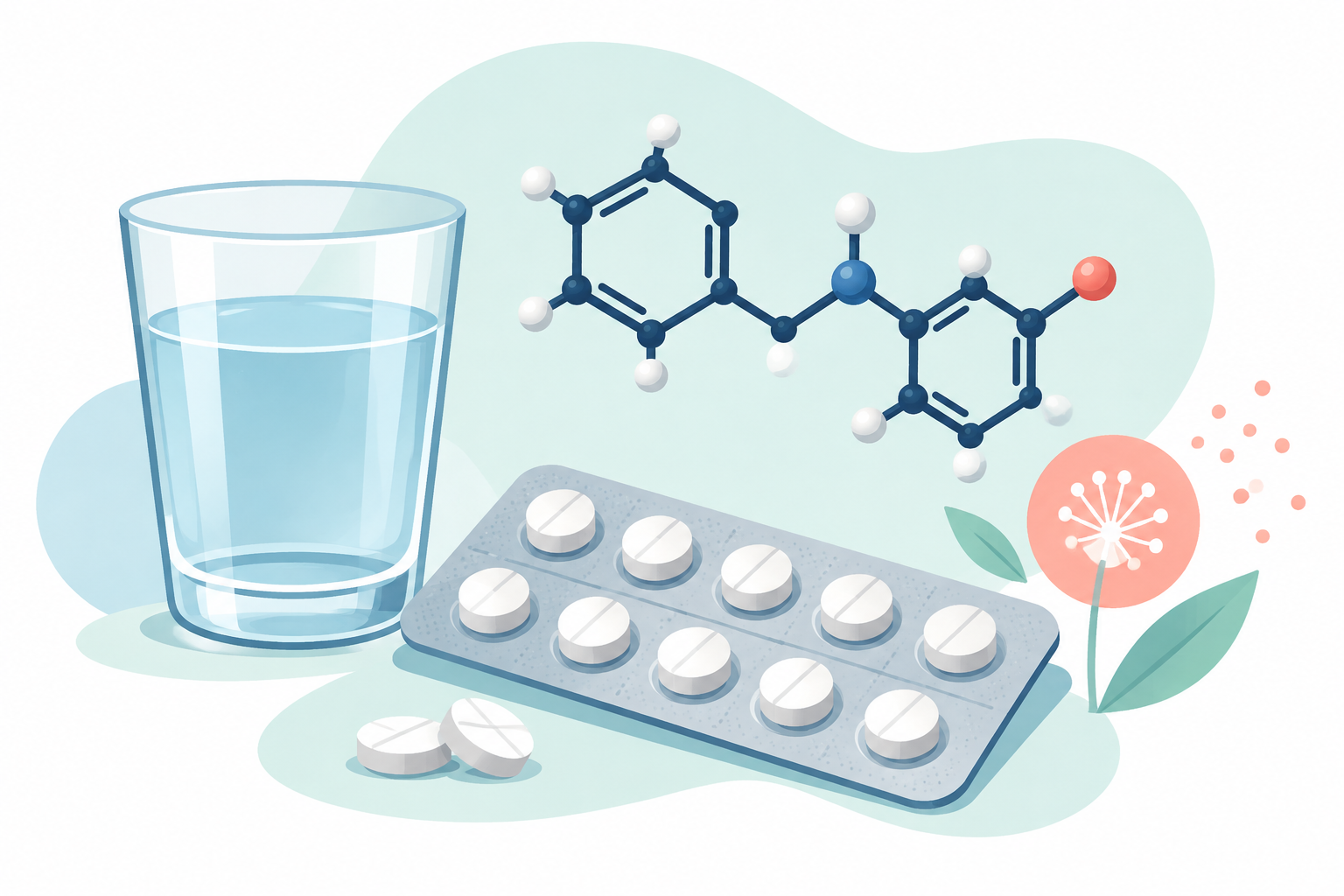
Levocetirizine is a popular antihistamine used to relieve allergy and cold symptoms. It is the active R-enantiomer of cetirizine and causes less sedation. This guide covers its doses, working mechanism, and key points for pharmacy exams.
What is it?
Levocetirizine is an antihistamine medicine. It belongs to the second-generation class of antihistamines. Some textbooks also call it a third-generation antihistamine.
Doctors prescribe it to treat allergy symptoms. It helps treat allergic rhinitis, hay fever, and watery eyes. It also relieves sneezing, runny nose, and itching caused by the common cold. Additionally, it treats chronic hives or urticaria.
Salt and Composition
Levocetirizine is available as a chemical salt called Levocetirizine Dihydrochloride.
It is the pure (R)-enantiomer of cetirizine. It has a piperazine chemical ring in its structure.
Common Strengths
- Tablets: 2.5 mg and 5 mg
- Oral Syrup: 2.5 mg per 5 mL
Popular Brand Examples
- Xyzal
- Levocet
- Teczine
- 1-AL
- Vozet
Dose Chart
Here is the standard dose chart for Levocetirizine. Take it by mouth, usually in the evening with or without food.
| Drug / Form | Adult Dose | Child Dose |
|---|---|---|
| Levocetirizine Tablet | 5 mg once daily at bedtime | 2.5 mg once daily (Children 6 to 11 years) |
| Levocetirizine Syrup (2.5 mg/5 mL) | 5 mg (10 mL) once daily | 1.25 mg (2.5 mL) once daily (Children 6 months to 5 years) |
Note: Reduce the dose in patients with renal impairment based on creatinine clearance.
How it Works in the Human Body
Levocetirizine works on the immune and respiratory systems. Here is the step-by-step mechanism:
- Allergen Entry: Pollen, dust, or cold triggers enter the nose or eyes.
- Histamine Release: Mast cells and basophils break open and release histamine.
- Receptor Binding: Histamine travels and tries to bind to peripheral H1 receptors.
- Receptor Blockade: Levocetirizine acts as an inverse agonist. It blocks the H1 receptors selectively.
- Symptom Relief: It stops blood vessels from dilating. It prevents fluid leakage and reduces redness and swelling. It stops the sensory nerve stimulation that causes sneezing and itching.
Levocetirizine does not cross the blood-brain barrier easily. Therefore, it causes much less sleepiness than first-generation antihistamines like diphenhydramine.
Side Effects
Levocetirizine is safe for most patients. However, some people may experience mild side effects:
- Mild drowsiness or fatigue
- Dry mouth
- Headache
- Nasopharyngitis (sore throat)
- Mild stomach pain
- Dizziness
3 Important Exam Points for GPAT
- Chirality and Potency: Levocetirizine is the active (R)-enantiomer of racemic cetirizine. It has a two-fold higher binding affinity for human H1 receptors than cetirizine and a 30-fold higher affinity than the (S)-enantiomer (dextrocetirizine).
- Chemical Classification: It belongs to the piperazine derivative class of H1 antihistamines. It has a carboxylic acid group that reduces CNS penetration.
- Pharmacokinetics: It is rapidly absorbed orally with high bioavailability. About 85% of the drug is excreted unchanged in urine. Dose adjustment is strictly necessary in patients with kidney dysfunction.
3 MCQs
Q1. Levocetirizine is the pure active enantiomer of which parent drug?
- A) Hydroxyzine
- B) Cetirizine
- C) Loratadine
- D) Chlorpheniramine
Answer: B
Q2. To which chemical class does levocetirizine belong?
- A) Ethanolamines
- B) Alkylamines
- C) Piperazines
- D) Ethylenediamines
Answer: C
Q3. How is the major portion of levocetirizine eliminated from the body?
- A) Hepatic metabolism via CYP3A4
- B) Unchanged excretion in feces
- C) Unchanged excretion in urine
- D) Biliary excretion
Answer: C
FAQs
Does levocetirizine cause sleepiness?
It causes less drowsiness than first-generation antihistamines. However, some people can still feel mild sleepiness. It is best taken at night.
Can levocetirizine cure a common cold?
No, it does not kill the cold virus. It only relieves runny nose, sneezing, and watery eyes caused by the cold.
What is the best time to take levocetirizine?
The evening is the best time. Taking it at bedtime helps manage morning allergy symptoms and avoids daytime drowsiness.
Take Free Test on this Topic
Check what you learned with quick GPAT-style questions.
Start Free Test →Unlock all 14 Classifications and 50+ Mock Tests with our Student Pro plan.
Unlock NowFor educational use only — not medical advice. Always check doses with current prescribing information.