DrugClass
Human Body & Drugs
Human Liver and Hepatotoxic Drugs: GPAT Pharmacy Guide
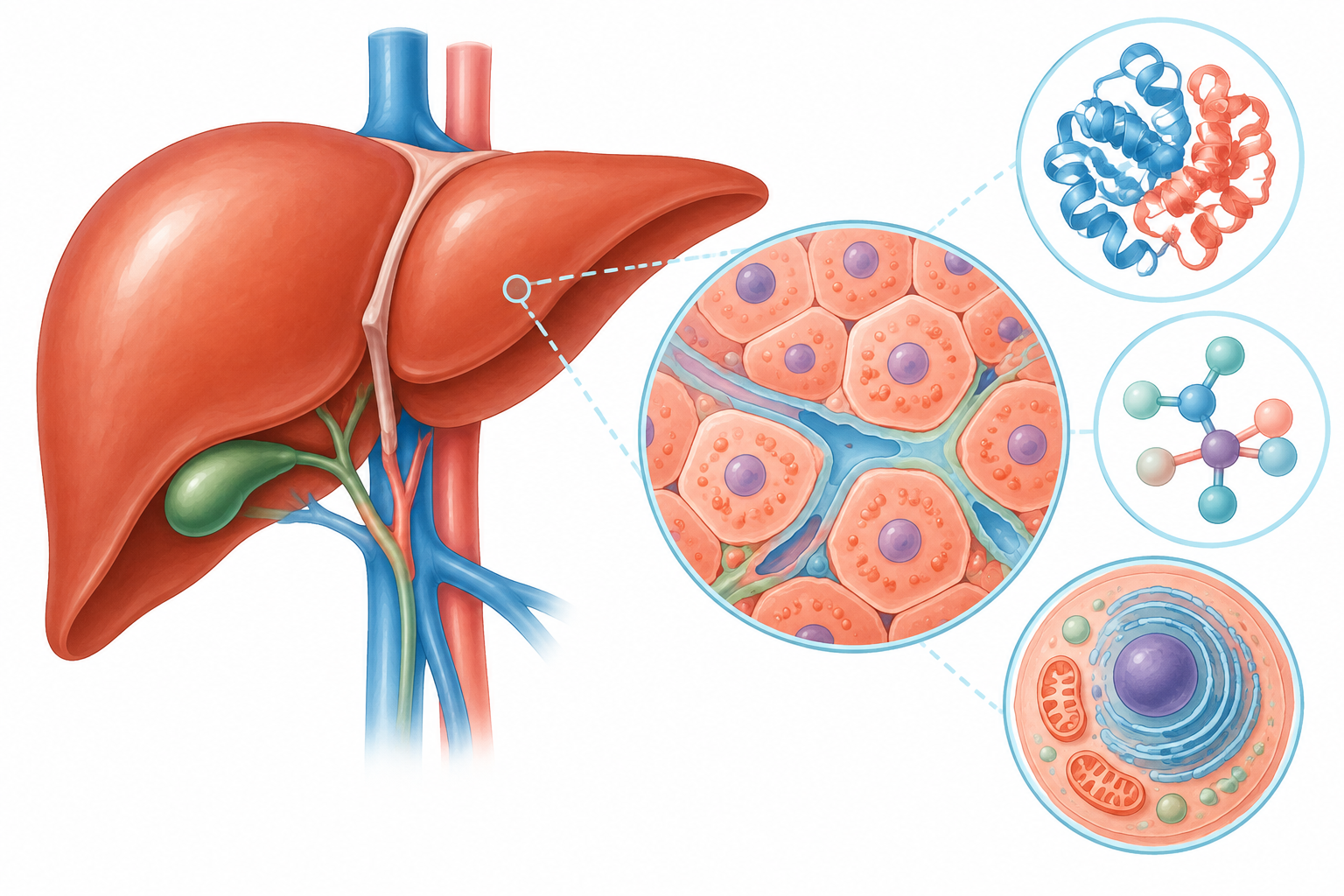
The human liver is the primary organ for drug metabolism. Certain medications can damage liver cells and cause drug-induced liver injury. This guide covers hepatotoxic drugs, their toxic mechanisms, and key GPAT exam concepts.
What is it?
The liver is the largest internal organ in the human body. It acts as the body's main chemical processing plant.
The liver performs several life-saving functions:
- It breaks down nutrients from food.
- It produces bile to digest fats.
- It makes vital blood proteins like albumin and clotting factors.
- It detoxifies drugs and harmful chemicals.
Hepatotoxicity refers to liver damage caused by chemicals or medicines. Drugs that injure the liver are called hepatotoxic drugs. Drug-Induced Liver Injury (DILI) is a major reason why drugs fail clinical trials or get withdrawn from the market.
Liver injury can happen in two main ways:
- Intrinsic toxicity: Predictable and dose-dependent (e.g., Paracetamol toxicity).
- Idiosyncratic toxicity: Unpredictable and independent of dose (e.g., Isoniazid or Halothane allergy).
Salt and Composition
Many different drug classes can cause liver damage. Below are the most common hepatotoxic drugs, their chemical nature, and common market forms:
-
Paracetamol (Acetaminophen)
- Chemical nature: Para-aminophenol derivative.
- Strengths: 500 mg, 650 mg tablets; 150 mg/mL injections.
- Brand examples: Calpol, Dolo-650, Crocin.
-
Isoniazid (INH)
- Chemical nature: Isonicotinic acid hydrazide.
- Strengths: 100 mg, 300 mg tablets.
- Brand examples: Solonex, Macrozide.
-
Rifampicin
- Chemical nature: Semisynthetic rifamycin antibiotic.
- Strengths: 150 mg, 300 mg, 450 mg capsules.
- Brand examples: R-Cin, Rifagut.
-
Methotrexate
- Chemical nature: Folate antimetabolite.
- Strengths: 2.5 mg, 5 mg, 10 mg tablets.
- Brand examples: Folitrax, Imutrex.
Dose Chart
| Drug / Form | Adult Dose | Child Dose |
|---|---|---|
| Paracetamol Tablet | 500 mg to 1000 mg every 4-6 hours (Max: 4000 mg/day) | 10 to 15 mg/kg every 4-6 hours |
| Isoniazid Tablet | 300 mg once daily (or 5 mg/kg/day) | 10 to 15 mg/kg once daily |
| Rifampicin Capsule | 450 mg to 600 mg once daily | 10 to 20 mg/kg once daily |
| Methotrexate Tablet | 7.5 mg to 15 mg once weekly | 10 to 15 mg/m² once weekly |
Note: High doses of Paracetamol above 7.5 to 10 grams in adults can cause fatal hepatic necrosis.
How it Works in the Human Body
1. Liver Anatomy and Blood Flow
The liver receives blood from two sources. The portal vein brings blood rich in nutrients and drugs from the gut. The hepatic artery brings oxygen-rich blood. Blood enters functional units called hepatic lobules.
2. Drug Metabolism Phases
Liver cells (hepatocytes) process drugs in two main phases:
- Phase I (Functionalization): Cytochrome P450 enzymes (CYP450) add or expose reactive groups via oxidation, reduction, or hydrolysis.
- Phase II (Conjugation): Enzymes attach polar molecules like glucuronic acid or glutathione. This makes the drug water-soluble for excretion in bile or urine.
3. Mechanism of Liver Damage
Hepatotoxic drugs damage the liver through specific pathways:
- Toxic Metabolite Formation: In normal doses, Paracetamol is conjugated safely. In overdose, Phase II pathways get saturated. Cytochrome P450 (mainly CYP2E1) converts the drug into a toxic electrophile called NAPQI (N-acetyl-p-benzoquinone imine).
- Glutathione Depletion: Under normal conditions, glutathione neutralizes NAPQI. When glutathione falls below 30% of normal levels, NAPQI binds covalently to cell proteins.
- Mitochondrial Stress: NAPQI binds to mitochondrial proteins. This disrupts ATP production and creates reactive oxygen species (ROS).
- Cell Death: The hepatocytes swell and burst, leading to acute centrilobular hepatic necrosis.
Side Effects
Hepatotoxicity produces clear clinical signs and symptoms:
- Nausea, vomiting, and loss of appetite
- Right upper quadrant abdominal pain
- Jaundice (yellow discoloration of eyes and skin)
- Dark-colored urine and pale stools
- Extreme weakness and fatigue
- Elevated serum transaminases (ALT and AST)
- Prolonged Prothrombin Time (PT/INR) due to loss of clotting factors
- Hepatic encephalopathy (confusion, coma in severe cases)
3 Important Exam Points for GPAT
- Paracetamol Antidote: N-Acetylcysteine (NAC) is the specific antidote for paracetamol toxicity. It works by replenishing hepatic glutathione stores and acting as a glutathione substitute. It is most effective when given within 8 to 10 hours of ingestion.
- Zone 3 Vulnerability: Centrilobular necrosis (Zone 3 of the liver acinus) is typical in paracetamol toxicity because Zone 3 has the highest concentration of CYP2E1 enzymes and the lowest oxygen tension.
- Anti-TB Drug Hepatotoxicity: Among first-line anti-TB drugs, Isoniazid, Rifampicin, and Pyrazinamide are hepatotoxic. Pyrazinamide is the most hepatotoxic, while Ethambutol and Streptomycin are non-hepatotoxic.
3 MCQs
-
Which toxic metabolite is responsible for paracetamol-induced hepatic necrosis? A) N-acetyl cysteine
B) N-acetyl-p-benzoquinone imine (NAPQI)
C) Para-aminophenol
D) Acetic acid
Answer: B -
Which zone of the liver acinus is most sensitive to damage caused by CYP2E1-mediated toxic metabolites? A) Zone 1 (Periportal)
B) Zone 2 (Midzonal)
C) Zone 3 (Centrilobular)
D) Zone 4
Answer: C -
Which of the following first-line antitubercular drugs does NOT cause hepatotoxicity? A) Rifampicin
B) Isoniazid
C) Pyrazinamide
D) Ethambutol
Answer: D
FAQs
What is the primary enzyme responsible for generating NAPQI from paracetamol?
CYP2E1 is the primary cytochrome P450 isoenzyme that converts paracetamol into toxic NAPQI. CYP1A2 and CYP3A4 also contribute to a minor extent.
Why does chronic alcohol intake increase paracetamol hepatotoxicity?
Chronic alcohol consumption induces the CYP2E1 enzyme and depletes baseline glutathione reserves. This leads to higher NAPQI formation even with lower doses of paracetamol.
What lab marker is the most specific indicator of acute liver injury?
Serum Alanine Aminotransferase (ALT) is the most specific marker for liver injury because ALT is concentrated mainly in hepatocyte cytoplasm, unlike AST which is also found in heart and muscle tissue.
Take Free Test on this Topic
Check what you learned with quick GPAT-style questions.
Start Free Test →Unlock all 14 Classifications and 50+ Mock Tests with our Student Pro plan.
Unlock NowFor educational use only — not medical advice. Always check doses with current prescribing information.