DrugClass
Human Body & Drugs
Human Kidney and Nephrotoxic Drugs: GPAT Study Guide
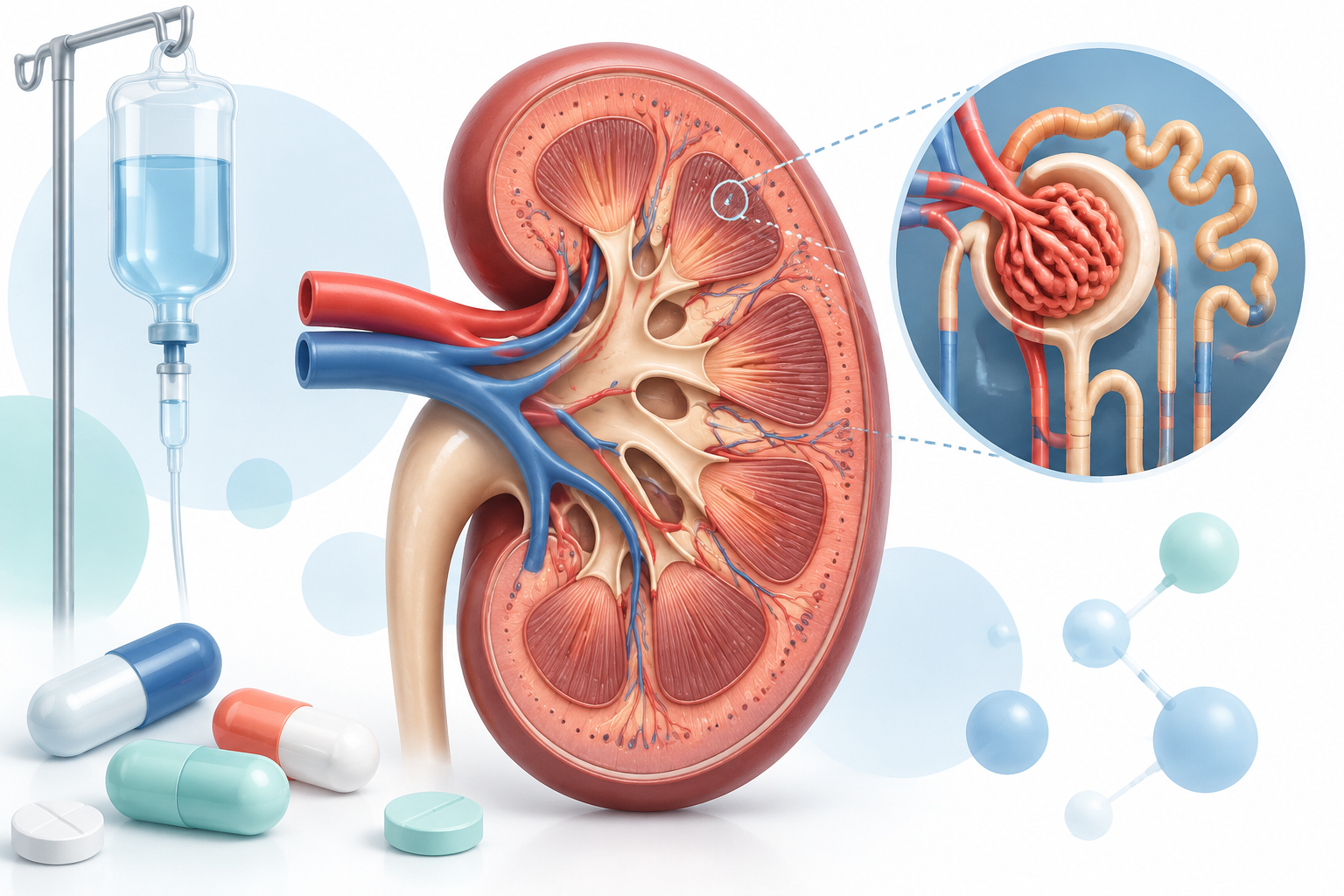
The human kidney filters metabolic waste and maintains fluid balance. Certain medicines can damage kidney tubules and glomeruli, leading to nephrotoxicity. This guide explains key nephrotoxic drugs, mechanisms, and important GPAT exam concepts.
What is it?
The human kidney is a vital excretory organ. Humans have two bean-shaped kidneys located in the retroperitoneal space. Each kidney contains about one million microscopic functional units called nephrons.
The main job of the kidney is to remove metabolic waste from the blood. It maintains water balance, electrolyte levels, and acid-base status. It also produces important hormones like erythropoietin, renin, and calcitriol.
Nephrotoxic medicines are drugs that cause temporary or permanent damage to the kidneys. Because kidneys filter large volumes of blood, they are exposed to high concentrations of drugs and their metabolites. This makes the renal tissue vulnerable to direct toxic injury, decreased blood flow, and tubular obstruction.
Salt and Composition
Nephrotoxicity is caused by different classes of drugs. Here are key nephrotoxic salts, their strengths, and common brand names:
- Gentamicin Sulphate: Aminoglycoside antibiotic. Injection strength: 40 mg/mL, 80 mg/2 mL vial. Brand name: Garamycin.
- Amphotericin B (Deoxycholate / Liposomal): Polyene antifungal. Powder for injection: 50 mg/vial. Brand names: Fungizone (conventional), Ambisome (liposomal).
- Cisplatin: Platinum-based alkylating antineoplastic agent. Injection strength: 10 mg/vial, 50 mg/vial. Brand name: Cisplat.
- Ibuprofen: Non-steroidal anti-inflammatory drug (NSAID). Tablet strengths: 200 mg, 400 mg, 600 mg. Brand name: Brufen.
- Vancomycin Hydrochloride: Glycopeptide antibiotic. Powder for infusion: 500 mg, 1 g vial. Brand name: Vancocin.
Dose Chart
| Drug / Form | Adult Dose | Child Dose |
|---|---|---|
| Gentamicin (IV/IM Injection) | 3 to 5 mg/kg/day divided every 8 hours (or once daily) | 2 to 2.5 mg/kg every 8 hours |
| Amphotericin B Conventional (IV) | 0.5 to 1 mg/kg/day slow IV infusion | 0.25 to 1 mg/kg/day slow IV infusion |
| Cisplatin (IV Infusion) | 50 to 100 mg/m² as a single dose every 3 to 4 weeks | 30 to 60 mg/m² every 3 to 4 weeks |
| Ibuprofen (Oral Tablet) | 400 mg every 6 to 8 hours (max 2400 mg/day) | 5 to 10 mg/kg every 6 to 8 hours (max 40 mg/kg/day) |
| Vancomycin (IV Infusion) | 15 to 20 mg/kg every 8 to 12 hours | 10 to 15 mg/kg every 6 hours |
How it Works in the Human Body
The kidney processes blood through three main steps: glomerular filtration, tubular reabsorption, and tubular secretion.
- Glomerular Filtration: Blood enters the kidney through the renal artery. It reaches the glomerulus via the afferent arteriole. Water, ions, and small drug molecules are filtered into Bowman's capsule.
- Concentration in Tubules: As filtrate passes through the proximal convoluted tubule and loop of Henle, water is reabsorbed. This drastically increases the concentration of drug molecules inside the tubular fluid.
- Cellular Uptake: Drugs like Gentamicin bind to acidic phospholipids on the brush border membrane of proximal tubular cells. The cells take up the drug via pinocytosis.
- Cellular Damage: Inside tubular cells, Gentamicin accumulates in lysosomes and ruptures them. This releases hydrolytic enzymes that cause acute tubular necrosis (ATN).
- Vascular Constriction: Other drugs like NSAIDs block renal cyclooxygenase (COX) enzymes. This stops the production of prostaglandins (PGE2 and PGI2). Without prostaglandins, the afferent arteriole constricts. This cuts down renal blood flow and reduces the Glomerular Filtration Rate (GFR).
Side Effects
When nephrotoxic drugs injure the kidney, patients may develop several clinical signs and symptoms:
- Oliguria or Anuria: Markedly reduced urine output (less than 400 mL/day).
- Elevated Serum Creatinine and BUN: Build-up of nitrogenous wastes in the bloodstream.
- Proteinuria and Casts: Leakage of albumin and renal tubular cells into the urine.
- Electrolyte Imbalances: Hypokalemia, hypomagnesemia (common with Amphotericin B and Cisplatin), or hyperkalemia (common with NSAIDs and ACE inhibitors).
- Fluid Retention and Edema: Swelling around the ankles, eyes, and lungs due to impaired sodium and water clearance.
- Renal Tubular Acidosis: Inability of tubules to excrete hydrogen ions or reabsorb bicarbonate.
3 Important Exam Points for GPAT
- Amifostine as a Chemoprotectant: Amifostine is an organic thiophosphate cytoprotective agent. It scavenges free radicals generated by Cisplatin and prevents Cisplatin-induced nephrotoxicity.
- NSAID-Induced Prerenal Azotemia: Prostaglandins (PGE2, PGI2) dilate the afferent arteriole. NSAIDs block prostaglandin synthesis. This causes intense afferent arteriolar constriction and decreases GFR.
- Aminoglycoside Toxicity Mechanism: Aminoglycosides accumulate selectively in the proximal convoluted tubule via megalin-cubilin receptor complexes, leading to acute tubular necrosis. Neomycin is the most nephrotoxic aminoglycoside, while Streptomycin is the least nephrotoxic.
3 MCQs
Q1. Which of the following aminoglycoside antibiotics exhibits the highest potential for nephrotoxicity?
A) Streptomycin
B) Neomycin
C) Gentamicin
D) Tobramycin
Answer: B
Q2. What cytoprotective drug is clinically administered to reduce Cisplatin-induced renal toxicity?
A) Mesna
B) Amifostine
C) Dexrazoxane
D) Leucovorin
Answer: B
Q3. NSAIDs cause acute renal failure mainly by inhibiting the synthesis of which mediator?
A) Angiotensin II
B) Thromboxane A2
C) Renal Prostaglandins
D) Erythropoietin
Answer: C
FAQs
What is the most sensitive early clinical marker of nephrotoxicity?
Serum creatinine is the classic marker, but it rises late. Serum Cystatin C and urinary NGAL (Neutrophil Gelatinase-Associated Lipocalin) are modern, highly sensitive biomarkers for detecting early acute kidney injury.
Why does aggressive saline hydration protect against Cisplatin nephrotoxicity?
Saline hydration promotes high urine flow and renal clearance. This dilutes Cisplatin concentrations within the renal tubules and reduces drug contact time with tubular epithelial cells.
Are liposomal forms of Amphotericin B less nephrotoxic?
Yes. Liposomal formulations deliver the drug preferentially to fungal cell membranes and reticuloendothelial organs. This reduces direct exposure and toxic uptake in mammalian renal tubules.
Take Free Test on this Topic
Check what you learned with quick GPAT-style questions.
Start Free Test →Unlock all 14 Classifications and 50+ Mock Tests with our Student Pro plan.
Unlock NowFor educational use only — not medical advice. Always check doses with current prescribing information.