DrugClass
Drug Side Effects
Aspirin Side Effects and Drug Dose: GPAT Revision Guide
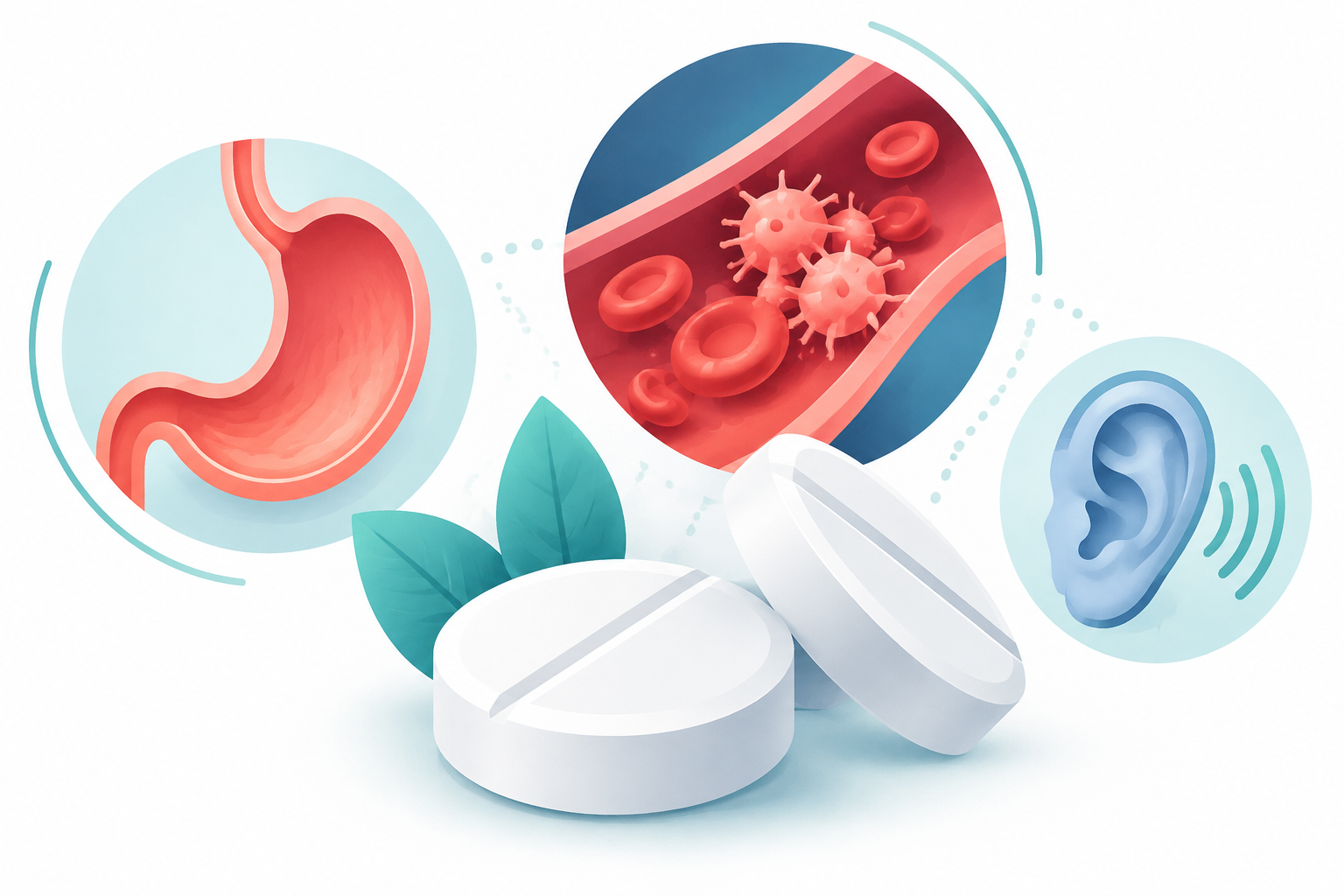
Aspirin can cause stomach ulcers, bleeding, bronchospasm, and salicylate toxicity. This GPAT guide explains standard adult doses, irreversible platelet inhibition, and the important warning about Reye syndrome.
What is it?
Aspirin is also called acetylsalicylic acid. It belongs to the non-steroidal anti-inflammatory drug group, or NSAIDs. It reduces pain, fever, and inflammation. At low doses, it also prevents platelets from forming clots.
Doctors commonly prescribe low-dose aspirin after a heart attack or certain types of stroke. However, it is not suitable for every stroke. Bleeding in the brain must be excluded before aspirin is used for an acute stroke.
For B.Pharma and D.Pharma students, aspirin is an important example of a drug with dose-dependent actions. Its key adverse effects include stomach irritation, bleeding, bronchospasm, and salicylate toxicity.
These notes are for study. Aspirin should not be started for heart protection without medical advice. Its bleeding risk can outweigh its benefit.
Dose Chart
The following are standard adult oral doses. The correct dose depends on the indication and the patient's bleeding risk.
| Drug / Form | Adult Dose | Child Dose |
|---|---|---|
| Aspirin, immediate-release oral tablets for pain or fever | 325–650 mg every 4–6 hours as needed; maximum 4 g/day | Not recommended for routine childhood pain or fever |
| Aspirin, low-dose oral tablets for antiplatelet treatment | 75–100 mg once daily for many cardiovascular indications | No routine dose; specialist use only |
| Aspirin, immediate-release, non-enteric-coated tablets for suspected acute coronary syndrome | 160–325 mg chewed once as a loading dose, when advised by emergency clinicians | Not a routine paediatric indication; specialist management required |
Important dose notes:
- These are study doses, not instructions for self-treatment.
- A suspected heart attack needs emergency care. Do not delay calling for help to take aspirin.
- Avoid aspirin in children and teenagers with viral infections because of Reye syndrome risk.
- Specialist exceptions include Kawasaki disease. Paediatric doses depend on the disease and treatment stage.
- Higher anti-inflammatory doses are now less commonly used because adverse effects increase.
How it Works
Aspirin irreversibly inhibits cyclo-oxygenase enzymes, called COX-1 and COX-2. This reduces the formation of prostaglandins and thromboxane.
Reduced prostaglandin production explains its pain-relieving and fever-reducing actions. However, prostaglandins also protect the stomach lining and help maintain kidney blood flow. Blocking them can therefore cause harm.
In platelets, aspirin reduces thromboxane A2 formation. Thromboxane normally promotes platelet aggregation and blood vessel narrowing.
Platelets cannot make new COX enzyme. Therefore, an affected platelet remains inhibited for its remaining lifespan, about 7–10 days. Platelet function returns gradually as new platelets enter the blood.
Aspirin prevents platelet-rich clots. It does not dissolve an existing clot.
Side Effects
Stomach irritation and ulcers
Aspirin may cause nausea, indigestion, and stomach pain. Reduced protective prostaglandins increase the risk of gastric or duodenal ulcers.
Taking it with food may reduce discomfort. However, food and enteric coating do not reliably prevent serious gastrointestinal bleeding.
Bleeding
Aspirin impairs platelet function. Easy bruising, nosebleeds, and prolonged bleeding may occur. Serious gastrointestinal bleeding or bleeding inside the skull can also occur.
Risk rises with:
- Previous peptic ulcer or gastrointestinal bleeding.
- Older age.
- Anticoagulants, such as warfarin.
- Other antiplatelet drugs or NSAIDs.
- Systemic corticosteroids.
Vomiting blood, black tarry stools, or a sudden severe headache needs urgent medical assessment.
Bronchospasm and hypersensitivity
Aspirin can trigger wheezing in susceptible people. A classic association is asthma, recurrent nasal polyps, and reactions to aspirin or other COX-1-inhibiting NSAIDs.
This condition is called aspirin-exacerbated respiratory disease. Increased leukotriene activity contributes to airway narrowing. Not every person with asthma has aspirin sensitivity.
Kidney injury
Aspirin, especially at analgesic or higher doses, can reduce kidney blood flow. Risk is greater with dehydration, existing kidney disease, or heart failure. Fluid retention may also occur.
Salicylism and overdose
Tinnitus, reduced hearing, nausea, and rapid breathing are important warning features of salicylate toxicity.
Early toxicity commonly causes respiratory alkalosis. More severe poisoning often produces a mixed respiratory alkalosis and high-anion-gap metabolic acidosis. Suspected overdose is a medical emergency.
Reye syndrome
Aspirin use during viral illness in children is associated with Reye syndrome. This rare but serious condition causes acute brain dysfunction and liver injury.
3 Important Exam Points for GPAT
- Irreversible platelet inhibition: Aspirin reduces thromboxane A2 through irreversible COX inhibition. Its platelet effect lasts much longer than its presence in plasma.
- Classic paediatric warning: Avoid aspirin in children and teenagers with influenza or chickenpox because of Reye syndrome risk.
- Classic toxicity clues: Tinnitus suggests salicylism. Salicylate poisoning can produce both respiratory alkalosis and metabolic acidosis.
3 MCQs
1. Which mediator is reduced to produce aspirin's antiplatelet action?
A. Histamine
B. Thromboxane A2
C. Acetylcholine
D. Dopamine
Answer: B
2. Aspirin use during a viral illness in a child is associated with which condition?
A. Reye syndrome
B. Cushing syndrome
C. Parkinson disease
D. Iron-deficiency anaemia
Answer: A
3. Which symptom is a classic clue to salicylate toxicity?
A. Gum enlargement
B. Dry cough
C. Tinnitus
D. Orange urine
Answer: C
FAQs
Is enteric-coated aspirin completely safe for the stomach?
No. It may reduce direct stomach irritation, but it does not remove the risk of ulcers or serious bleeding.
Can aspirin and ibuprofen be taken together?
Do not combine them without advice. Bleeding risk increases. Ibuprofen can also interfere with aspirin's antiplatelet effect, depending on timing and formulation.
Should aspirin be stopped before surgery?
Not automatically. The decision depends on the procedure, bleeding risk, and reason for treatment. Patients with coronary stents need particular care. Follow the treating team's instructions.
Is aspirin suitable for everyone with diabetes?
No. Diabetes alone does not mean everyone needs aspirin. For people without established cardiovascular disease, clinicians weigh cardiovascular benefit against bleeding risk.
Take Free Test on this Topic
Check what you learned with quick GPAT-style questions.
Start Free Test →Unlock all 14 Classifications and 50+ Mock Tests with our Student Pro plan.
Unlock NowFor educational use only — not medical advice. Always check doses with current prescribing information.