 DrugClass
Amoxicillin 500mg: Uses, Dose, Mechanism & GPAT Notes
Amoxicillin is an essential broad-spectrum beta-lactam antibiotic used to treat bacterial infections. It works by blocking bacterial cell wall synthesis. This guide provides standard doses, pharmacology, and key GPAT exam notes for pharmacy students.
What is it?
Amoxicillin is a widely used antibiotic. It belongs to the penicillin class of medicines. Specifically, it is an aminopenicillin.
Amoxicillin is a broad-spectrum antibiotic. This means it kills both Gram-positive and Gram-negative bacteria. It is a bactericidal drug, so it actively kills bacteria rather than just stopping their growth.
Doctors prescribe Amoxicillin for many common bacterial infections:
- Ear, nose, and throat infections (such as otitis media and sinusitis)
- Lower respiratory tract infections (such as bronchitis and pneumonia)
- Urinary tract infections (UTIs)
- Skin and soft tissue infections
- Helicobacter pylori stomach infections (used with other drugs)
Amoxicillin does not work against viral infections. It cannot cure the common cold or flu.
Salt and Composition
Amoxicillin is a semisynthetic derivative of penicillin.
- Active Salt: Amoxicillin Trihydrate
- Chemical Nature: Aminopenicillin (contains an amino group attached to the penicillin nucleus)
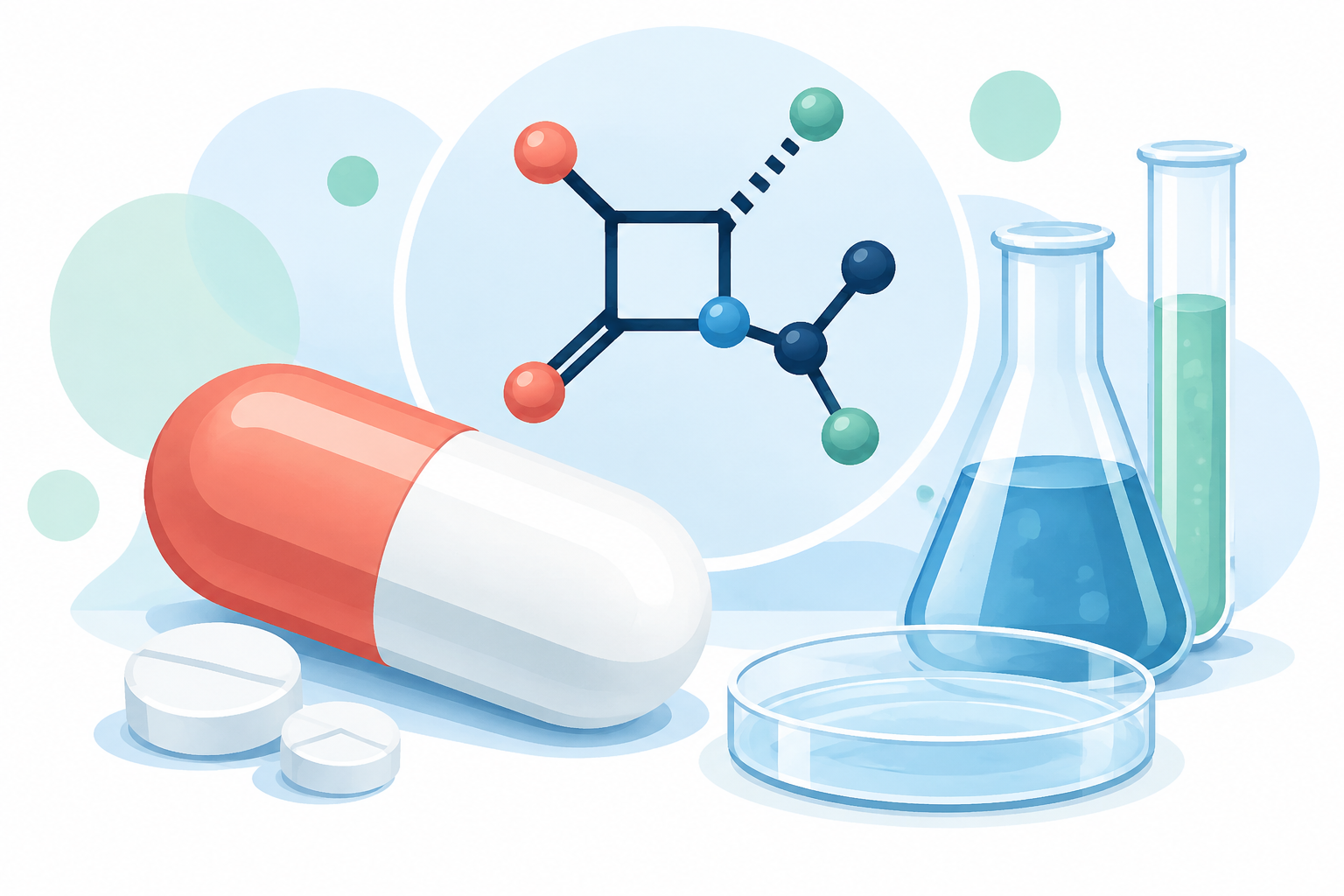
- Beta-lactam Ring: It contains a core 6-aminopenicillanic acid (6-APA) structure with a beta-lactam ring.
Common Strengths
- Capsules and Tablets: 250 mg, 500 mg, and 875 mg
- Dispersible Tablets: 125 mg, 250 mg
- Oral Suspension: 125 mg/5 mL, 250 mg/5 mL
Brand Examples
- Amoxil (GlaxoSmithKline)
- Mox (Ranbaxy / Sun Pharma)
- Novamox (Cipla)
- Augmentin (Amoxicillin combined with Potassium Clavulanate)
Dose Chart
Doses depend on infection severity, body weight, and kidney function. Below are standard textbook doses.
| Drug / Form | Adult Dose | Child Dose |
|---|---|---|
| Amoxicillin Capsule / Tablet (Standard) | 250 mg to 500 mg every 8 hours (or 500 mg to 875 mg every 12 hours) | 20 to 40 mg/kg/day orally in 3 divided doses (every 8 hours) |
| Amoxicillin (Severe Infection) | 500 mg to 1000 mg every 8 hours | 40 to 90 mg/kg/day orally in 2 to 3 divided doses |
| Amoxicillin for H. pylori Eradication | 1000 mg twice daily for 10 to 14 days (with a PPI and clarithromycin) | Not typically indicated for children |
Note: Reduce the dose in patients with severe renal impairment (low glomerular filtration rate).
How it Works in the Human Body
Amoxicillin targets the bacterial cell wall. Human cells do not have cell walls, so the drug has selective toxicity.
Here is how Amoxicillin works step by step:
-
Absorption in the GI Tract: You swallow the capsule. Amoxicillin resists gastric acid breakdown. It is rapidly absorbed in the small intestine. Its oral bioavailability is high (around 75% to 90%). Food does not reduce its absorption.
-
Distribution through the Blood: The drug enters systemic circulation. It binds poorly to plasma proteins (only about 20%). It distributes widely into body tissues, lungs, fluids, and middle ear fluid.
-
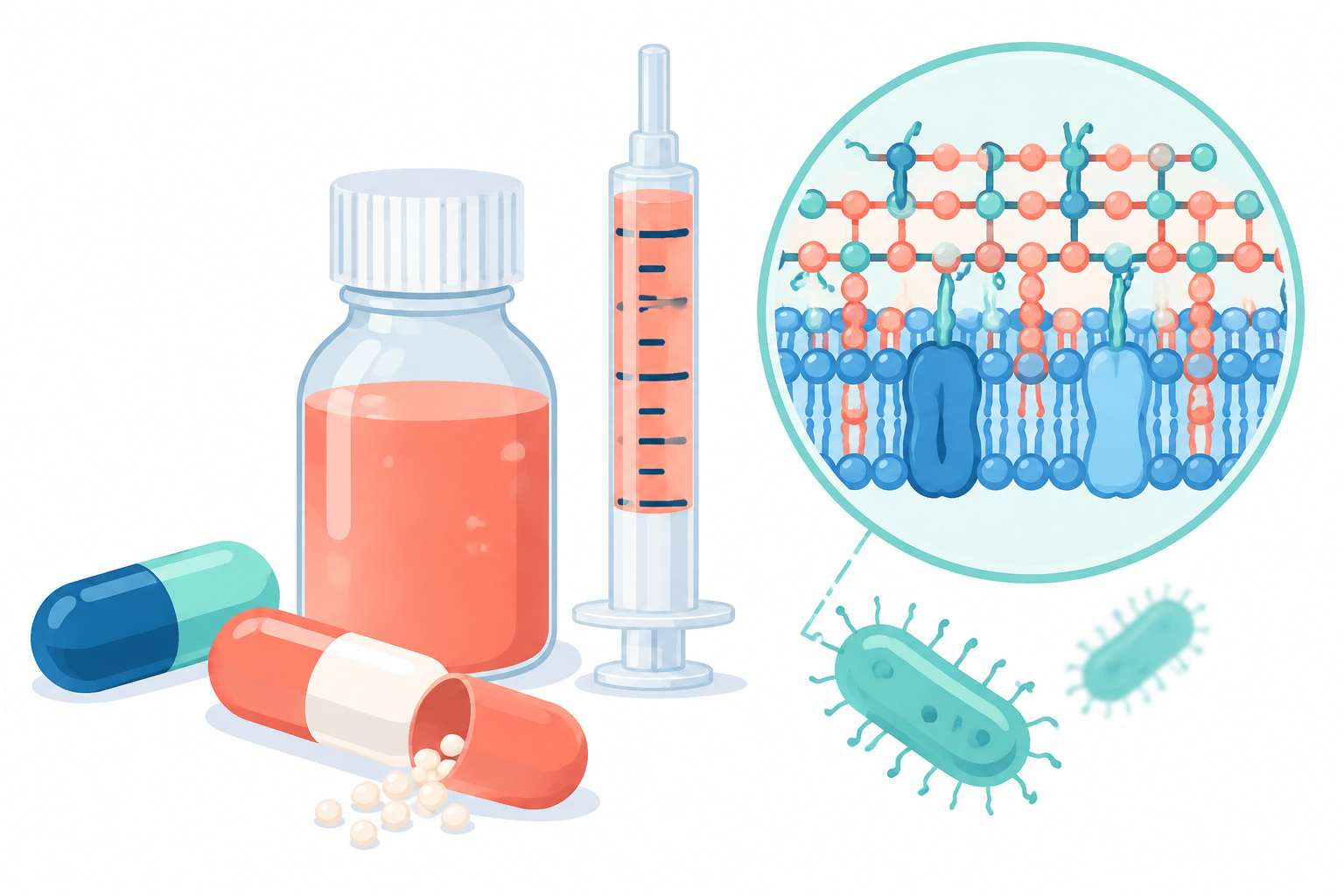
Binding to PBPs: Amoxicillin reaches the bacterial cell. It binds to specific proteins on the bacterial membrane called Penicillin-Binding Proteins (PBPs).
-
Inhibition of Transpeptidase: The primary target is the transpeptidase enzyme. This enzyme forms cross-links between peptidoglycan chains. Peptidoglycan is the structural backbone of the bacterial cell wall. Amoxicillin inhibits transpeptidase and stops cross-linking.
-
Cell Lysis and Death: The bacterial cell wall becomes weak and fragile. Internal osmotic pressure builds up. Autolytic enzymes inside the bacteria are activated. Water rushes in, the bacterial cell bursts (lysis), and the bacteria die.
Side Effects
Most patients tolerate Amoxicillin well, but side effects can occur.
Common Side Effects
- Diarrhea
- Nausea and vomiting
- Mild skin rashes
- Altered taste
Serious Side Effects
- Hypersensitivity Reactions: Urticaria, swelling, and life-threatening anaphylaxis. Always check for a history of penicillin allergy.
- Pseudomembranous Colitis: Caused by an overgrowth of Clostridioides difficile. It causes severe watery diarrhea.
- Ampicillin/Amoxicillin Rash: A non-allergic rash that often occurs if given to patients with infectious mononucleosis (Epstein-Barr virus).
- Black Hairy Tongue: Rare superficial fungal overgrowth on the tongue.
3 Important Exam Points for GPAT
-
Superior Bioavailability Over Ampicillin: Amoxicillin is an analog of ampicillin. It has an additional hydroxyl group on the benzene ring. This gives it better acid stability and superior oral absorption. Food does not interfere with its absorption, unlike ampicillin.
-
Renal Excretion and Probenecid Drug Interaction: Amoxicillin is excreted mostly unchanged in urine via active tubular secretion. Co-administration of Probenecid blocks the organic anion transporter (OAT) in the renal tubules. This decreases renal clearance, prolonging Amoxicillin plasma levels.
-
Susceptibility to Beta-Lactamases: Amoxicillin is degraded by bacterial beta-lactamase (penicillinase) enzymes. To overcome this resistance, it is often combined with Clavulanic acid, a suicide inhibitor of beta-lactamase.
3 MCQs
Question 1
Which enzyme is directly inhibited by Amoxicillin during bacterial cell wall synthesis?
A) DNA gyrase
B) Transpeptidase
C) Dihydrofolate reductase
D) Topoisomerase IV
Answer: B
Question 2
Why is probenecid combined with amoxicillin in clinical practice?
A) To increase gastric absorption of amoxicillin
B) To inhibit bacterial beta-lactamase
C) To decrease renal tubular secretion of amoxicillin
D) To reduce amoxicillin-induced diarrhea
Answer: C
Question 3
A characteristic non-allergic maculopapular rash develops when amoxicillin is mistakenly given to a patient with which infection?
A) Hepatitis B
B) Infectious Mononucleosis
C) Tuberculosis
D) Typhoid fever
Answer: B
FAQs
Can Amoxicillin be taken with food?
Yes. Food does not reduce the absorption of Amoxicillin. Taking it after food helps avoid stomach upset and nausea.
Is Amoxicillin safe during pregnancy?
Amoxicillin is an FDA Category B drug. It is widely considered safe during pregnancy when prescribed by a doctor.
Why is Clavulanic acid added to Amoxicillin?
Many bacteria produce beta-lactamase enzymes that destroy amoxicillin. Clavulanic acid irreversibly binds and blocks these enzymes, protecting amoxicillin from degradation.
Take Free Test on this Topic
Check what you learned with quick GPAT-style questions.
Start Free Test →Unlock all 14 Classifications and 50+ Mock Tests with our Student Pro plan.
Unlock NowFor educational use only — not medical advice. Always check doses with current prescribing information.