 DrugClass
Human Body & Drugs
Digestive System and Antacids: GPAT Pharmacology Notes
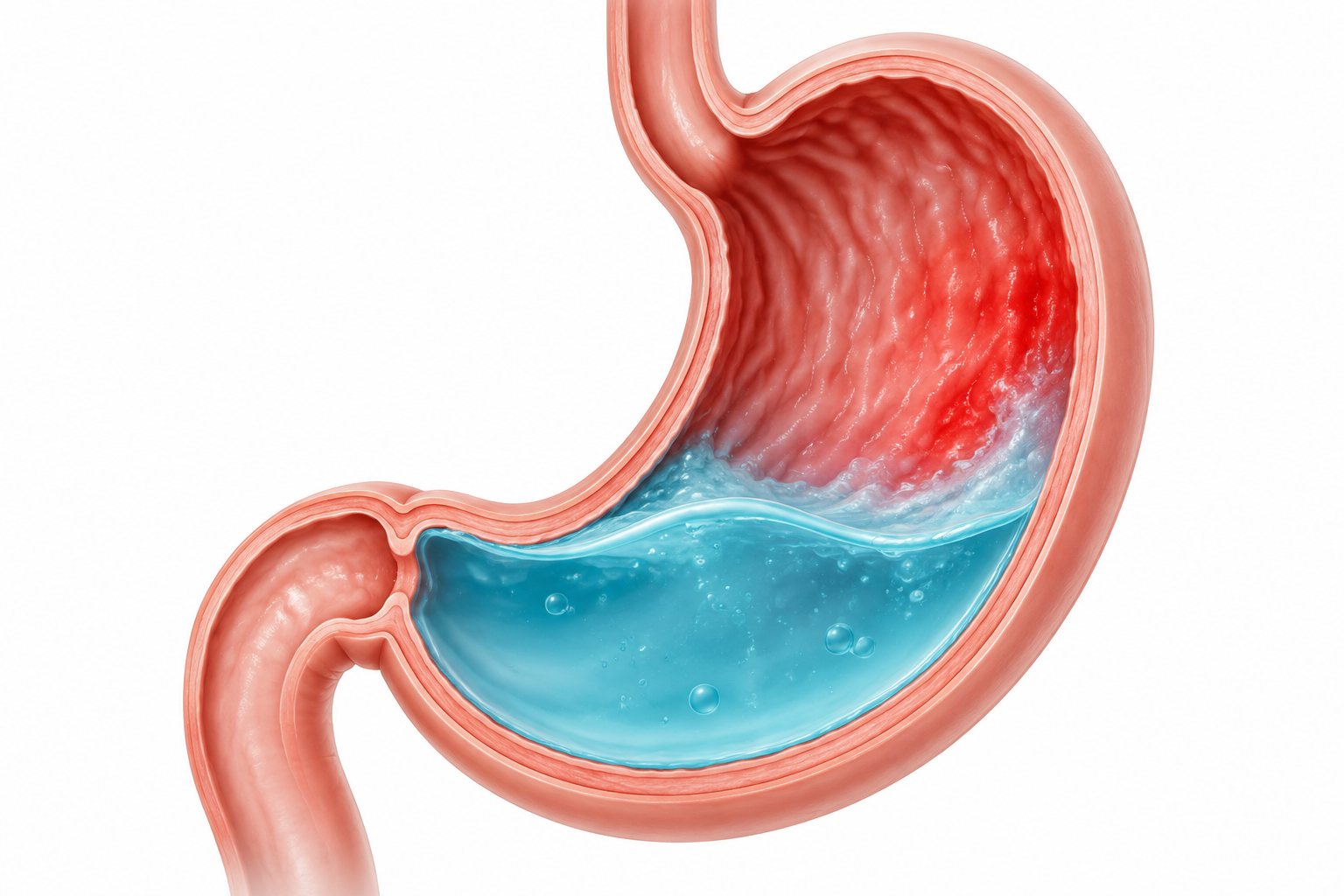
The human stomach secretes hydrochloric acid to digest food, but excess acid causes discomfort and ulcers. Antacids are basic compounds that neutralize stomach acid directly. This review covers antacid classification, mechanisms, side effects, and crucial GPAT exam questions.
What is it?
The digestive system breaks down food into nutrients. The stomach plays a central role in this process. Specialized cells in the stomach wall, called parietal cells, secrete hydrochloric acid (HCl).
Stomach acid helps kill bacteria. It also activates the digestive enzyme pepsin. However, excess acid production causes hyperacidity, gastritis, heartburn, and peptic ulcers.
Antacids are basic compounds. They are taken orally to neutralize gastric acid. They do not stop acid production. Instead, they react chemically with gastric juice to raise stomach pH.
Antacids fall into two main groups:
- Systemic antacids: These are absorbed into the blood. An example is Sodium bicarbonate.
- Non-systemic antacids: These stay mostly in the gut. They are not absorbed in large amounts. Examples include Aluminium hydroxide and Magnesium hydroxide.
Salt and Composition
Non-systemic antacids are safer and used far more often than systemic agents.
- Aluminium Hydroxide Gel [Al(OH)3]: Contains about 3.5% to 4.4% of aluminium oxide. It is available as a suspension or tablet (300 mg to 500 mg).
- Magnesium Hydroxide [Mg(OH)2]: Known as Milk of Magnesia. It contains an aqueous suspension of about 7.5% to 8.5% magnesium hydroxide (approx. 400 mg per 5 mL).
- Calcium Carbonate [CaCO3]: A fast-acting salt. Common strength is 500 mg tablets.
- Sodium Bicarbonate [NaHCO3]: A fast, water-soluble salt. Usually found in effervescent powders (e.g., 1 g to 2 g per sachet).
- Magaldrate: A chemical complex of aluminium and magnesium hydroxide. Common strength is 400 mg to 800 mg.
Popular commercial brands like Digene and Gelusil combine Aluminium hydroxide and Magnesium hydroxide. This balances out individual side effects.
Dose Chart
| Drug / Form | Adult Dose | Child Dose |
|---|---|---|
| Aluminium Hydroxide Gel (Suspension) | 500 mg to 1000 mg (5 to 10 mL) 4 times daily | 250 mg to 500 mg (2.5 to 5 mL) |
| Magnesium Hydroxide (Milk of Magnesia) | 300 mg to 600 mg (5 to 10 mL) as antacid | 150 mg to 300 mg (2.5 to 5 mL) |
| Calcium Carbonate (Chewable Tablet) | 500 mg to 1500 mg as needed (max 8 g/day) | Not routinely recommended under 12 years |
| Sodium Bicarbonate (Powder/Tablet) | 1 g to 2 g dissolved in water every 4 hours | Not recommended for children |
| Magaldrate (Suspension/Tablet) | 480 mg to 960 mg between meals and at bedtime | Half adult dose for children 6–12 years |
Note: Antacids should be taken 1 hour after meals and at bedtime for maximum effect.
How it Works in the Human Body
Antacids work through a direct chemical reaction in the gastric lumen.
- Acid Secretion: Parietal cells in the stomach mucosa use the H+/K+ ATPase pump (proton pump) to secrete HCl into the gastric lumen.
- Chemical Neutralization: When you swallow an antacid, the weak base reacts with free hydrochloric acid.
- Sodium bicarbonate: $$\text{NaHCO}_3 + \text{HCl} \rightarrow \text{NaCl} + \text{H}_2\text{O} + \text{CO}_2$$
- Aluminium hydroxide: $$\text{Al(OH)}_3 + 3\text{HCl} \rightarrow \text{AlCl}_3 + 3\text{H}_2\text{O}$$
- Magnesium hydroxide: $$\text{Mg(OH)}_2 + 2\text{HCl} \rightarrow \text{MgCl}_2 + 2\text{H}_2\text{O}$$
- Rise in Gastric pH: The reaction quickly raises gastric pH from 1.5 to above 3.5.
- Inhibition of Pepsin: Gastric pepsin loses its digestive activity at a pH above 4. This protects the stomach lining and allows ulcers to heal.
- Mucosal Defense: Some aluminium antacids also trigger local prostaglandin release. Prostaglandins improve blood flow and increase protective mucus secretion in the gastric wall.
Side Effects
- Constipation: Aluminium salts cause smooth muscle relaxation and possess astringent properties, leading to constipation.
- Osmotic Diarrhea: Magnesium salts are poorly absorbed. They draw water into the intestinal lumen by osmosis, causing loose stools.
- Systemic Alkalosis: Sodium bicarbonate gets absorbed into systemic circulation. Prolonged use disrupts blood pH and can cause metabolic alkalosis.
- Acid Rebound: Calcium carbonate stimulates gastrin release directly. Once the antacid effect wears off, the stomach produces even more acid.
- Milk-Alkali Syndrome: Taking high doses of calcium carbonate with milk causes hypercalcemia, renal failure, and metabolic alkalosis.
- Eructation and Flatulence: Carbonate salts produce carbon dioxide gas ($$\text{CO}_2$$), which causes belching and stomach distension.
3 Important Exam Points for GPAT
- Acid Neutralizing Capacity (ANC): ANC is defined as the number of milliequivalents (mEq) of 1N HCl brought to pH 3.5 in 15 minutes by a unit dose of antacid. An ideal antacid preparation should have an ANC of at least 5 mEq per dose.
- Magaldrate Structure: Magaldrate is a hydroxymagnesium aluminate complex. It is not a simple physical mixture. It converts into aluminium and magnesium hydroxides in the stomach step by step. This gives a sustained buffering action.
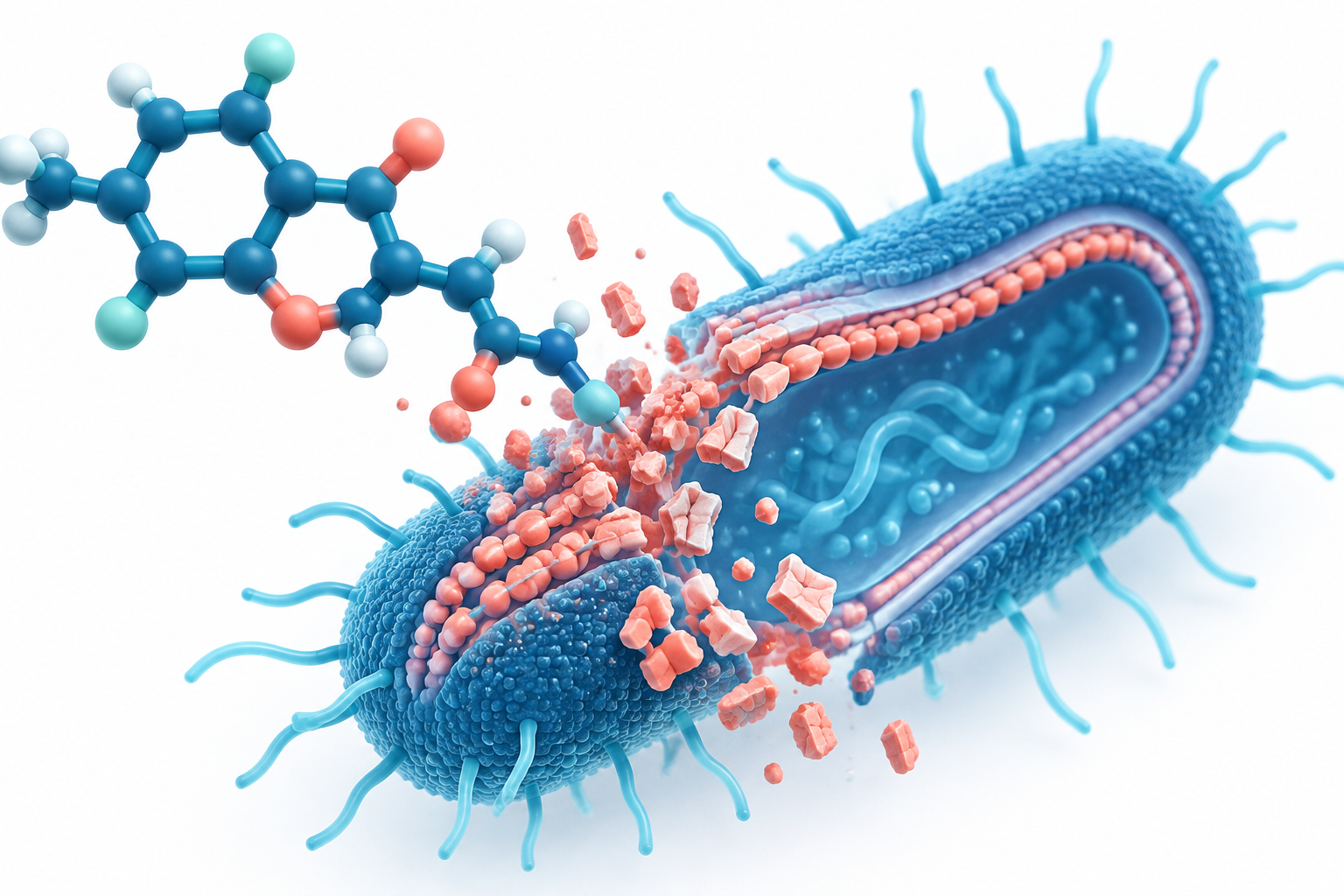
- Chelation and Drug Interactions: Aluminium, magnesium, and calcium ions form insoluble chelate complexes with Tetracyclines and Fluoroquinolones. This stops antibiotic absorption. Always maintain a gap of at least 2 hours between an antacid and these antibiotics.
3 MCQs
Q1. Which antacid is most likely to cause systemic metabolic alkalosis?
A) Aluminium hydroxide
B) Magnesium trisilicate
C) Sodium bicarbonate
D) Calcium carbonate
Answer: C
Q2. Why are aluminium hydroxide and magnesium hydroxide combined in commercial formulations?
A) To increase the absorption of both salts
B) To balance out constipation and diarrhea
C) To stimulate systemic gastrin release
D) To prevent carbon dioxide production
Answer: B
Q3. Milk-alkali syndrome is a clinical danger associated with which antacid?
A) Magnesium hydroxide
B) Aluminium hydroxide
C) Magaldrate
D) Calcium carbonate
Answer: D
FAQs
Why are antacids more effective when taken after meals?
On an empty stomach, antacids empty into the duodenum in 20 to 30 minutes. Food slows gastric emptying. Taken 1 hour after a meal, antacids stay in the stomach for 2 to 3 hours.
Can antacids cure peptic ulcers permanently?
No. Antacids offer quick, short-term symptomatic relief from pain. They do not tackle the root cause, such as Helicobacter pylori infection or acid overproduction. Proton pump inhibitors (PPIs) are needed for complete ulcer healing.
How do antacids affect urine pH?
Systemic antacids, such as sodium bicarbonate, alkalinize the urine. This change speeds up the elimination of acidic drugs like aspirin, but it slows the clearance of basic drugs like amphetamine.
Take Free Test on this Topic
Check what you learned with quick GPAT-style questions.
Start Free Test →Unlock all 14 Classifications and 50+ Mock Tests with our Student Pro plan.
Unlock NowFor educational use only — not medical advice. Always check doses with current prescribing information.